
Setting Up a Cat-Friendly Home: Enrichment, Safety, and Space
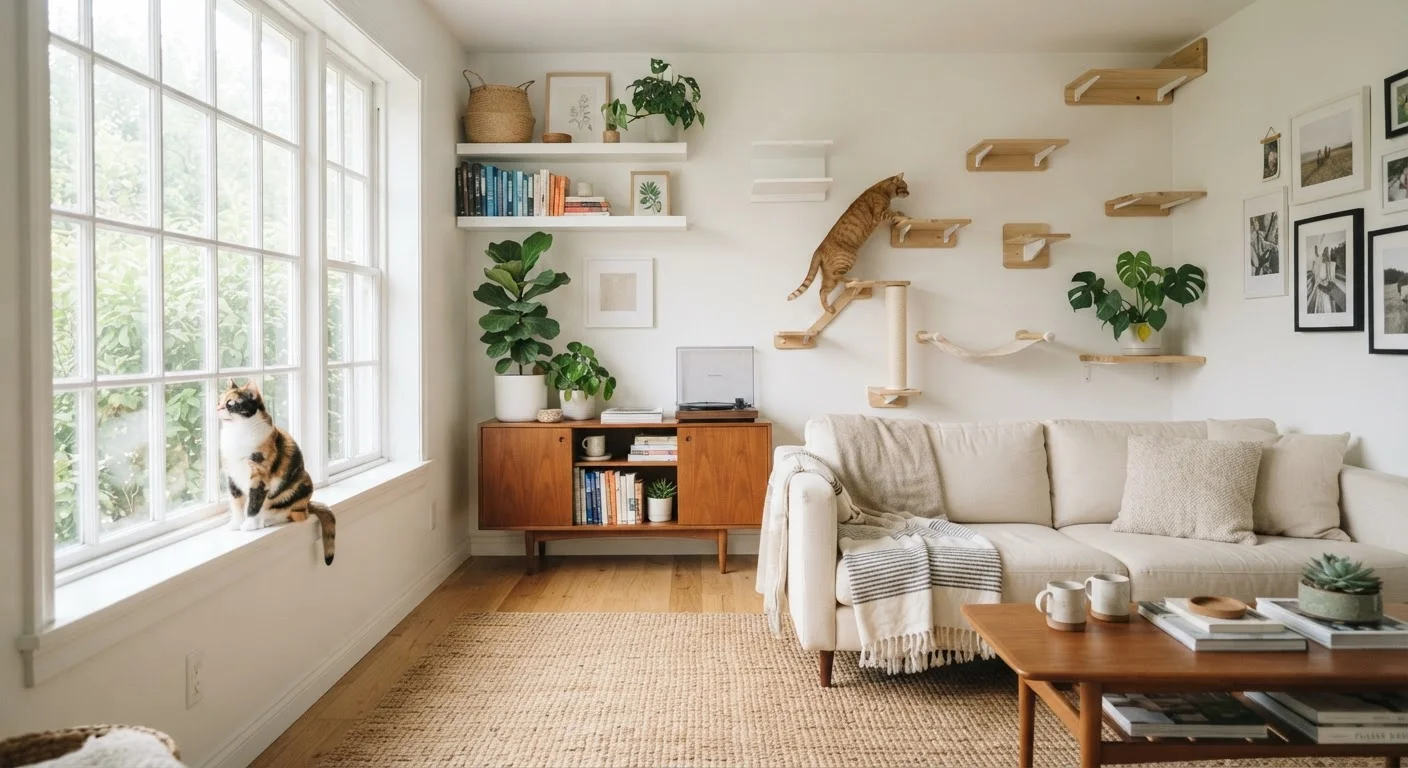
Photo credit: FaqBulletin.com | Information Made Easy
In this article
From vertical climbing space to toxic plant removal, here's how to structure your home environment for a cat's physical and mental wellbeing.
Key Takeaways
- Vertical space — shelves, cat trees, and perches — is essential for feline wellbeing, not optional.
- Many common household plants and foods are toxic to cats; a full audit is a must before or after adoption.
- Scratching is a natural behavior; providing appropriate surfaces prevents furniture damage and stress.
- Litter box placement and quantity directly affect whether cats use them consistently.
- Mental enrichment reduces destructive behavior and stress-related health issues in indoor cats.
- A cat-safe home environment should be revisited as your cat ages and its needs change.
Why Your Home Environment Shapes Your Cat's Health
Cats are territorial, sensory-driven animals whose physical and psychological wellbeing is deeply tied to the spaces they inhabit. An under-stimulating or hazardous home environment is one of the most common — and most preventable — sources of feline stress, anxiety, and behavioral problems. Whether you're preparing for a new arrival or reassessing your current setup, this checklist gives you a structured framework for creating a home your cat can genuinely thrive in.
Before diving into the checklist, it helps to understand what cats actually need: vertical height to survey their territory, safe retreat zones to decompress, outlets for predatory behavior, and an environment free of physical hazards. If you're still assembling the basics, our complete first-cat guide covers supplies and setup from the ground up.
Vertical Space and Climbing
Scratching Surfaces
Enrichment and Play
Toxic Plant and Substance Removal
Physical Hazard Reduction
Litter Box Setup
Tools and Supplies You'll Need
Working through this checklist is largely an audit exercise — but several items will prompt you to acquire or install something. Here's what to have on hand before you start.
Cat tree or wall-mounted shelving system
Provides necessary vertical territory for climbing, perching, and retreat.
Tall vertical scratching post
Gives cats an appropriate surface for claw maintenance and territorial marking.
Interactive wand toys and puzzle feeders
Supports hunting-sequence play and mental stimulation during daily sessions.
Cord management covers or cable sleeves
Protects electrical cords from chewing to prevent electrocution risk.
Litter boxes (one per cat plus one extra)
Ensures adequate elimination options distributed around the home.
Window screen reinforcement hardware
Prevents screen failures that could result in high-rise falls.
Feline pheromone diffuser
Can help reduce territorial stress, particularly during introductions or environmental changes.
ASPCA Poison Control app or bookmarked database
Reference tool for quickly verifying whether a plant, food, or substance is toxic to cats.
Enrichment: Keeping Your Cat Mentally and Physically Active
Mental stimulation isn't a luxury for indoor cats — it's a health requirement. Research in feline behavioral science consistently links insufficient enrichment to stress-related conditions including over-grooming, aggression, and inappropriate elimination. Hunting-sequence play (stalk, chase, pounce, catch) is particularly important, because it mirrors the predatory cycle cats are wired for. For a deeper dive into specific enrichment strategies, see our guide on enrichment activities that satisfy natural hunting instincts.
Avoid Laser Pointers as a Primary Play Tool
Laser pointers can stimulate the chase phase of hunting behavior but never allow a cat to complete the sequence with a physical catch — which can lead to frustration and anxiety over time. If you use a laser pointer, always end each session by redirecting your cat to a tangible toy it can physically capture and 'kill.' Wand toys and tossable toys are generally better primary enrichment tools.
Cats who regularly knock items off surfaces, vocalize excessively, or engage in redirected aggression are often signaling inadequate environmental stimulation — behaviors explored in detail in our article on why cats knock things off tables. Addressing the environment often resolves these issues without any additional intervention.
Safety: Eliminating Hidden Hazards Room by Room
A thorough safety audit is one of the highest-value steps a cat owner can take. Cats explore with their mouths, squeeze into tight spaces, and leap onto surfaces most pet owners wouldn't anticipate. The ASPCA's Animal Poison Control Center maintains a comprehensive database of plants, foods, and household substances toxic to cats — consulting it directly is strongly recommended when evaluating your home.
Many Common Plants Are Seriously Toxic to Cats
Lilies (including Easter, Tiger, and Asiatic varieties) are among the most dangerous — even small amounts can cause acute kidney failure in cats. Other frequently encountered toxic plants include pothos, sago palm, dieffenbachia, and certain varieties of aloe. Do not assume a plant is safe simply because it is common or sold widely in stores. Verify every plant in your home before allowing cat access, and contact your veterinarian or the ASPCA Animal Poison Control Center immediately if you suspect ingestion.
If you're weighing how much outdoor access to allow, the safety calculus changes significantly — outdoor environments introduce additional hazards including predators, traffic, and toxins. Our article on indoor vs. outdoor cat trade-offs examines that decision in detail.
Space: Litter, Territory, and Multi-Cat Considerations
How you allocate and organize space within your home has a direct bearing on litter box compliance, territorial stress, and inter-cat relationships. The general guideline — one litter box per cat, plus one extra — exists because cats are fastidious and territorial about elimination sites. Box placement matters as much as quantity: boxes tucked next to loud appliances, in high-traffic areas, or too close to food stations are frequently avoided.
In multi-cat homes, resource distribution becomes even more critical. Feeding stations, resting spots, and litter boxes should be positioned so that no single cat can guard access to all of them. For households managing two or more cats, our guide on multi-cat household management provides specific strategies for reducing conflict. Additionally, your cat's needs shift meaningfully across life stages, so revisit this checklist as your cat ages — a senior cat may need lower-entry litter boxes, ramps instead of leaps, and quieter retreat zones.
This article is for general informational purposes only and does not constitute veterinary advice. Consult a licensed veterinarian for guidance specific to your cat's health needs.

Author
Pets Editorial Team
Pets Editorial Team is the collective byline for our editorial team and contributor network. Articles published under this byline or an editorial pen name are researched, written, and reviewed according to our editorial standards for clarity, consistency, and independence before publication.
View all articles →