
Feline Life Stages: How a Cat's Needs Change from Kittenhood to Senior Years
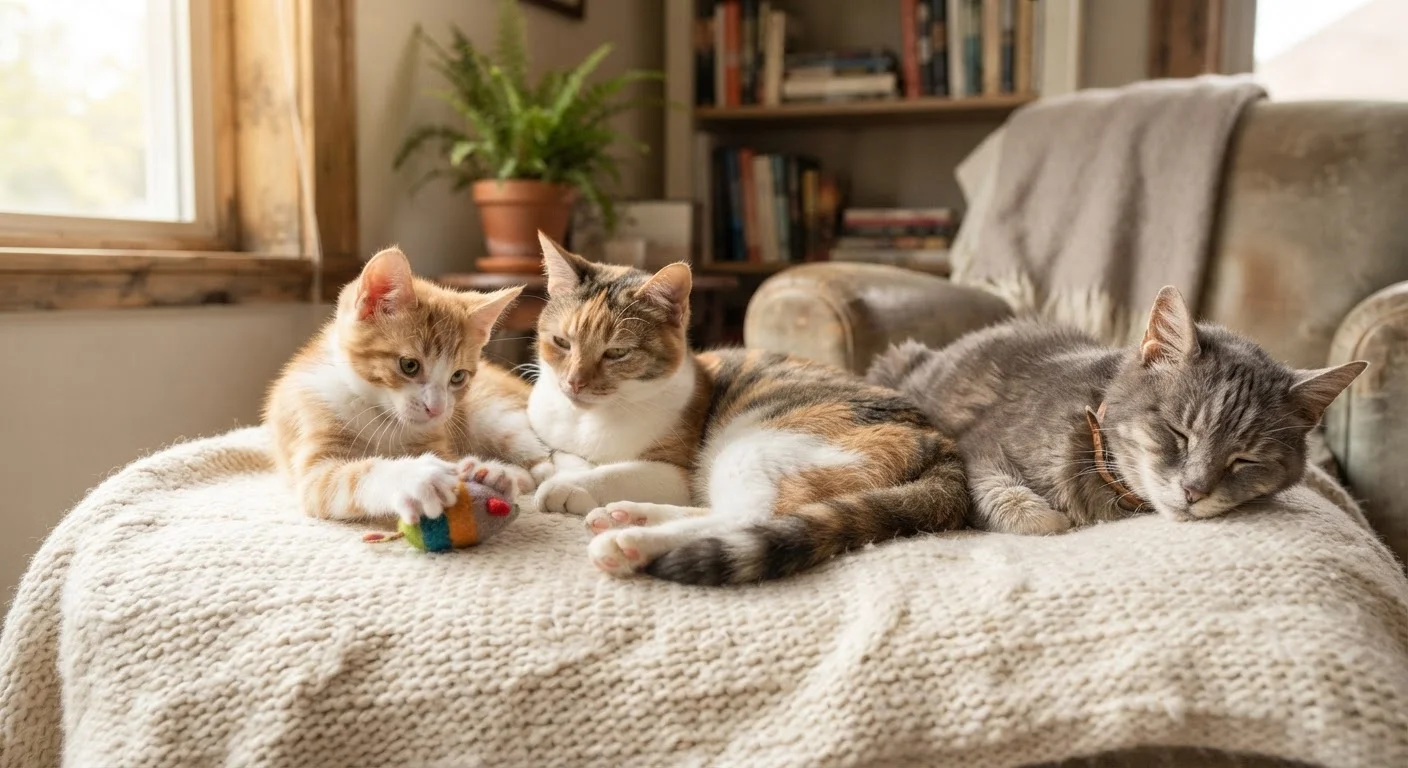
Photo credit: FaqBulletin.com | Information Made Easy
In this article
- How Vets Define Feline Life Stages
- Kittenhood (0–6 Months): Growth, Socialization, and Foundation Care
- Junior and Prime Adult Years (7 Months–6 Years): Maintenance and Monitoring
- Mature and Senior Cats (7–14 Years): Shifting Health Priorities
- Geriatric Cats (15+ Years): Comfort, Mobility, and Palliative Care
- Nutrition Across Every Life Stage
- Environmental and Enrichment Adjustments Over Time
Cats aren't one-size-fits-all at every age. This guide maps out shifting nutritional, health, and environmental needs across a cat's lifetime.
Key Takeaways
- Cats pass through at least five recognized life stages, each with distinct nutritional and health needs.
- Kittens require calorie-dense, protein-rich food and core vaccinations within their first weeks.
- Annual wellness exams become bi-annual starting around age seven to catch age-related conditions early.
- Senior and geriatric cats are prone to kidney disease, hyperthyroidism, and arthritis — all manageable with early detection.
- Home environment adjustments — lower litter box sides, ramps, softer bedding — meaningfully improve quality of life for older cats.
How Vets Define Feline Life Stages
The American Association of Feline Practitioners (AAFP) recognizes six life stages for cats: kitten, junior, prime, mature, senior, and geriatric. Each stage reflects meaningful biological changes — not just age on a calendar — and carries different recommendations for nutrition, veterinary screening, and daily care.
Understanding where your cat falls on this spectrum helps you anticipate needs before problems arise, rather than reacting to them. If you're bringing a cat home for the first time, our complete first-cat guide covers the foundational setup you'll need at the start.
Kittenhood (0–6 Months): Growth, Socialization, and Foundation Care
Kittens grow at a remarkable pace. In the first six months, a cat reaches roughly 75% of its adult body weight, driven by rapid skeletal and organ development. This demands food formulated specifically for kittens — higher in protein, fat, and calories than adult formulas — to fuel growth without deficiency.
Socialization is equally critical during this window. Kittens exposed to varied people, sounds, and gentle handling between two and seven weeks of age typically develop into calmer, more adaptable adults. After eight weeks, new experiences are still valuable but the neural pathways for social learning begin to narrow.
Core vaccinations — including feline panleukopenia, herpesvirus, and calicivirus — begin around six to eight weeks, with boosters every three to four weeks until 16 weeks of age, followed by a one-year booster. Your veterinarian will also schedule spay or neuter, typically between four and six months.
Start handling your kitten's paws, ears, and mouth routinely from week one — even briefly. Cats accustomed to this from early life are dramatically easier to examine and medicate as adults and seniors.
Early handling normalizes veterinary-style contact, reducing stress during exams and making it easier to spot abnormalities at home over the years.
Request a baseline senior bloodwork panel at age seven even if your cat seems perfectly healthy. Chronic kidney disease can destroy up to 75% of kidney function before showing outward symptoms.
CKD is the leading cause of death in older domestic cats, and early-stage detection dramatically expands management options.
Junior and Prime Adult Years (7 Months–6 Years): Maintenance and Monitoring
Between seven months and roughly six years, most cats are physically mature and relatively stable in health. Energy needs level off, and the focus shifts from growth to weight management and preventive care. Obesity is the most common nutritional disorder seen in adult cats, and it significantly elevates risk for diabetes, joint disease, and urinary problems.
Annual wellness exams remain important even when a cat appears healthy. Bloodwork baselines established during the prime years give your veterinarian a personalized reference point — making it much easier to detect subtle changes as the cat ages. Dental disease also accelerates during adulthood; professional cleanings under anesthesia are often recommended starting around age three.
For households with multiple cats, the prime adult stage is often when resource competition and territorial stress become apparent. Managing multi-cat dynamics around feeding stations and litter boxes matters at every age but is especially relevant now.
Mature and Senior Cats (7–14 Years): Shifting Health Priorities
At age seven, cats enter the mature stage — roughly equivalent to a human in their mid-40s. Metabolism begins to slow, lean muscle mass can decline, and the risk of chronic disease increases. Common conditions that emerge during this window include chronic kidney disease (CKD), hyperthyroidism, hypertension, and early osteoarthritis.
The AAFP recommends bi-annual veterinary visits starting at this stage, along with routine bloodwork, urinalysis, and blood pressure measurement. Catching CKD in its early stages, for example, allows for dietary and medical management that can significantly slow progression.
Don't Dismiss Senior Behavior Changes
Increased nighttime yowling, disorientation, or changes in litter box habits in older cats are not simply signs of aging to ignore. These behaviors can indicate hyperthyroidism, hypertension, cognitive decline, or pain from arthritis — all of which benefit from veterinary assessment. Early intervention generally leads to better outcomes and improved quality of life.
Senior cats may also show behavioral changes — increased vocalization, altered sleep patterns, or apparent confusion — that can signal feline cognitive dysfunction syndrome (FCDS), sometimes described as a form of dementia. These changes are worth discussing with your vet rather than attributing solely to old age.
Geriatric Cats (15+ Years): Comfort, Mobility, and Palliative Care
Cats reaching 15 years and beyond are considered geriatric, and while many remain active and engaged, their care requires close attention to comfort and quality of life. Joint stiffness and reduced mobility are common; cats that once leapt effortlessly may struggle with standard litter box heights or accessing elevated resting spots.
Weight loss in geriatric cats often reflects reduced digestive efficiency or underlying disease rather than intentional calorie restriction, and it warrants prompt veterinary evaluation. Feeding highly digestible, protein-rich food in smaller, more frequent meals can support aging digestive systems.
Pain management for arthritis, along with environmental modifications — ramps, heated orthopedic beds, low-entry litter boxes — can make a meaningful difference in daily wellbeing. Conversations with your veterinarian about palliative care goals are appropriate at this stage, focusing on maintaining comfort and function rather than curative intervention alone.
Nutrition Across Every Life Stage
A cat is an obligate carnivore, meaning it requires animal-derived protein for essential nutrients — including taurine, arachidonic acid, and preformed vitamin A — that it cannot synthesize adequately from plant sources. This biological reality holds across every life stage, though the specific balance of nutrients shifts considerably.
- Kittens: High protein, high fat, elevated calcium and phosphorus for bone development. Look for foods labeled "complete and balanced for growth" or "all life stages."
- Adults: Controlled calories, moderate protein, and adequate hydration — wet food can help support urinary tract health.
- Senior and geriatric cats: Highly digestible protein to preserve muscle mass; phosphorus restriction may be indicated if kidney disease is present (under veterinary guidance).
Hydration deserves attention at every stage, but especially in older cats prone to kidney disease. Wet food, water fountains, and multiple water stations throughout the home are practical strategies. For a comparison of how life-stage nutrition works across species, see how puppy and adult dog nutrition differs.
This article provides general educational information about feline care and is not a substitute for personalized veterinary advice. Always consult a licensed veterinarian for guidance specific to your cat's health needs.
Environmental and Enrichment Adjustments Over Time
A well-structured home environment supports a cat's physical and psychological health at every age. The needs, however, are not static. Kittens benefit from supervised exploration, safe hiding spots, and interactive play to build confidence and coordination. Adults need vertical space, scratching outlets, and regular play sessions to prevent boredom and weight gain.
As cats age into their senior and geriatric years, the same environment may need rethinking. High cat trees become inaccessible; litter boxes with tall sides become painful to navigate. Softer, lower-profile resting areas — placed near heat sources — become more appealing and beneficial. Our guide to building a cat-friendly home walks through how to structure space for wellbeing across life stages.
Whether your cat lives exclusively indoors or has outdoor access also shapes enrichment strategy across its lifetime. Weighing the indoor-outdoor trade-offs is a decision that benefits from revisiting as your cat ages, since outdoor risks — from predators to infectious disease — interact with age-related immune changes differently than they do in young, robust adults.

Author
Pets Editorial Team
Pets Editorial Team is the collective byline for our editorial team and contributor network. Articles published under this byline or an editorial pen name are researched, written, and reviewed according to our editorial standards for clarity, consistency, and independence before publication.
View all articles →