
Calorie Counting: What It Can and Can't Tell You About Your Diet
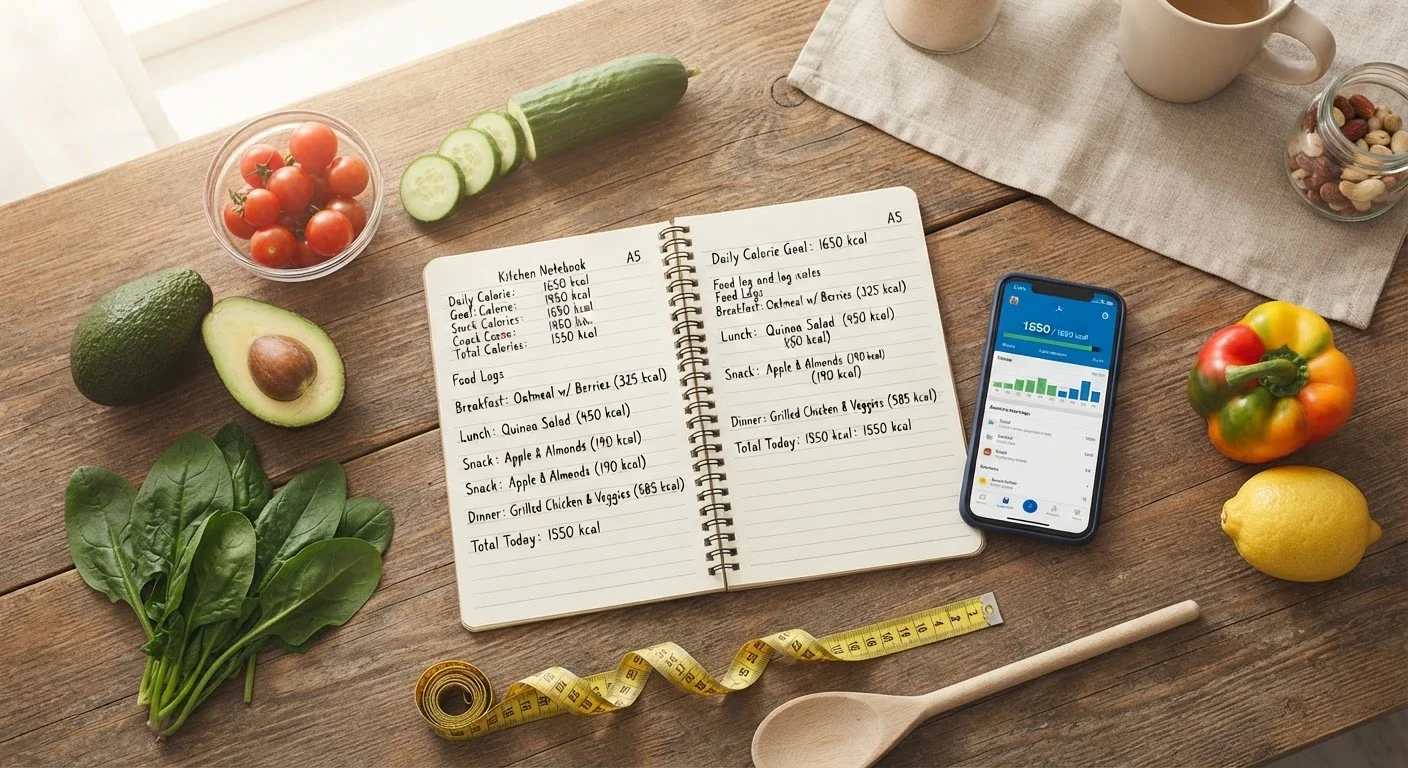
Photo credit: FaqBulletin.com | Information Made Easy
In this article
Tracking calories has real benefits and real limitations. A balanced look at what this approach gets right and where it falls short.
Key Takeaways
- Calorie counting can build awareness of portion sizes and overall energy intake.
- Calories alone don't reveal food quality, nutrient density, or how your body processes different foods.
- Tracking accuracy is often lower than people assume, due to labeling tolerances and estimation errors.
- For some individuals, calorie counting may reinforce unhealthy relationships with food.
- A qualified healthcare or nutrition professional can help determine whether tracking suits your situation.
Builds awareness of portion sizes and energy intake
Many people significantly underestimate how much they eat. Tracking even briefly can recalibrate expectations and highlight habitual portions that are larger than assumed.
Creates a concrete feedback loop for behavior change
Logging meals provides immediate, tangible data on eating patterns, which research links to increased accountability and more deliberate food choices.
Identifies hidden calorie sources in the diet
Beverages, sauces, dressings, and casual snacking are frequently overlooked; tracking reveals these contributions in a way that memory alone rarely does.
Accessible and low-cost with modern tools
Free and low-cost nutrition tracking apps have made calorie logging available to virtually anyone with a smartphone, lowering the barrier to basic dietary self-monitoring.
Ignores nutrient quality and food composition
Equal calorie totals from different food sources have vastly different effects on satiety, blood sugar, inflammation, and long-term health — none of which calorie counts reflect.
Calorie data carries meaningful margin of error
FDA labeling tolerances, home measurement variability, and restaurant portion inconsistency mean tracked totals may routinely differ from actual intake by 20% or more.
Doesn't account for metabolic individuality
Factors including gut microbiome, hormonal status, and sleep quality influence how individuals process food energy, making a single calorie target imprecise for many people.
May increase food-related anxiety in some individuals
For those prone to rigid thinking or with a history of disordered eating, strict calorie tracking can heighten stress around meals and reinforce an unhealthy relationship with food.
Difficult to sustain accurately long term
Consistent, precise tracking is time-consuming, and accuracy tends to decline over weeks and months, limiting its usefulness as a permanent dietary strategy.
What Calorie Counting Actually Measures
A calorie is a unit of energy — specifically, the amount of energy needed to raise one kilogram of water by one degree Celsius. In nutrition, we use kilocalories (kcal), though they're colloquially called calories. Calorie counting is the practice of tracking the energy content of everything you eat and drink over a given period.
The underlying principle is rooted in energy balance: consuming more energy than your body expends tends to lead to weight gain over time, while a consistent deficit tends to produce weight loss. This thermodynamic framework is well-established, and calorie awareness has genuine utility in helping people recognize patterns in their eating habits.
What calorie counts do not measure is nutritional quality. A 300-calorie serving of salmon and a 300-calorie serving of chips register identically on a calorie counter, yet they differ dramatically in protein, omega-3 fatty acids, fiber, sodium, and overall effect on satiety and metabolic health. To better understand what those numbers actually contain, see our guide on reading a nutrition facts label.
The Real Benefits of Tracking
For many people, calorie counting functions as a useful education tool rather than a lifelong system. It can reveal surprising truths about habitual eating — common discoveries include underestimating liquid calories from beverages, or not recognizing how quickly condiments and snacks accumulate.
Builds awareness of portion sizes and energy intake
Many people significantly underestimate how much they eat. Tracking even briefly can recalibrate expectations and highlight habitual portions that are larger than assumed.
Creates a concrete feedback loop for behavior change
Logging meals provides immediate, tangible data on eating patterns, which research links to increased accountability and more deliberate food choices.
Identifies hidden calorie sources in the diet
Beverages, sauces, dressings, and casual snacking are frequently overlooked; tracking reveals these contributions in a way that memory alone rarely does.
Accessible and low-cost with modern tools
Free and low-cost nutrition tracking apps have made calorie logging available to virtually anyone with a smartphone, lowering the barrier to basic dietary self-monitoring.
Research broadly supports that self-monitoring eating behavior is one of the more consistent predictors of dietary change. Tracking also creates a concrete feedback loop that can make abstract nutrition guidance feel more actionable for those who are number-oriented or respond well to structured systems.
Where Calorie Counting Falls Short
Despite its usefulness as an awareness tool, calorie counting carries meaningful limitations that are often underappreciated.
Ignores nutrient quality and food composition
Equal calorie totals from different food sources have vastly different effects on satiety, blood sugar, inflammation, and long-term health — none of which calorie counts reflect.
Calorie data carries meaningful margin of error
FDA labeling tolerances, home measurement variability, and restaurant portion inconsistency mean tracked totals may routinely differ from actual intake by 20% or more.
Doesn't account for metabolic individuality
Factors including gut microbiome, hormonal status, and sleep quality influence how individuals process food energy, making a single calorie target imprecise for many people.
May increase food-related anxiety in some individuals
For those prone to rigid thinking or with a history of disordered eating, strict calorie tracking can heighten stress around meals and reinforce an unhealthy relationship with food.
Difficult to sustain accurately long term
Consistent, precise tracking is time-consuming, and accuracy tends to decline over weeks and months, limiting its usefulness as a permanent dietary strategy.
Perhaps most importantly, calorie counts themselves carry built-in imprecision. The U.S. Food and Drug Administration permits a 20% margin of error on nutrition labels — meaning a food labeled at 200 calories could legally contain anywhere from 160 to 240. Home measurement errors, restaurant portion variability, and cooking method differences compound this further.
There's also the question of individual metabolism. Two people eating identical calorie totals can experience very different outcomes depending on gut microbiome composition, hormonal factors, sleep quality, and stress levels. For a broader look at nutrition claims that oversimplify how the body works, see popular nutrition claims that aren't backed by science.
Calorie Needs Vary Significantly by Individual
Standard daily calorie reference values on nutrition labels are based on a general 2,000-calorie diet. In reality, energy needs vary considerably based on age, sex, body size, activity level, and health status. No single number applies universally, and personal calorie targets should be discussed with a qualified healthcare or nutrition professional rather than derived solely from a label or app default.
Calorie Counting and Your Relationship With Food
Nutrition science is only part of the picture. Eating behaviors, social contexts, and emotional patterns all shape what and how much people eat. Calorie tracking, particularly when practiced rigidly, can sometimes heighten anxiety around food choices or create an adversarial relationship with eating.
For individuals with a history of disordered eating, or those prone to all-or-nothing thinking, calorie counting may do more harm than good. This is a context where input from a registered dietitian is especially valuable — they can help identify whether structured tracking supports or undermines your broader health goals.
For most households, a more durable approach involves building meals around food quality and variety rather than chasing a daily number. Our article on building balanced meals offers a practical framework that doesn't require a calculator.
20%
Permitted calorie label margin of error
The U.S. FDA allows packaged food nutrition labels to be within 20% of their stated calorie values, meaning real intake can differ meaningfully from what's tracked.
~38%
Adults who have tried calorie tracking
Survey data from the International Food Information Council has consistently found that a significant share of American adults report tracking calories or macronutrients at some point.
This article is for general informational and educational purposes only and is not a substitute for professional medical or nutritional advice. Consult a qualified healthcare provider before making significant changes to your diet, especially if you have a medical condition or history of disordered eating.

Author
Health & Wellness Editorial Team
Health & Wellness Editorial Team is the collective byline for our editorial team and contributor network. Articles published under this byline or an editorial pen name are researched, written, and reviewed according to our editorial standards for clarity, consistency, and independence before publication.
View all articles →