
Reading a Nutrition Facts Label Without Getting Confused
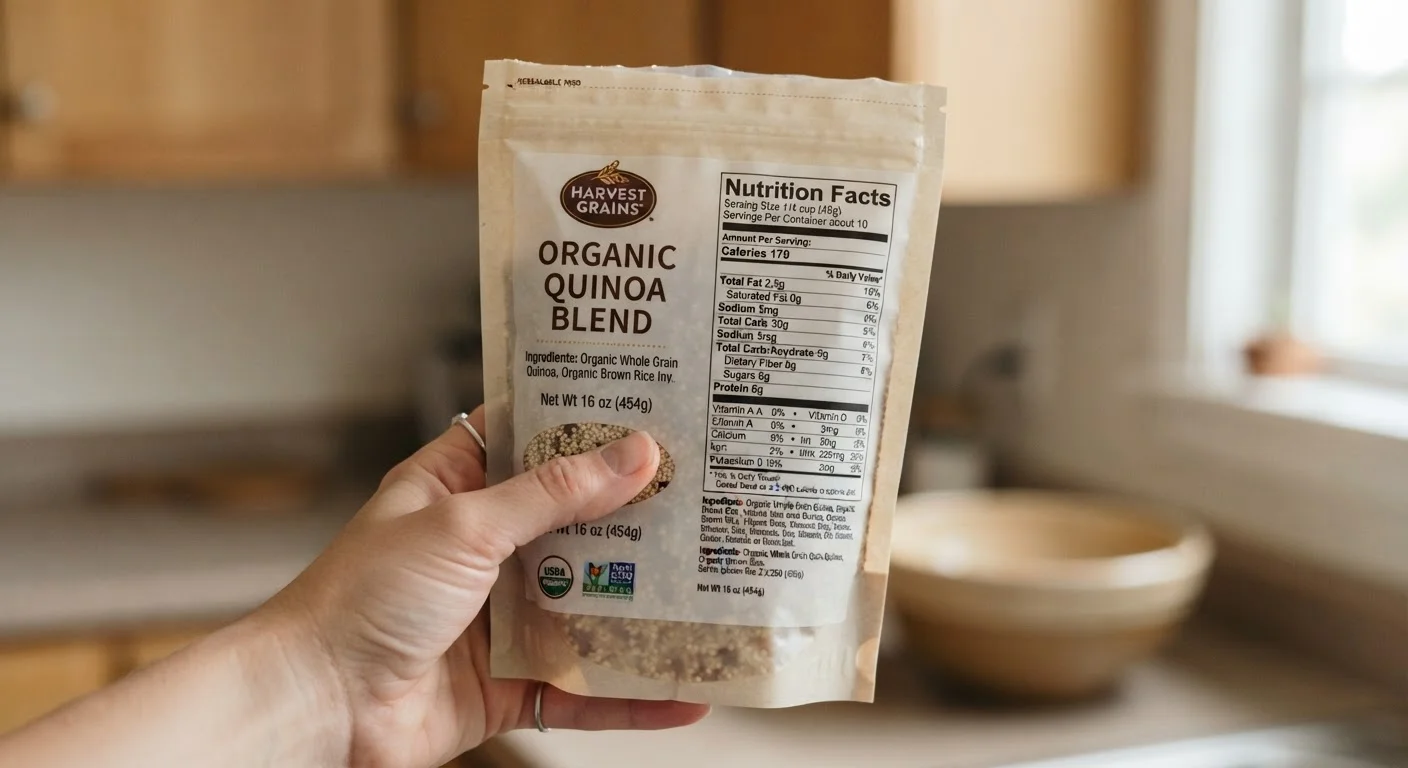
Photo credit: FaqBulletin.com | Information Made Easy
In this article
Nutrition labels pack a lot of information into a small space. Here's how to decode each section and use it to make informed food choices.
Key Takeaways
- Serving size is the foundation of every number on the label — always check it first.
- The % Daily Value column tells you whether a nutrient is high or low relative to a standard 2,000-calorie diet.
- Prioritize limiting saturated fat, added sugars, and sodium; prioritize getting enough fiber and key micronutrients.
- Ingredient lists are ordered by weight — the first few ingredients matter most.
- Nutrition labels reflect one standardized diet; individual needs will vary based on health status and goals.
Why the Label Exists and What It's Designed to Do
The Nutrition Facts label is a federally mandated panel that appears on most packaged foods sold in the United States. It was redesigned by the U.S. Food and Drug Administration (FDA) and updated in 2016 to reflect current dietary science, with major manufacturers required to adopt the new format by 2020. The goal is straightforward: give consumers standardized, comparable information so they can make informed choices at a glance.
If you're just building your nutrition knowledge, the foundational concepts covered in our Nutrition 101 guide will give you useful context before diving into label details. For now, know that the label is a tool — not a verdict. No single food makes or breaks a diet, and the label is most useful when you understand what each section is actually measuring.
What you will need
How to Read the Label Step by Step
Work through the label from top to bottom. Each section builds on the one before it, so skipping straight to calories or fat grams without checking the serving size first is one of the most common ways people misread the information in front of them.
Start with Serving Size and Servings Per Container
The very first line after the "Nutrition Facts" header shows the serving size — for example, "2 cookies (29g)" — followed by the number of servings per container. Every calorie count and nutrient amount listed below refers to that one serving, not the entire package.
If a bag of chips lists 150 calories per serving but contains 3.5 servings, eating the whole bag means consuming roughly 525 calories. This is one of the most common sources of confusion, and checking serving size first prevents it entirely.
Note the Calorie Count
Calories measure the total energy a serving provides. The updated FDA label displays this number in a larger, bolder font to make it easier to find. Calories come from three macronutrients — carbohydrates, protein, and fat — and the label breaks these down in the rows below.
Calorie needs vary significantly by age, sex, activity level, and health status. For a balanced perspective on what calorie numbers can and can't tell you, see our article on calorie counting's benefits and limitations.
Review the Nutrients to Limit
The next section lists nutrients that many Americans consume in higher-than-recommended amounts: total fat (broken into saturated fat and trans fat), cholesterol, and sodium. Added sugars also appear here under the Total Carbohydrates section.
- Saturated fat: Current dietary guidelines recommend limiting this; it appears separately from total fat.
- Trans fat: No safe level is established; aim for as close to zero as possible.
- Sodium: Particularly relevant for individuals managing blood pressure — discuss personal targets with a healthcare provider.
- Added sugars: Now listed separately from naturally occurring sugars, added sugars are those introduced during processing or preparation.
Look for Nutrients to Prioritize
Below the nutrients-to-limit section, the label lists nutrients that many Americans get too little of: dietary fiber, vitamin D, calcium, iron, and potassium. These are highlighted because research has linked inadequate intake of these nutrients to various health concerns at a population level.
Dietary fiber in particular supports digestive health and is consistently under-consumed in the average U.S. diet. Look for foods where fiber contributes a meaningful %DV per serving.
Use the % Daily Value Column to Compare
Once you've scanned the individual nutrients, use the % Daily Value (%DV) column on the right side to quickly gauge whether a food is a meaningful source of a given nutrient. This is particularly useful when comparing two similar products — for instance, two brands of bread or two breakfast cereals.
Remember that %DV is based on a 2,000-calorie daily diet. People with different calorie needs will have different actual requirements, but the %DV still provides a useful relative benchmark for comparison shopping.
Use the Label to Compare, Not Judge
The Nutrition Facts label is most powerful as a comparison tool. Rather than labeling foods as "good" or "bad," use the label to compare similar products side by side and choose the option that better fits your household's overall pattern of eating. No single food defines a diet.
Understanding % Daily Value and Why It Matters
The % Daily Value (%DV) column is one of the most useful — and most misunderstood — parts of the label. It tells you how much of a nutrient one serving contributes toward a general daily goal, based on a 2,000-calorie reference diet. That reference point is a standardized benchmark, not a prescription for every person.
A rough rule of thumb recognized by the FDA: 5% DV or less is considered low for a nutrient; 20% DV or more is considered high. Use this to quickly identify foods that are high in nutrients you want more of (fiber, vitamin D, calcium, iron, potassium) or high in nutrients most Americans consume in excess. For a deeper look at three nutrients with outsized effects on everyday health, see our article on fiber, sugar, and sodium.
Keep in mind that %DV is not shown for all nutrients. Trans fat, total sugars, and protein do not carry a %DV because no recommended daily intake has been established for trans fat or total sugars, and protein deficiency is uncommon in the U.S. population.
The 2,000-Calorie Baseline Is a Reference Point Only
The %DV figures on every Nutrition Facts label are calculated using a standardized 2,000-calorie daily diet. This figure does not represent a recommendation for any individual. Children, older adults, highly active people, and those managing specific health conditions all have different caloric and nutrient needs. Use %DV for relative comparisons between products, and speak with a registered dietitian for guidance tailored to your household's actual needs.
The Ingredient List and Front-of-Package Claims
The ingredient list sits below the Nutrition Facts panel and follows a simple rule: ingredients are listed in descending order by weight. If sugar appears among the first three ingredients of a product marketed as a health food, that's meaningful context the label is quietly providing.
Front-of-package claims — phrases like "low fat," "reduced sodium," or "good source of fiber" — are also regulated by the FDA and must meet specific legal definitions. However, these claims highlight one attribute and can distract from the full nutritional picture. A product can be labeled "fat-free" and still be high in added sugars. Our article on popular nutrition claims that aren't backed by science explores how marketing language can diverge from nutritional reality.
For context on how micronutrients listed at the bottom of the label — vitamin D, calcium, iron, and potassium — function in the body, see our guide to vitamins and minerals your body can't make on its own. Once you're comfortable reading individual labels, the logical next step is applying that knowledge to your meals — our guide to a week of balanced eating shows how to put it all together without obsessing over every gram.
This article provides general nutrition education and is not a substitute for personalized advice from a registered dietitian or qualified healthcare professional.

Author
Health & Wellness Editorial Team
Health & Wellness Editorial Team is the collective byline for our editorial team and contributor network. Articles published under this byline or an editorial pen name are researched, written, and reviewed according to our editorial standards for clarity, consistency, and independence before publication.
View all articles →