
Cabin Air Filter vs. Engine Air Filter: Two Jobs, Two Very Different Consequences
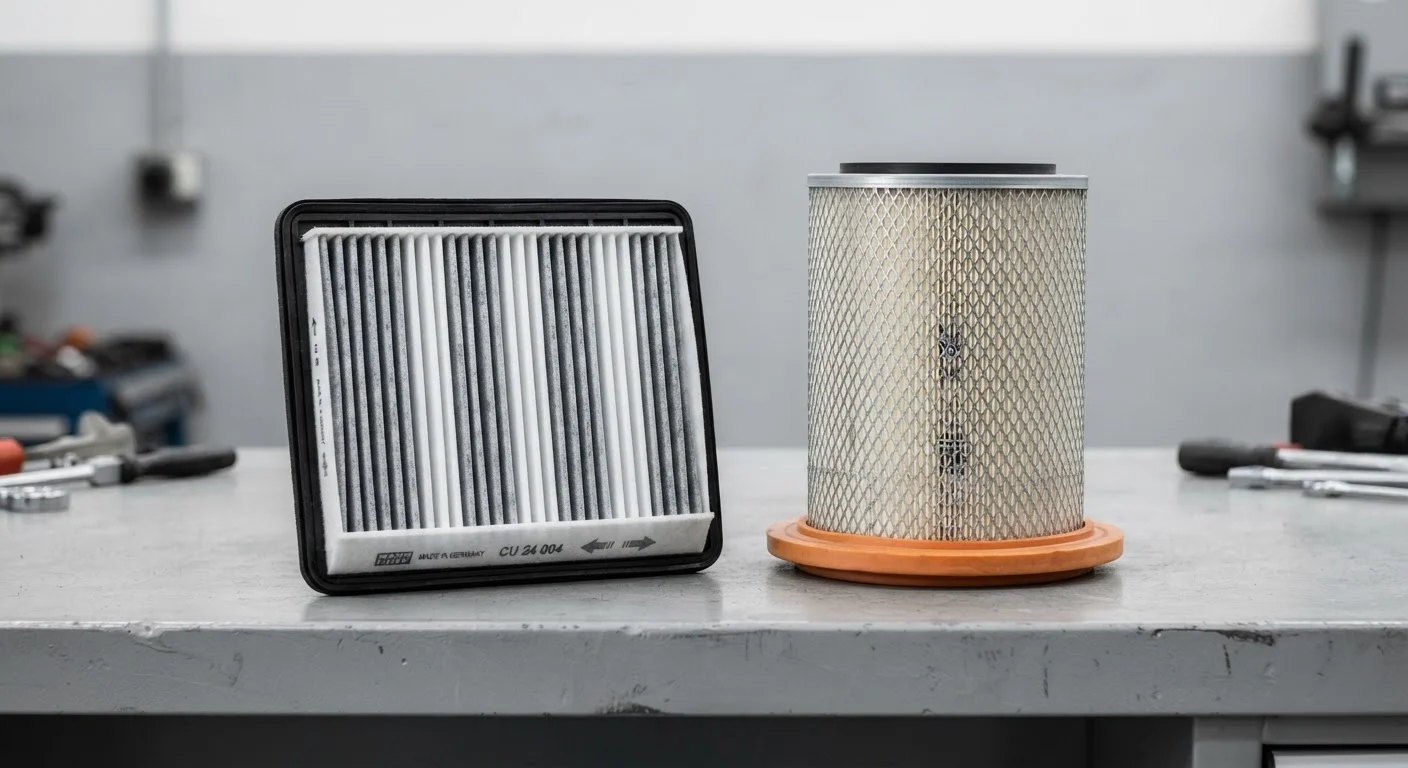
Photo credit: FaqBulletin.com | Information Made Easy
In this article
These two filters are often confused. Learn what each one protects, how often to replace them, and the signs they're overdue.
Key Takeaways
- The cabin air filter cleans air entering the passenger compartment; the engine air filter protects the engine from debris.
- A clogged engine air filter can measurably reduce fuel economy and, over time, cause engine damage.
- Cabin air filter neglect leads to reduced HVAC airflow, bad odors, and poor interior air quality.
- Both filters are typically affordable to replace and accessible for most DIY drivers.
- Replacement intervals differ - always consult your owner's manual for your vehicle's specific schedule.
- Confusing the two filters is common, but the consequences of neglecting each are distinct.
What Each Filter Actually Does
These two filters share a name category but serve entirely separate systems. Understanding their distinct roles is the fastest way to appreciate why neglecting either one carries real consequences.
The cabin air filter - sometimes called a pollen filter or HVAC filter - sits in the airflow path between the outside environment and your vehicle's heating, ventilation, and air conditioning (HVAC) system. Its job is to trap contaminants before they reach the interior: pollen, road dust, mold spores, fine particulate matter, and in some premium filter designs, even exhaust gases. Every breath you take inside the car passes through this filter when the HVAC system is running.
The engine air filter sits in the air intake system and intercepts particulates before they enter the engine's combustion chambers. Engines are precision machines - even small particles of dirt or debris that bypass the filter can cause microscopic abrasion on cylinder walls, piston rings, and other internal components over time. The filter also plays a direct role in the engine's air-fuel mixture: a free-flowing, clean filter allows the correct volume of air into the engine, supporting proper combustion efficiency.
In short: the cabin air filter protects the people inside the car; the engine air filter protects the car itself.
Side-by-Side: Key Differences at a Glance
Although both filters trap airborne particles, their specifications, locations, and replacement consequences vary considerably.
| Criterion | Cabin Air Filter | Engine Air Filter |
|---|---|---|
| What it protects | Passengers and interior air quality | Engine internals and combustion system |
| Location | HVAC system, often behind glove box | Engine intake system, under the hood |
| Typical replacement interval | 15,000-25,000 miles (varies by conditions) | 15,000-30,000 miles (varies by conditions) |
| Key symptom of neglect | Weak airflow, bad odors from vents | Reduced fuel economy, sluggish acceleration |
| Risk of extended neglect | Poor air quality, HVAC strain | Engine wear, potential long-term damage |
| DIY accessibility | Generally easy, minimal tools | Generally easy, minimal tools |
One important nuance: engine air filters are typically subjected to far higher air volumes than cabin air filters, which partly explains why a clogged engine filter can produce more immediate, measurable performance symptoms.
Warning Signs Each Filter Is Overdue
Both filters give you clues when they're past their service life - you just need to know what to look for.
Signs Your Cabin Air Filter Needs Replacement
- Reduced airflow from vents even when the fan is set to maximum
- Musty or stale odors when the HVAC system activates
- Increased dust buildup on interior surfaces, particularly the dashboard
- Allergy or respiratory symptoms worsening during drives
- Visual inspection reveals heavy gray or brown discoloration and visible debris
Signs Your Engine Air Filter Needs Replacement
- Decreased fuel economy - your fill-ups are coming more frequently
- Sluggish acceleration or a noticeable reduction in throttle response
- Check Engine light in some vehicles equipped with mass airflow sensors
- Rough idling or an engine that runs unevenly at low speeds
- Visual inspection shows a filter that is noticeably darkened or caked with debris
Check Both at the Same Service Visit
Since both filters share similar replacement mileage windows and neither requires specialized tools to inspect, it makes practical sense to check them together during routine maintenance. Replacing one while finding the other in good condition costs you nothing extra, and you'll have peace of mind on both fronts. Ask your mechanic to inspect both at your next oil change.
When in doubt, a visual inspection of either filter takes only a few minutes and costs nothing. Many auto parts retailers will inspect and show you the filter without charge.
Replacement Intervals and Practical Guidance
General industry guidelines provide a useful starting point, but your owner's manual is the authoritative source for your specific vehicle. Driving conditions also matter significantly - urban stop-and-go traffic, unpaved roads, high-pollen regions, and wildfire smoke areas all accelerate filter degradation.
15K-25K
Typical cabin filter replacement interval (miles)
General industry guidelines suggest this range, though dusty or high-pollen environments may require more frequent changes.
15K-30K
Typical engine air filter replacement interval (miles)
This range is commonly cited by automotive maintenance resources; off-road or high-dust driving can significantly shorten this window.
Up to 10%
Potential fuel economy loss from a clogged engine filter
The U.S. Department of Energy has noted that fixing a clogged air filter on older carbureted vehicles can improve fuel economy; modern fuel-injected engines may see smaller but still meaningful gains.
Cabin air filter: Many manufacturers suggest replacement every 15,000 to 25,000 miles, though drivers in high-pollen or high-pollution environments may benefit from more frequent changes. The filter is typically located behind the glove box, under the dashboard, or under the hood near the base of the windshield - all generally accessible without specialized tools.
Engine air filter: A common guideline is replacement every 15,000 to 30,000 miles, but this varies widely by engine design and environment. High-dust driving conditions can dramatically shorten this interval. The filter sits inside a plastic housing connected to the intake system, and replacing it is generally considered one of the more straightforward DIY maintenance tasks.
If you're uncertain about tackling either replacement yourself, a qualified mechanic can inspect and replace both filters during a routine service visit. Never delay engine air filter replacement if symptoms of restriction are present - extended neglect can contribute to long-term engine wear.

Author
Automotive Editorial Team
Automotive Editorial Team is the collective byline for our editorial team and contributor network. Articles published under this byline or an editorial pen name are researched, written, and reviewed according to our editorial standards for clarity, consistency, and independence before publication.
View all articles →