
Accommodation Options for Families: Hotels, Vacation Rentals, and Campgrounds Compared
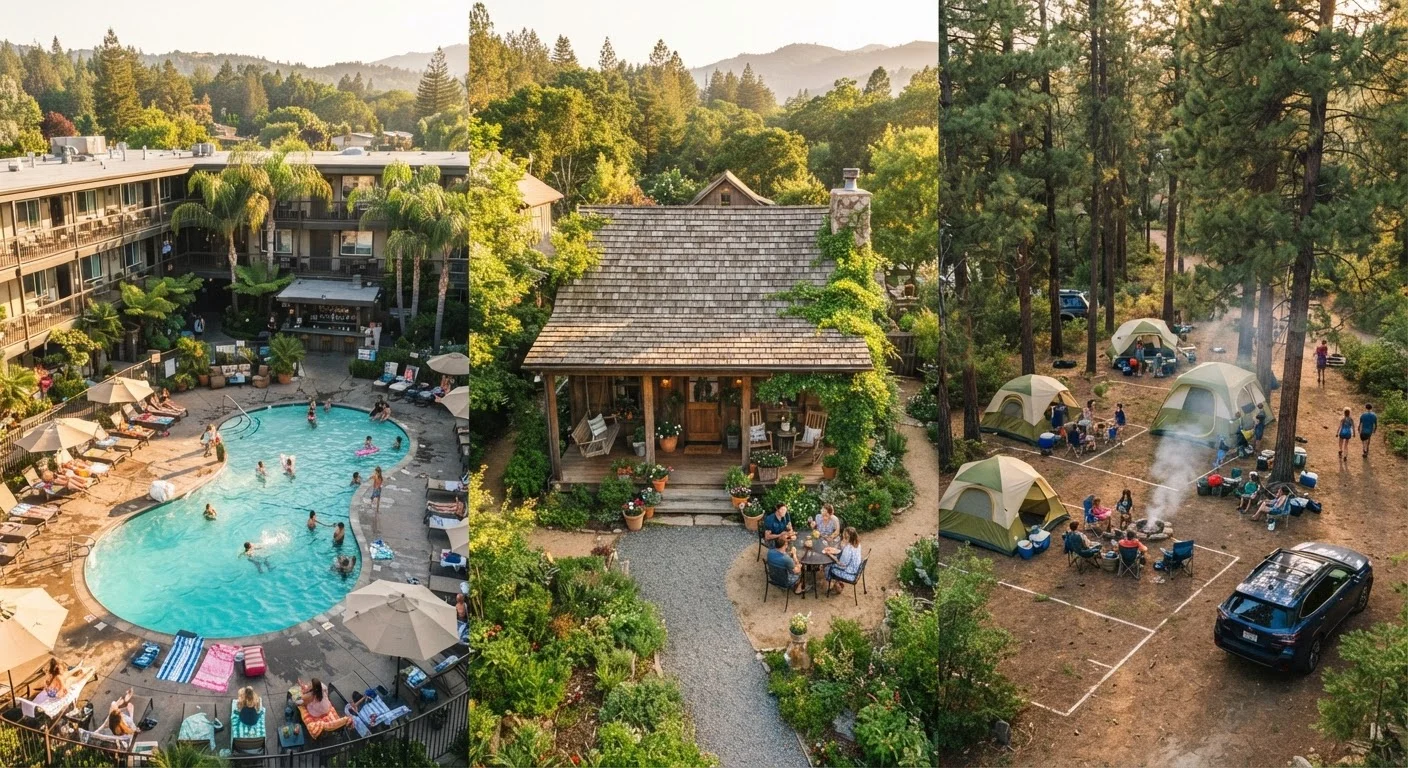
Photo credit: FaqBulletin.com | Information Made Easy
In this article
A side-by-side look at the practical trade-offs between hotels, short-term rentals, and campgrounds for family stays.
Key Takeaways
- Hotels offer reliability and convenience but tend to cost more and provide less living space for families.
- Vacation rentals give families room to spread out and cook, though quality and cancellation policies vary widely.
- Campgrounds are the most budget-friendly option and connect kids with nature, but require gear and flexibility.
- Your ideal choice depends on your family's ages, budget, trip length, and tolerance for logistics.
- Mixing accommodation types across a single trip can balance comfort, cost, and experience effectively.
Why Accommodation Choice Matters More Than You Think
Where your family sleeps doesn't just affect your nightly budget — it shapes the entire rhythm of your trip. A hotel stay in the center of a city creates a completely different vacation than renting a house on a lake or pitching a tent in a national park. Getting the match right between accommodation type and your family's actual needs is one of the highest-leverage decisions in trip planning.
Families face real trade-offs: space versus simplicity, cost versus comfort, flexibility versus reliability. This comparison breaks down each option honestly so you can plan smarter. For a closer look at how destination type intersects with accommodation choice, see our guide on city breaks versus nature destinations.
| Hotels | Vacation Rentals | Campgrounds | |
|---|---|---|---|
| Average nightly cost (family) | $150–$400+ | $100–$300 | $15–$50 |
| Living space | Limited (1–2 rooms) | Generous (full home) | Minimal (tent/RV) |
| Kitchen access | Rarely included | Full kitchen standard | Campfire or camp stove |
| Consistency/predictability | High | Moderate — varies by host | Moderate — weather-dependent |
| Setup required | None | Minimal | Significant (gear needed) |
| Best trip length | 1–3 nights | 4+ nights | Any length |
| Nature immersion | Low | Varies by location | High |
Hotels: Reliable Comfort With Real Limitations
Hotels are the default for a reason — they're consistent, centrally located, and require zero gear. Daily housekeeping, on-site pools, and 24-hour front desks take real pressure off parents. For short trips of one to three nights in urban or theme-park destinations, hotels are hard to beat on sheer convenience.
The core drawbacks for families are space and cost. A standard room sleeps four tightly, and rates in popular destinations can run $200–$400 per night before taxes and resort fees. Dining out for every meal adds up fast. Suite upgrades help but push costs higher. If you're weighing a fully bundled alternative, our honest look at all-inclusive resorts covers when that model makes financial sense.
Negotiate or Bundle for Multi-Night Hotel Stays
If you're booking four or more nights at a hotel, it's worth calling the property directly rather than booking solely through third-party platforms. Some properties offer better room categories, flexible check-in, or modest rate adjustments for direct bookings, particularly at independent hotels. Always ask about connecting rooms if your children are young — availability often isn't shown in online searches.
Vacation Rentals: Space and Savings for Longer Stays
Short-term rental platforms have expanded family options dramatically. A three-bedroom house with a full kitchen, backyard, and laundry often costs the same or less per night than two hotel rooms — and creates a genuinely different experience. Families can stock the fridge, keep nap schedules, and give kids separate space to decompress after long activity days.
The trade-offs are real: cleaning fees can be steep, quality varies more than it does with hotel chains, and cancellation policies range from generous to punishing. Always read recent reviews specifically mentioning families or children, verify the check-in process before you arrive, and confirm that the sleeping arrangements actually match your headcount comfortably. For destinations where rentals are particularly practical, our guide to national parks with kids includes notes on nearby rental communities.
Campgrounds: Budget-Friendly and Genuinely Memorable
Campgrounds — from basic tent sites to full-hookup RV parks — offer the widest range of price points and the most direct connection to nature. National park campgrounds in particular are beloved by families; even a modest site at a well-run park puts kids within steps of trails, wildlife, and starry skies that no hotel can replicate. Nightly rates at public campgrounds typically run $15–$40, making week-long trips financially achievable for most households.
The upfront investment in gear is the primary barrier, and camping does require flexibility around weather and amenities. Younger children need more preparation — reliable sleeping systems and familiar comfort items matter. For families weighing this route as part of a broader outdoor trip, our national parks versus beach resorts comparison explores how the camping-adjacent national park experience stacks up against resort alternatives.
Making the Call: Key Questions to Ask Before You Book
Before defaulting to what you've always done, run through these practical questions:
- How long is the trip? Vacation rentals usually become cost-competitive after four or more nights once you factor in meals cooked at home.
- What are the ages of your kids? Toddlers and infants do better with predictable hotel-style amenities; teens often thrive in campgrounds or rental homes with outdoor space.
- What's your flexibility tolerance? Campgrounds require weather acceptance and planning; hotels and rentals absorb more uncertainty.
- Does your destination shape the choice? Urban destinations favor hotels; lake regions and mountain towns are natural fits for rentals or campgrounds.
For more on building a trip that actually works for your family's real dynamics, our honest look at traveling with children offers grounded, practical perspective. And if you're still narrowing down where to go, our destinations hub is a good starting point.

Author
Travel Editorial Team
Travel Editorial Team is the collective byline for our editorial team and contributor network. Articles published under this byline or an editorial pen name are researched, written, and reviewed according to our editorial standards for clarity, consistency, and independence before publication.
View all articles →