
National Parks With Kids: What Families Actually Experience on the Ground
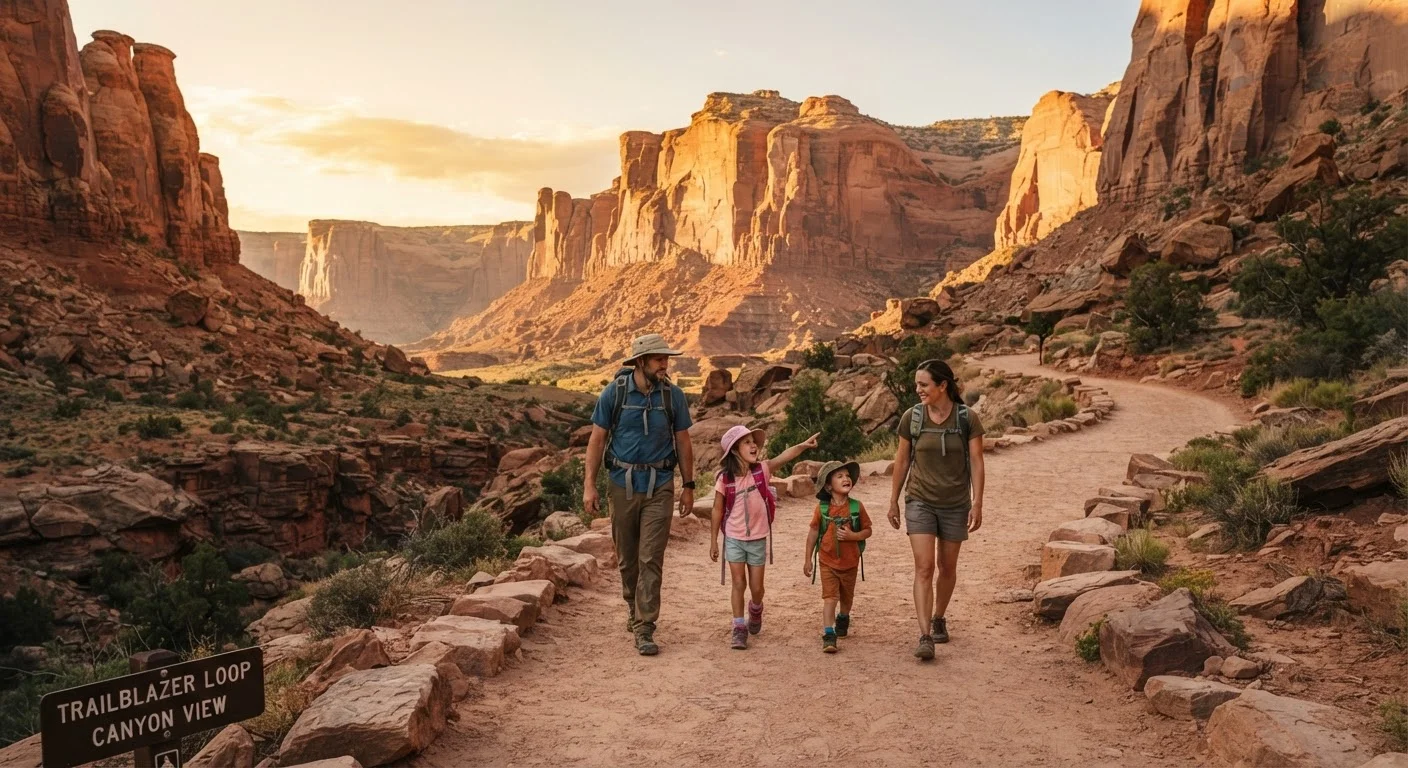
Photo credit: FaqBulletin.com | Information Made Easy
In this article
Beyond the brochure: what hiking trails, visitor centers, and campgrounds are really like when you bring children to America's national parks.
Key Takeaways
- Most national parks have kid-specific programming like Junior Ranger badges that dramatically boost engagement.
- Trail difficulty ratings at parks are designed for average adults — scout conditions before bringing toddlers or young children.
- Visitor center hours and campground amenities vary widely; always verify before arrival, especially in shoulder seasons.
- Crowds at marquee parks like Yellowstone and Grand Canyon can rival theme parks in peak summer — timed entry reservations are increasingly common.
- Half-day outings with built-in rest time consistently outperform ambitious full-day itineraries when traveling with kids.
- Elevation, heat, and altitude sickness are real risks at many parks that families often underestimate.
What 'Kid-Friendly' Actually Means in a National Park
Brochures and travel blogs love phrases like 'suitable for all ages,' but that description can mean wildly different things depending on which park, which trail, and which month you're talking about. A path labeled 'easy' on an NPS map is rated for a moderately fit adult — not a five-year-old who stops to inspect every beetle. Understanding the gap between marketing language and ground reality is the first step to planning a trip your whole family will actually remember fondly.
The good news: the NPS has invested significantly in family-oriented infrastructure. Most major parks offer Junior Ranger activity booklets, ranger-led nature walks scaled for children, and visitor centers with hands-on exhibits. These programs aren't afterthoughts — they're consistently the highlight families report when asked what their kids most enjoyed. Picking up a Junior Ranger booklet at the entrance station is one of the highest-return moves in family travel.
What parks generally can't control is the terrain itself. Altitude, heat, uneven surfaces, and long distances between restrooms are real factors that a motivated six-year-old will eventually bump into. See our guide to avoiding overscheduled family trips for a framework on building breathing room into any itinerary.
Pick Up the Junior Ranger Booklet First
Before hitting any trail, stop at the visitor center and grab the free Junior Ranger activity booklet for your child's age group. It gives kids a tangible mission for the entire visit and ends with an official badge ceremony — which, consistently, kids remember longer than any scenic viewpoint. Most parks have booklets for multiple age ranges, so siblings won't be working on identical tasks.
Trails, Crowds, and the Logistics Nobody Warns You About
The most iconic parks — Yellowstone, Grand Canyon, Zion, Yosemite — draw millions of visitors each year, and summer crowds can genuinely rival theme parks in intensity. Parking lots fill before 9 a.m. at peak-season hotspots. Shuttle systems at Zion and Acadia help manage congestion, but shuttles with tired, overheated children have their own friction points.
Timed-entry reservation systems have become increasingly common. These require families to book a specific entry window ahead of time — sometimes months in advance — on top of any camping or lodging reservations. Missing a timed-entry window means missing the park for that day. Check the official NPS website for current reservation requirements before finalizing any itinerary.
63
Designated national parks in the US
The National Park Service manages 63 national parks — along with hundreds of monuments, recreation areas, and historic sites — across the country.
Free
Admission for children 15 and under
The NPS admits all visitors aged 15 and under at no charge at every national park in the system.
~325M
Annual visits to NPS-managed sites
NPS visitor data consistently shows hundreds of millions of recreational visits annually, making national parks among the most attended natural destinations in the world.
Trail difficulty is the other variable families consistently misjudge. A 'moderate' four-mile round trip at sea level is a very different experience at 10,000 feet of elevation. Children dehydrate faster than adults, and altitude fatigue sets in earlier. Building half-day hikes with guaranteed shade and water access, then adding mileage only if the group has energy to spare, is a consistently smarter approach than committing to a long loop that's difficult to exit early.
For a side-by-side look at how park trips compare to other family vacation formats, the national parks vs. beach resorts comparison lays out the practical trade-offs honestly.
Campgrounds, Lodges, and Where Families Actually Sleep
Accommodation is where national park trips diverge most sharply from resort travel. Options range from tent camping with vault toilets to full-service lodges inside park boundaries. The in-park lodges at places like Grand Canyon's South Rim or Glacier's Lake McDonald Lodge offer unmatched access — you wake up inside the landscape — but they book out months in advance and carry a price that reflects their scarcity.
Campground amenities vary dramatically. Some frontcountry campgrounds have flush toilets, bear-proof food storage, and even electric hookups for RVs. Others have only pit toilets and a flat patch of dirt. Families with young children should confirm amenity levels on recreation.gov rather than assuming. Our accommodation options comparison for families walks through what to expect and weigh across lodging types.
A practical middle path many families use: book a hotel or vacation rental in a gateway town just outside the park boundary, then day-trip in. This trades the immersive experience for predictable beds, real bathrooms, and a kitchen — factors that matter considerably more with young children than travel writers often acknowledge.
Gateway Towns Are a Legitimate Strategy
Staying just outside park boundaries in a gateway town — Gatlinburg near Great Smoky Mountains, Springdale near Zion, Jackson near Grand Teton — is not a compromise; it's a practical strategy used by experienced family travelers. You get real restaurant options, reliable Wi-Fi, and hotel pools that become non-negotiable after dusty trail days. Day-tripping into the park, especially with an early start, often yields a better overall experience than roughing it in a campsite when children are involved.
Making the Experience Land for Kids of Different Ages
Toddlers and preschoolers respond best to sensory-rich, short-burst experiences: a meadow full of wildflowers, a ranger holding a snake skin, the sound of a waterfall heard before it's seen. Long hikes are mostly endured at this age, not appreciated. A carrier backpack for smaller children dramatically extends what's possible.
School-age kids (roughly six to twelve) are the sweet spot for national park travel. They can hike real distances, engage meaningfully with Junior Ranger programs, and retain the awe of seeing a bison herd or a geyser erupt in a way that shapes how they think about the natural world for years. This age group also handles structured exploration well — giving kids a specific mission (spot three different bird species, sketch a rock formation) keeps engagement high on longer trail days.
Teenagers often require a different pitch. Framing a park visit around a genuine challenge — a summit attempt, a photography project, a backcountry day hike — tends to generate more buy-in than presenting it as a passive scenic drive. Involving teens in the pre-trip research and route planning gives them ownership of the experience.
Regardless of age, the families who report the best national park experiences share one consistent trait: they planned for less and left room for spontaneity. The honest look at traveling with children captures this dynamic well — the unplanned moments almost always become the stories worth telling.
Frequently Asked Questions

Author
Travel Editorial Team
Travel Editorial Team is the collective byline for our editorial team and contributor network. Articles published under this byline or an editorial pen name are researched, written, and reviewed according to our editorial standards for clarity, consistency, and independence before publication.
View all articles →