
Honest Look at Traveling with Children: The Upsides, the Struggles, and What Helps
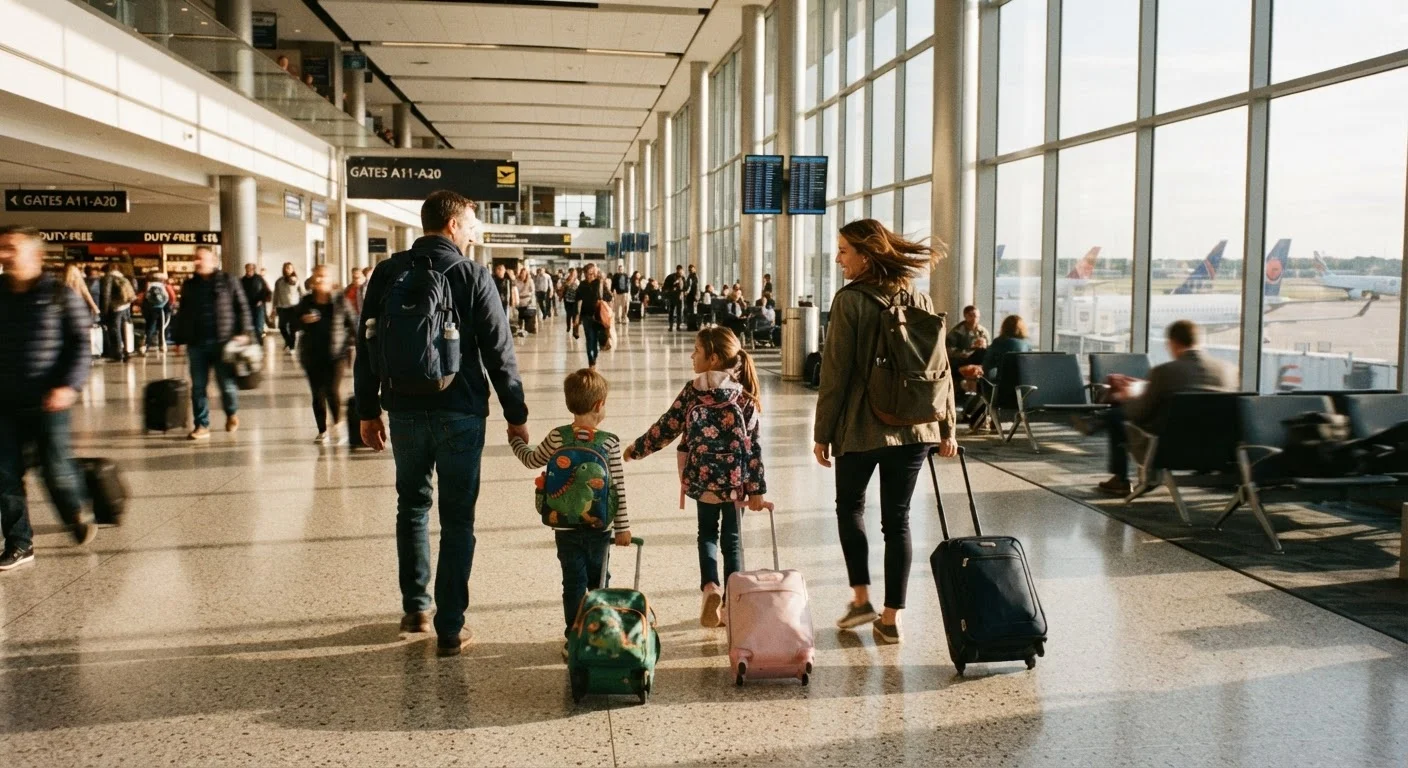
Photo credit: FaqBulletin.com | Information Made Easy
In this article
Family travel is rewarding and exhausting in equal measure. A balanced breakdown of what to expect and how to prepare.
Key Takeaways
- Family travel creates lasting memories and deepens children's curiosity about the world.
- Logistical complexity and costs increase significantly when traveling with kids.
- Flexible planning and realistic expectations reduce stress for the whole family.
- Children's ages and temperaments matter more than the destination itself.
- Preparation beats perfection — building in buffer time is one of the most effective tools families have.
Children experience the world in a uniquely engaged way
Kids notice things adults filter out — a street musician, a funny sign, an unusual smell at a market. These observations often become the most talked-about moments of the trip.
Travel builds real-world learning outside the classroom
History, geography, language, and culture become tangible when a child stands at the edge of the Grand Canyon or hears a different language spoken around them. This kind of learning tends to stick.
Shared experiences strengthen family bonds
Navigating an unfamiliar city together, solving problems on the fly, and laughing at things that go wrong all create a kind of family intimacy that routine daily life rarely generates.
Children adapt more readily than parents expect
Kids are often more resilient and curious about new foods, routines, and environments than adults anticipate, especially when they feel secure and included in the adventure.
Travel expands children's sense of empathy and perspective
Exposure to different ways of living — even within the US — nudges children toward a broader, more curious view of the world and the people in it.
Logistics multiply with every child added
Car seats, strollers, nap schedules, food preferences, and medication needs turn even a simple trip into a detailed operation. What takes a solo traveler 20 minutes to plan can take a family hours.
Travel costs increase substantially with children
Additional airline seats, larger hotel rooms or vacation rentals, admission fees, and the sheer volume of snacks and supplies add up quickly. Budget assumptions from pre-kid trips rarely hold.
Itineraries must bend to children's rhythms
Meltdowns, nap time, and low-blood-sugar moments are non-negotiable. Overscheduled days that work for adults tend to unravel fast with young children in tow.
Parents get significantly less rest
Broken sleep in unfamiliar environments, early wake-ups, and the constant attentiveness required with children means parents rarely come home feeling refreshed.
Illness and disruption are more likely on the road
Children are more susceptible to travel-related illness, and a sick child mid-trip can derail plans entirely. Having a contingency mindset — and travel insurance — is worth thinking through carefully.
What Family Travel Actually Looks Like
Anyone who has traveled with children knows the gap between the Instagram version and the reality. Both are true at the same time: the breathtaking moment your kid sees the ocean for the first time, and the forty-five minutes you spent in a gas station parking lot because someone needed a bathroom and then didn't. Family travel is genuinely wonderful and genuinely hard, often within the same hour.
Understanding that tension upfront — rather than being blindsided by it — is what separates families who come home energized from those who come home swearing they'll never do it again. The trip planning decisions you make before you leave matter enormously, but so does your mindset going in.
Children experience the world in a uniquely engaged way
Kids notice things adults filter out — a street musician, a funny sign, an unusual smell at a market. These observations often become the most talked-about moments of the trip.
Travel builds real-world learning outside the classroom
History, geography, language, and culture become tangible when a child stands at the edge of the Grand Canyon or hears a different language spoken around them. This kind of learning tends to stick.
Shared experiences strengthen family bonds
Navigating an unfamiliar city together, solving problems on the fly, and laughing at things that go wrong all create a kind of family intimacy that routine daily life rarely generates.
Children adapt more readily than parents expect
Kids are often more resilient and curious about new foods, routines, and environments than adults anticipate, especially when they feel secure and included in the adventure.
Travel expands children's sense of empathy and perspective
Exposure to different ways of living — even within the US — nudges children toward a broader, more curious view of the world and the people in it.
The Real Challenges Worth Preparing For
The difficulties of family travel are not reasons to stay home — but they are reasons to plan differently. The biggest ones aren't dramatic; they're logistical and cumulative. Costs creep up in ways families don't anticipate. Schedules that look reasonable on paper collapse against a five-year-old's energy cycle. And parents, who are simultaneously managing all of this, absorb stress that doesn't always show up until day three.
Destination choice matters more than most families realize. A trip that suits your children's ages and interests will run more smoothly than a stunning destination that demands long daily drives or adult-paced museum marathons. Our guide to what families actually experience at national parks is a useful reality check for one popular category of family trip.
Logistics multiply with every child added
Car seats, strollers, nap schedules, food preferences, and medication needs turn even a simple trip into a detailed operation. What takes a solo traveler 20 minutes to plan can take a family hours.
Travel costs increase substantially with children
Additional airline seats, larger hotel rooms or vacation rentals, admission fees, and the sheer volume of snacks and supplies add up quickly. Budget assumptions from pre-kid trips rarely hold.
Itineraries must bend to children's rhythms
Meltdowns, nap time, and low-blood-sugar moments are non-negotiable. Overscheduled days that work for adults tend to unravel fast with young children in tow.
Parents get significantly less rest
Broken sleep in unfamiliar environments, early wake-ups, and the constant attentiveness required with children means parents rarely come home feeling refreshed.
Illness and disruption are more likely on the road
Children are more susceptible to travel-related illness, and a sick child mid-trip can derail plans entirely. Having a contingency mindset — and travel insurance — is worth thinking through carefully.
What Genuinely Helps
Experienced family travelers tend to share a few consistent practices. First, they build more time into every transition than seems necessary — because it always takes longer. Second, they accept that children's needs will reshape the itinerary, and they've already identified which activities they're willing to skip. Third, they involve kids in the planning where possible, which raises buy-in and cuts down on destination-related conflict.
Age Makes a Significant Difference
The experience of traveling with a toddler is fundamentally different from traveling with an eight-year-old or a teenager. Toddlers require more physical management and sleep structure; older children can participate in planning and handle longer activity stretches. Calibrating your destination and itinerary to your children's current developmental stage — not an idealized version of them — is one of the most practical things you can do before booking.
Accommodation choices also shape the entire experience. Families often find that having a kitchen, separate sleeping space, or access to outdoor areas makes a significant difference in daily rhythm. See our comparison of hotels, vacation rentals, and campgrounds for a practical breakdown of what each option actually delivers.
For families thinking through how to structure their days specifically, building a trip itinerary that survives contact with real children walks through the flexible planning approach that tends to work best.
70%
Families who say travel improves family communication
According to a survey by the US Travel Association, a large majority of American families report that travel strengthens their relationships and communication.
2–3x
Typical cost increase when adding two children to a trip
Travel industry analysts generally estimate that families with two children face costs roughly two to three times higher than a couple traveling the same itinerary without children.
Is Family Travel Worth It?
Most families say yes — emphatically — when asked years later. The memories formed during family trips tend to outlast the stress of executing them. Children often remember far less about the destination than about the experience of being somewhere new with their family: the inside jokes, the wrong turns, the unexpected discoveries.
That said, it's worth being honest about where you are as a family. A first-time trip with a two-year-old looks very different from a seasoned family's tenth adventure. If you're new to traveling with kids, what every first-time family traveler should understand about logistics is a grounding place to start. And if you're curious about specific destinations, guides like myths about traveling to Mexico with kids or Hawaii Island vs. Oahu for families can help you match destination to family style rather than going in blind.

Author
Travel Editorial Team
Travel Editorial Team is the collective byline for our editorial team and contributor network. Articles published under this byline or an editorial pen name are researched, written, and reviewed according to our editorial standards for clarity, consistency, and independence before publication.
View all articles →