
Caulk vs. Weatherstripping: Sealing the Right Gap the Right Way
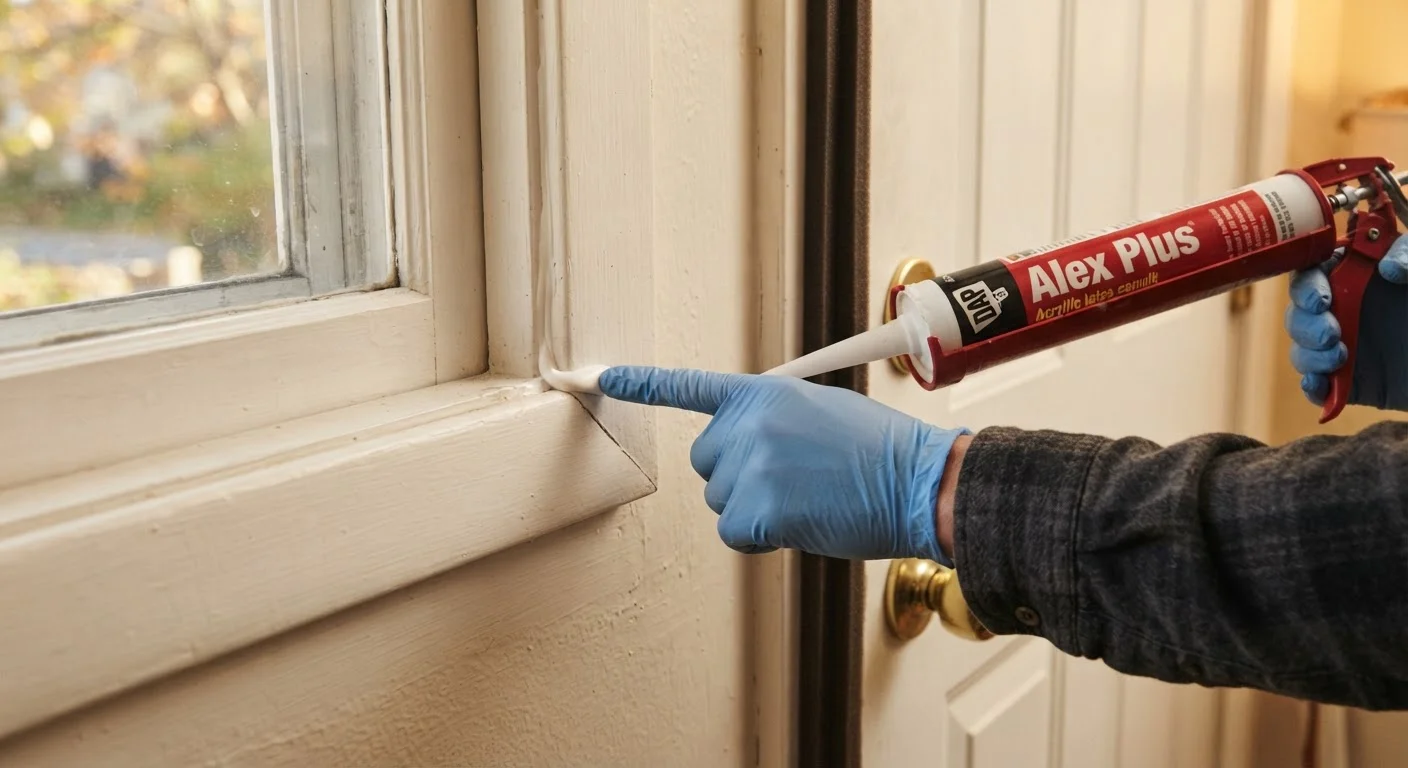
Photo credit: FaqBulletin.com | Information Made Easy
In this article
Caulk and weatherstripping both block drafts, but they're not interchangeable. Here's how to choose the right one for each gap in your home.
Key Takeaways
- Caulk is best for stationary gaps; weatherstripping belongs on moving parts like doors and operable windows.
- Using caulk on a moving door edge will cause it to crack and fail quickly.
- Weatherstripping compresses and releases with each open-and-close cycle without breaking down.
- Most homes need both products — caulk around the frame, weatherstripping on the door or sash.
- Choosing the wrong material wastes money and leaves drafts unresolved.
Why the Distinction Actually Matters
Walk into any hardware store and you'll find an entire aisle dedicated to sealing products. Caulk and weatherstripping sit near each other, both promise to stop drafts, and both cost only a few dollars. So why does it matter which one you grab? Because they work through completely different mechanisms — and applying the wrong one means redoing the job in a single season.
Caulk is an adhesive sealant. It bonds to two surfaces, cures into a semi-flexible bead, and creates an airtight fill that's designed to stay put permanently. Weatherstripping, by contrast, is a compressible material — foam, rubber, felt, or vinyl — that seals a gap by being squeezed between two surfaces each time a door or window closes. It doesn't bond; it creates pressure contact.
The moment you apply caulk to a moving joint, the repeated flexing tears that bond apart. Within weeks you'll see cracks, peeling edges, and the same draft you started with. Weatherstripping applied to a stationary gap, meanwhile, has nothing to compress against — it either falls off or leaves an uneven seal.
| Criterion | Caulk | Weatherstripping |
|---|---|---|
| Best application | Stationary joints and cracks | Moving door and window edges |
| How it seals | Adhesive bond, fills the gap | Compression against a surface |
| Durability on moving parts | Cracks and fails quickly | Designed for repeated flex |
| Typical materials | Silicone, latex, polyurethane | Foam, rubber, vinyl, felt |
| DIY skill level | Beginner — gun and steady hand | Beginner — measure, cut, press |
| Paintable | Yes (latex); No (silicone) | Generally not painted over |
| Exterior use | Yes, with exterior-rated caulk | Yes, with exterior-rated product |
How to Read a Gap Before You Seal It
Before reaching for either product, ask one question: does this surface move? That single answer drives the right choice almost every time.
- Stationary gaps: Joints between a window frame and the wall, cracks in door trim, gaps where pipes or wires enter the house, and seams along baseboards are all fixed. Caulk is appropriate here.
- Moving gaps: The perimeter of a door slab where it meets the stop molding, the bottom of a door at the threshold, and the meeting rails of a double-hung window all move with every use. These need weatherstripping.
A useful field test: close the door or window and slide a piece of paper along the edge. If the paper slides through with little resistance, air is moving through that gap. Identify whether the leaky edge is part of the frame (stationary) or the moving sash or slab, then choose accordingly.
~30%
Home energy loss from drafts and air leaks
The U.S. Department of Energy estimates that drafts and air leaks account for roughly 25–30% of the energy used for heating and cooling in a typical home.
$0–$50
Typical DIY cost for a full door seal
Weatherstripping kits and tube caulk are among the most cost-effective weatherization measures a homeowner can complete in an afternoon.
Applying Each Material Correctly
For caulk: Clean and dry the joint completely before application — caulk won't bond to dusty, wet, or painted-over gaps. Cut the cartridge tip at a 45-degree angle for a controlled bead, apply steady pressure along the joint, and smooth the bead with a dampened finger or tool within a few minutes. Silicone caulk is the most durable choice for exterior or high-moisture areas; latex (paintable) caulk works well for interior trim. Allow full cure time before exposing the joint to water or heavy temperature swings.
For weatherstripping: Measure the perimeter carefully — most products are sold by the foot or in kits. Clean the surface where the adhesive backing will stick, since oils and old adhesive residue reduce grip. For door bottoms, a door sweep or threshold seal is typically more durable than foam tape. Test the door operation after installation: the seal should compress enough to block air but not create so much resistance that the latch won't catch.
One important note: if a door or window frame itself is warped or out of square, no sealing product will fully solve the problem. In that case, a contractor assessment is the right first step before adding any materials.

Author
Home & Garden Editorial Team
Home & Garden Editorial Team is the collective byline for our editorial team and contributor network. Articles published under this byline or an editorial pen name are researched, written, and reviewed according to our editorial standards for clarity, consistency, and independence before publication.
View all articles →