
Micronutrients: The Vitamins and Minerals Your Body Can't Make on Its Own
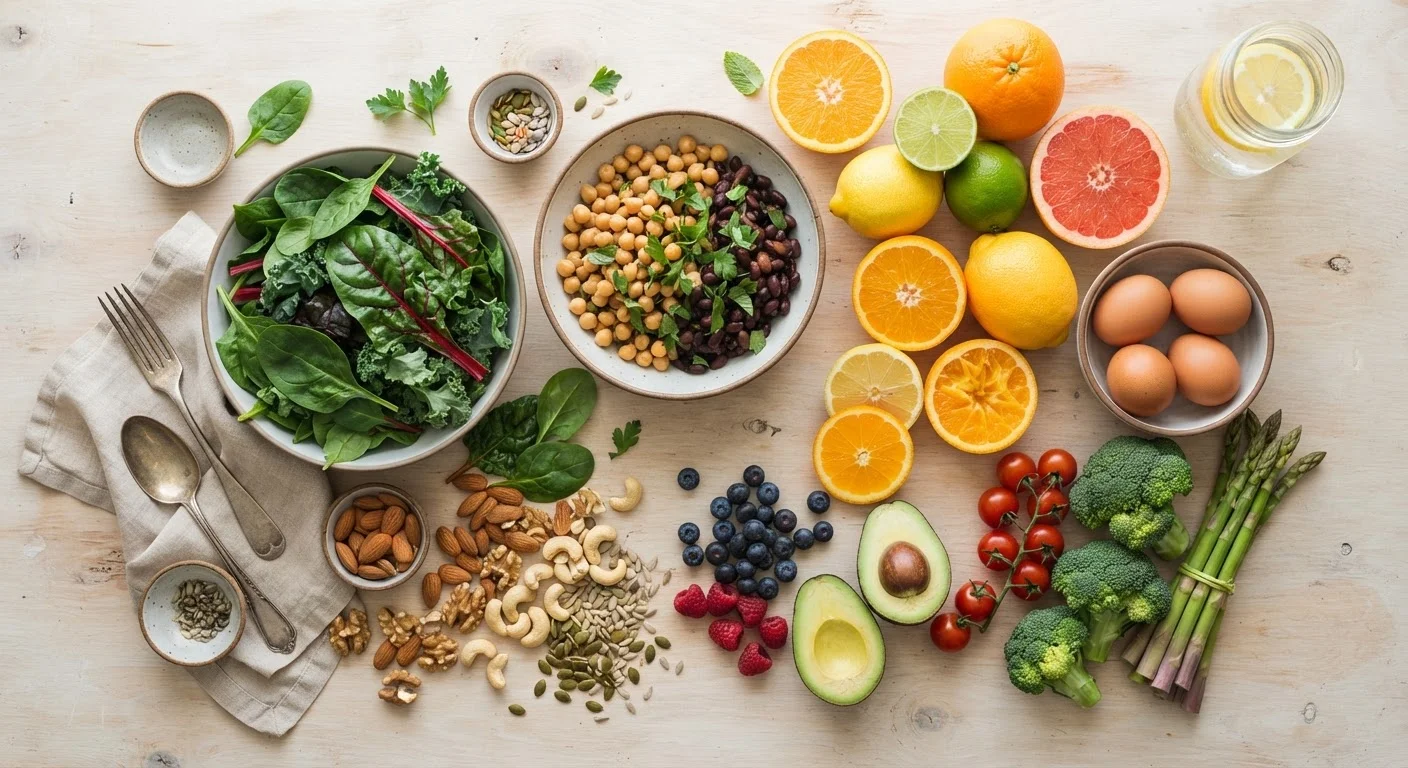
Photo credit: FaqBulletin.com | Information Made Easy
In this article
A plain-language breakdown of essential vitamins and minerals, what they do, and where to find them in everyday foods.
What Are Micronutrients and Why Do They Matter?
When most people think about nutrition, they think about calories — or about carbs, protein, and fat. Those are the macronutrients, the energy-providing building blocks your body uses in large quantities. But there is a second category equally essential to your health: micronutrients, the vitamins and minerals your body needs in smaller amounts yet cannot function well without. (For a side-by-side look at how these categories relate, see our guide to macronutrients.)
Unlike macronutrients, micronutrients provide no calories. Instead, they act as the infrastructure behind almost every biological process — from converting food into usable energy, to synthesizing DNA, to keeping your immune system primed. Critically, the human body cannot manufacture most of them in meaningful quantities, which means they must come from food.
Deficiencies are more common than many households realize and can develop gradually, producing subtle symptoms — fatigue, poor wound healing, brittle nails — long before a clinical diagnosis. Understanding what each micronutrient does and where to find it is a practical first step toward closing those gaps.
| Total essential vitamins | 13 (4 fat-soluble, 9 water-soluble) (National Institutes of Health, Office of Dietary Supplements) |
| Essential dietary minerals | At least 16 recognized as essential (Dietary Reference Intakes, National Academies) |
| Most common deficiency in the US | Vitamin D and iron are among the most frequently reported (CDC Second National Report on Biochemical Indicators of Diet and Nutrition) |
| Fat-soluble vitamin storage site | Liver and adipose (fat) tissue |
| Vitamin B12 plant-based concern | Found almost exclusively in animal-derived foods (National Institutes of Health, Office of Dietary Supplements) |
| Iron absorption booster | Pairing plant-based iron with vitamin C improves uptake (American Journal of Clinical Nutrition) |
The Major Vitamins: Fat-Soluble vs. Water-Soluble
Vitamins fall into two broad categories based on how the body stores and processes them.
Fat-Soluble Vitamins (A, D, E, K)
These dissolve in fat and are stored in fatty tissue and the liver, meaning they can accumulate over time. That storage capacity offers a buffer against brief dietary gaps, but it also means excess intake — typically from high-dose supplements rather than food — carries more risk than with water-soluble vitamins.
- Vitamin A — supports vision (especially in low light), immune function, and skin integrity. Found in liver, dairy, eggs, and as beta-carotene in orange and dark-green vegetables.
- Vitamin D — essential for calcium absorption and bone health; also involved in immune regulation. Synthesized by the skin in sunlight, but dietary sources (fatty fish, fortified dairy, egg yolks) matter for many households, especially in northern climates.
- Vitamin E — an antioxidant that protects cell membranes. Found in nuts, seeds, and vegetable oils.
- Vitamin K — necessary for blood clotting and bone metabolism. Leafy greens such as kale, spinach, and broccoli are the richest sources.
Water-Soluble Vitamins (C and the B Vitamins)
These are not stored in significant amounts — excess is excreted in urine — so consistent daily intake matters more. This group includes eight B vitamins and vitamin C.
- Vitamin C — supports collagen synthesis, wound healing, iron absorption, and immune function. Citrus fruits, bell peppers, strawberries, and broccoli are excellent sources.
- B vitamins — a family that includes thiamin (B1), riboflavin (B2), niacin (B3), pantothenic acid (B5), B6, biotin (B7), folate (B9), and B12. Collectively they drive energy metabolism and support neurological health. B12 is found almost exclusively in animal products, making it a common consideration for people following plant-based diets.
Micronutrient
A vitamin or mineral required by the body in relatively small amounts to support normal function. Unlike macronutrients, micronutrients provide no calories but are essential for metabolic processes, immunity, and tissue maintenance.
Fat-soluble vitamin
A vitamin (A, D, E, or K) that dissolves in fat and is stored in the liver and fatty tissues. Because they accumulate, excessive supplementation carries more risk than with water-soluble vitamins.
Water-soluble vitamin
A vitamin (the B vitamins and vitamin C) that dissolves in water and is not stored significantly in the body. Excess amounts are generally excreted in urine, making consistent daily intake important.
Trace mineral
A mineral the body requires in very small quantities — typically less than 100 mg per day. Examples include iron, zinc, iodine, and selenium. Despite the tiny amounts needed, deficiencies can have significant health consequences.
Heme iron
A form of iron found in animal foods such as meat and fish. It is absorbed more efficiently by the body than non-heme iron, which comes from plant sources and fortified foods.
Daily Value (DV)
A reference amount set by the FDA used on US nutrition labels to show how much of a nutrient a serving provides relative to a general daily target. It helps consumers compare products and identify nutritional gaps.
Key Minerals and Where to Find Them
Minerals are inorganic elements — unlike vitamins, they don't break down with heat or light, but absorption can still be influenced by what you eat them with. They divide broadly into macrominerals (needed in larger amounts) and trace minerals (needed in much smaller quantities).
Macrominerals
- Calcium — the most abundant mineral in the body, critical for bone structure and muscle contraction. Dairy, fortified plant milks, leafy greens, and canned fish with bones are reliable sources.
- Magnesium — involved in over 300 enzymatic reactions including energy production and muscle function. Found in nuts, seeds, legumes, and whole grains.
- Potassium — regulates fluid balance and supports heart and muscle function. Bananas, potatoes, beans, and dairy contribute meaningfully.
Trace Minerals
- Iron — central to oxygen transport via hemoglobin. Heme iron (from meat and fish) is absorbed more readily than non-heme iron (from legumes and fortified grains); pairing plant sources with vitamin C improves uptake.
- Zinc — supports immune response, wound healing, and protein synthesis. Oysters, red meat, poultry, beans, and nuts are good sources.
- Iodine — essential for thyroid hormone production, which governs metabolism. Iodized table salt and seafood are the primary sources in the US diet.
- Selenium — an antioxidant mineral supporting thyroid function. Brazil nuts, tuna, and whole grains contain meaningful amounts.
For practical meal-planning strategies that help your household reach these targets without overthinking every bite, see our week of balanced eating guide.
Getting Micronutrients From Food — and When to Ask About More
A varied, whole-food diet covering multiple food groups remains the most reliable and well-studied way to meet micronutrient needs for most healthy adults. Foods deliver vitamins and minerals alongside fiber, phytonutrients, and other compounds that may enhance absorption and work synergistically in ways isolated supplements cannot fully replicate.
That said, certain groups — including pregnant people, older adults, strict vegans, and those with specific medical conditions or absorption issues — may have needs that diet alone doesn't consistently meet. A healthcare provider can assess whether supplementation makes sense through a conversation and, where appropriate, blood work. Do not start high-dose supplements without professional guidance; fat-soluble vitamins in particular can accumulate to harmful levels.
Nutrition labels are another practical tool: the % Daily Value column on packaged foods reflects micronutrient content and can help you spot where a meal falls short. Our nutrition label guide walks through exactly how to read that information. And if budget is a concern, many of the most micronutrient-dense foods — eggs, canned beans, frozen spinach, oats — are also among the most affordable. See our nutrient value by dollar spent overview for specifics.
This article provides general nutrition information for educational purposes and is not a substitute for personalized medical or dietary advice. Consult a qualified healthcare professional before making significant changes to your diet or starting any supplement regimen.

Author
Health & Wellness Editorial Team
Health & Wellness Editorial Team is the collective byline for our editorial team and contributor network. Articles published under this byline or an editorial pen name are researched, written, and reviewed according to our editorial standards for clarity, consistency, and independence before publication.
View all articles →