
Your First Cat: Everything You Need Before Bringing One Home
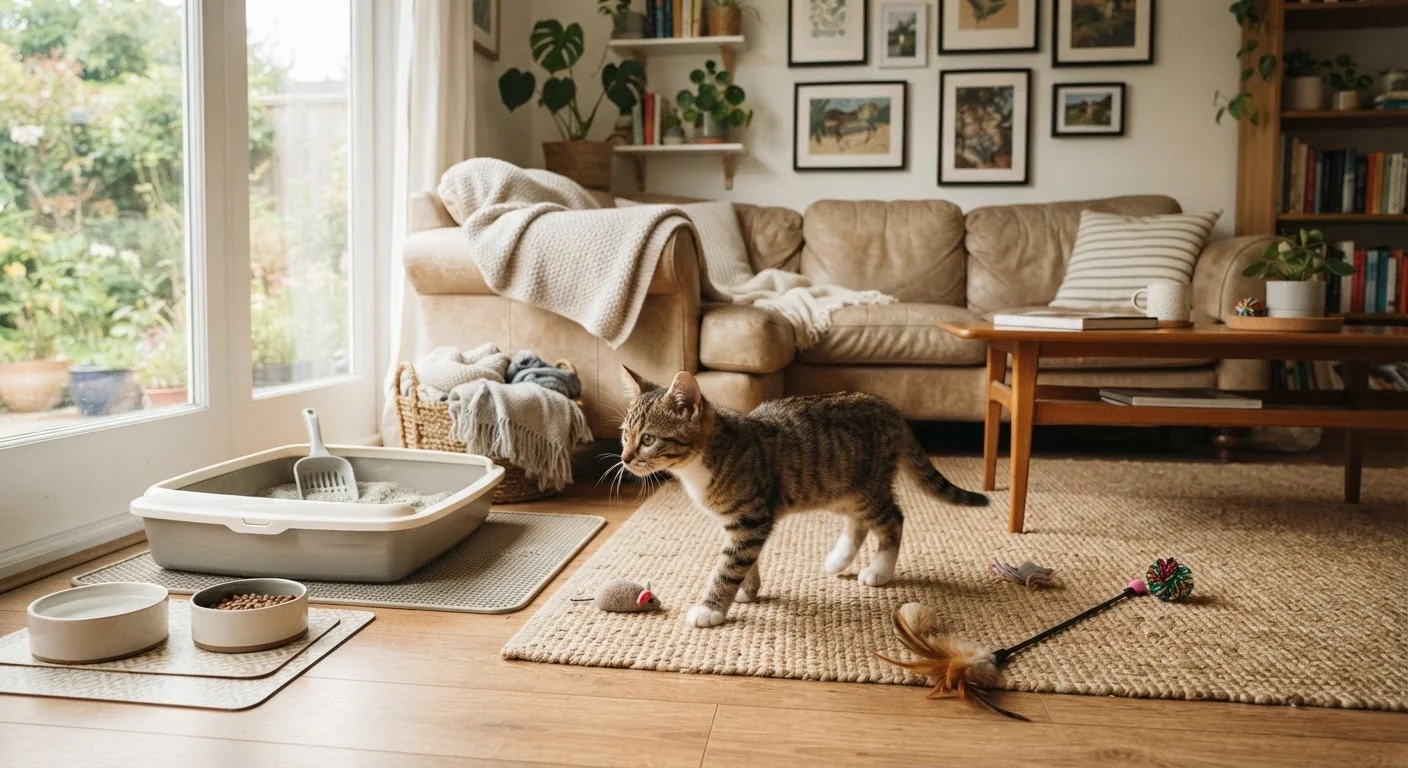
Photo credit: FaqBulletin.com | Information Made Easy
In this article
New to cat ownership? This complete guide covers supplies, vet visits, feeding, litter boxes, and what to expect in the first weeks.
Key Takeaways
- Have all core supplies — food, litter box, carrier, and bedding — ready before your cat arrives home.
- Cat-proofing your space reduces accidents and helps a new cat feel secure faster.
- A first vet visit within the first week is essential for establishing a health baseline.
- Cats are territorial; a slow, room-by-room introduction to your home reduces stress.
- Litter box placement and cleanliness directly affect whether your cat will use it reliably.
- Cats' needs shift significantly across life stages, so anticipate changing care requirements over time.
Essential Supplies to Have Ready on Day One
Walking through the door with a cat carrier and no supplies at home is a recipe for stress — for your cat and for you. Before pickup day, gather these fundamentals:
- Litter box and litter: Unscented, clumping litter is widely preferred by cats and easy to maintain.
- Food and water bowls: Stainless steel or ceramic are hygienic and easy to clean. Avoid deep, narrow bowls that press against a cat's whiskers.
- Age-appropriate food: Kitten food, adult food, and senior formulas have different nutrient profiles. Confirm what stage applies to your cat.
- Carrier: A sturdy, well-ventilated carrier is essential for transport and vet visits.
- Scratching post: Cats scratch to maintain their claws and mark territory. Provide an outlet from day one.
- Safe resting space: A bed or quiet corner with a blanket gives your cat somewhere to decompress.
Obligate carnivore
An animal that must eat meat to survive because its body cannot synthesize certain essential nutrients from plant sources. Cats fall into this category, which is why their diet must be animal-based.
AAFCO
The Association of American Feed Control Officials. This organization sets the nutritional standards that pet food manufacturers use to formulate and label foods as complete and balanced.
Taurine
An amino acid that cats cannot produce in sufficient quantities on their own. It must come from their diet, and deficiency can lead to serious heart and vision problems.
FVRCP vaccine
A core combination vaccine for cats that protects against feline viral rhinotracheitis, calicivirus, and panleukopenia — three common and potentially serious respiratory and gastrointestinal diseases.
FeLV / FIV
Feline leukemia virus and feline immunodeficiency virus are two contagious viruses that affect a cat's immune system. Testing at the first vet visit is standard practice for cats with unknown histories.
If you're also thinking through the broader financial and logistical side of welcoming a pet, the approach mirrors the checklist mindset in our guide before you bring home a small pet.
Preparing Your Home: Cat-Proofing and Safe Spaces
Cats are curious, agile, and motivated to investigate everything at eye — and ceiling — level. Before your cat arrives, walk through each room with these hazards in mind:
- Toxic plants: Lilies, pothos, and sago palm are among many common houseplants that are toxic to cats. The ASPCA maintains a comprehensive toxic plant database worth consulting.
- Loose cords and strings: These are chew and swallowing risks. Secure or conceal electrical cords.
- Small openings: Cats can squeeze into spaces behind appliances, inside cabinets, or under recliners. Check for gaps before giving your cat access to a room.
- Open windows and balconies: Screens should be secure. Falls from height are a significant cause of injury in cats.
Start your cat in a single room rather than the full house. A confined space is less overwhelming and makes it easier for your cat to locate the litter box and food reliably. Expand access gradually over the first week or two.
Use a 'base camp' approach for settling in
Set up one comfortable room with all essentials — food, water, litter box, and bedding — and let your cat explore that space first before opening access to the rest of the home. This reduces overwhelming sensory input and makes it much easier for your cat to find what it needs. Most cats are ready to expand their territory within a week or two.
Feeding Your Cat: Nutrition Basics
Cats are obligate carnivores — meaning their bodies require nutrients found only in animal tissue and cannot produce certain amino acids, like taurine, on their own. A commercially prepared cat food labeled as "complete and balanced" by the Association of American Feed Control Officials (AAFCO) is formulated to meet those requirements.
Key feeding considerations:
- Life stage matters: Kittens need higher calories and different nutrient ratios than adults or seniors. The guide feline life stages explains how nutritional needs shift as your cat ages.
- Wet vs. dry food: Wet food contributes significantly to your cat's water intake, which supports kidney and urinary tract health. Many veterinarians recommend incorporating wet food regularly.
- Fresh water always: Cats often drink more from moving water sources. A cat water fountain can help encourage adequate hydration.
- Portion control: Free-feeding dry food can lead to overeating. Measured meals twice daily is a common veterinarian recommendation, though needs vary by cat.
Never feed cats dog food as a substitute — it lacks taurine and other feline-specific nutrients.
Litter Box Setup and Hygiene
The litter box is one of the most consequential pieces of cat equipment you'll own. Poor setup is among the most common reasons cats eliminate outside the box. Follow these evidence-informed principles:
- Size: The box should be roughly 1.5 times the length of your cat. Many commercially sold boxes are undersized for adult cats.
- Number: The standard recommendation is one box per cat, plus one. For one cat, that means two boxes in different locations.
- Placement: Quiet, low-traffic areas work best. Avoid placing boxes next to loud appliances like washing machines or directly next to food and water bowls.
- Cleanliness: Scoop at least once daily. Cats avoid dirty boxes, which leads to accidents elsewhere. Replace litter fully and wash the box regularly.
- Covered vs. uncovered: Some cats prefer covered boxes for privacy; others find them trap odors uncomfortably. Observe your cat's preference.
First Vet Visit and Preventive Care
A veterinary wellness exam within the first week establishes a health baseline, catches hidden issues — such as intestinal parasites common in shelter and stray cats — and confirms vaccination status. Bring any records provided by the shelter, breeder, or previous owner.
At your first visit, your veterinarian will typically:
- Perform a full physical examination
- Review and update vaccinations (core vaccines include rabies and FVRCP)
- Test for feline leukemia virus (FeLV) and feline immunodeficiency virus (FIV) if status is unknown
- Check for internal and external parasites
- Discuss spay or neuter status and timing if applicable
- Recommend a deworming or flea prevention protocol if needed
For more detail on the spay/neuter decision specifically, our article on what spaying and neutering involves is a practical next read.
This article provides general educational information about cat care and is not a substitute for personalized veterinary advice. Always consult a licensed veterinarian for guidance specific to your cat's health.
What to Expect in the First Few Weeks
New cats — even confident, friendly ones — routinely hide, eat less, and sleep more in their first days home. This is normal stress behavior, not a sign something is wrong. Most cats begin to settle within one to two weeks as they become familiar with scents, sounds, and routines.
Signs your cat is adjusting well:
- Gradually exploring more of the space
- Eating and drinking consistently
- Using the litter box reliably
- Seeking proximity to you, even if not yet comfortable with touch
During this period, keep the environment as calm as possible. Limit loud gatherings, give children clear guidance on gentle interaction, and avoid forcing your cat out of hiding. Let your cat set the pace.
If your household is adding a cat alongside a dog, the adjustment timeline and introduction approach differ significantly — the guide on the first 30 days with a new dog offers useful context for the canine side of that equation.
Patience in these early weeks pays dividends. Cats that are given time to acclimate on their own terms typically develop stronger bonds with their owners and adapt more thoroughly to household routines.
Frequently Asked Questions

Author
Pets Editorial Team
Pets Editorial Team is the collective byline for our editorial team and contributor network. Articles published under this byline or an editorial pen name are researched, written, and reviewed according to our editorial standards for clarity, consistency, and independence before publication.
View all articles →