
Indoor vs. Outdoor Housing for Small Pets: Weighing the Trade-Offs
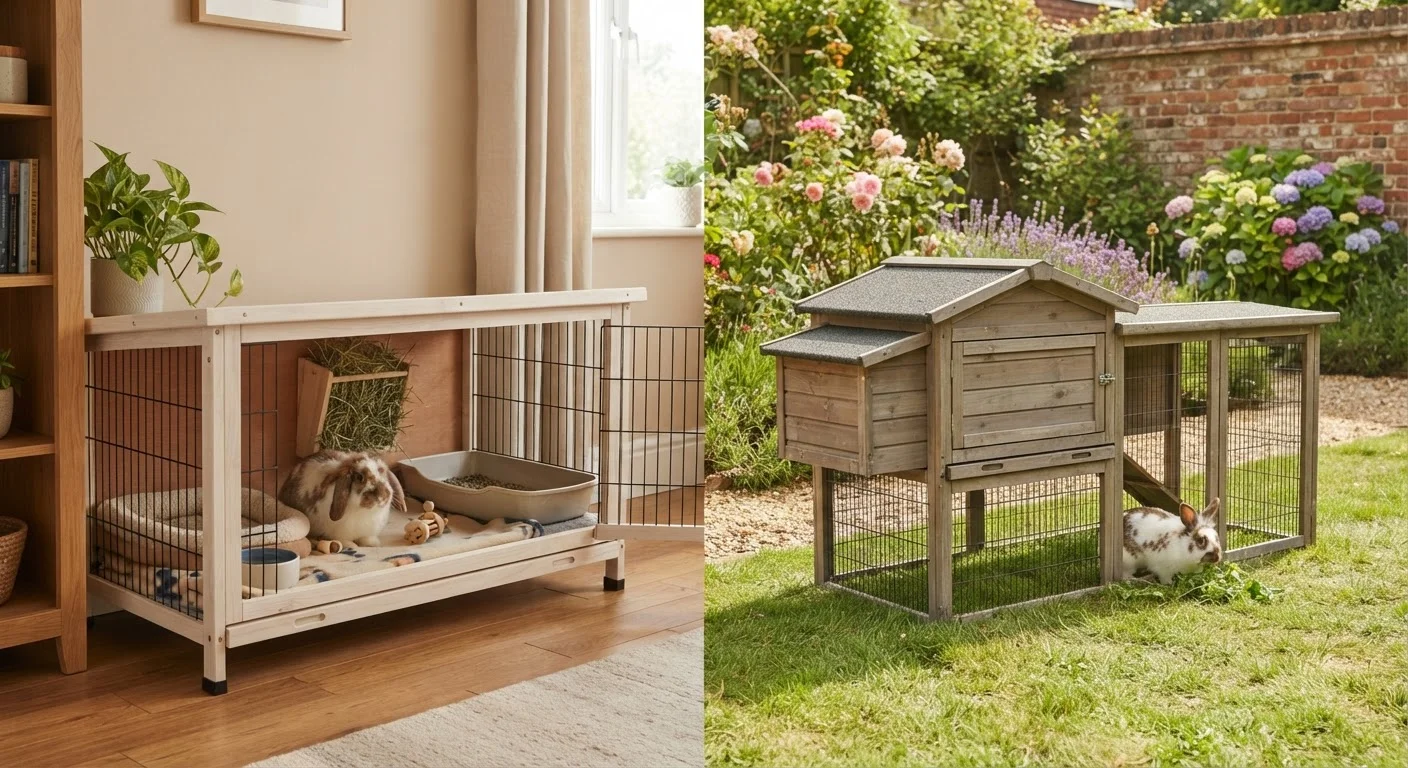
Photo credit: FaqBulletin.com | Information Made Easy
In this article
Should your rabbit or guinea pig live inside or outside? Explore the safety, climate, and wellbeing factors that shape the right decision for your setup.
Key Takeaways
- Indoor housing offers stable temperatures and easier daily monitoring, reducing stress and illness risk.
- Outdoor setups can provide more space but require significant investment in predator-proofing and weatherproofing.
- Guinea pigs are especially temperature-sensitive and are generally considered unsuitable for outdoor living in most U.S. climates.
- Rabbits can live outdoors safely only with purpose-built, secure enclosures and attentive seasonal management.
- Whichever setup you choose, enrichment, social contact, and veterinary care remain equally critical.
Why Housing Location Matters More Than Most Owners Realize
For dogs and cats, the indoor-versus-outdoor debate is well-covered territory. But for rabbits, guinea pigs, hamsters, and other small pets, the stakes are often higher and less widely understood. These animals have narrow temperature tolerances, are prey species with acute stress responses to unfamiliar sounds and smells, and — critically — tend to mask illness until symptoms are advanced. See our guide to spotting early warning signs in small pets for more on that last point.
Where a small pet lives directly influences how well owners can monitor them, how stable their environment stays, and how exposed they are to predators, parasites, and infectious disease. It also shapes the quality and frequency of human interaction — something that matters enormously for social species like rabbits and guinea pigs.
Neither option is universally correct. The right answer depends on the species, your climate, your available space, and your household's capacity to maintain the setup safely.
| Criterion | Indoor Housing | Outdoor Housing |
|---|---|---|
| Temperature stability | Consistent year-round | Seasonal risk; requires management |
| Predator exposure | Minimal | High; requires robust proofing |
| Daily monitoring ease | High — pet is visible routinely | Requires deliberate daily checks |
| Space for movement | Often limited by enclosure size | Larger runs more feasible |
| Natural light exposure | Reduced unless near windows | Full natural light cycle |
| Parasite and disease risk | Lower | Higher (wildlife contact) |
| Suitable for guinea pigs | Yes — strongly preferred | Generally not recommended |
| Human interaction frequency | Higher — proximity helps | Lower — requires intentional effort |
The Case for Indoor Housing
Keeping small pets indoors removes several of the most serious risks associated with outdoor living: sudden temperature swings, predator stress (even a neighborhood cat prowling outside a hutch at night can trigger dangerous stress responses in prey animals), and exposure to wild-animal-borne parasites or diseases.
Indoor environments also make daily observation far easier. When your rabbit's water bottle or food bowl is in the same room you walk through each morning, you're far more likely to notice subtle behavioral changes — reduced appetite, lethargy, or abnormal posture — that can be early illness signals. This kind of passive monitoring is much harder to maintain with an animal housed in a backyard outbuilding.
For guinea pigs specifically, the indoor option isn't just preferable — most veterinary organizations consider it the appropriate default. Guinea pigs are highly sensitive to both cold and heat, with a comfortable range generally cited as 65–75°F. U.S. summers in many regions, and winters nearly everywhere, routinely exceed these bounds outdoors. Our guinea pig housing setup guide covers indoor enclosure sizing and layout in detail.
The main tradeoffs indoors are space and allergens. Many commercial hutches marketed for indoor use are genuinely too small for rabbits or guinea pigs to move freely — a problem that requires a deliberate enclosure upgrade, not just whatever fits in a corner of the living room.
65–75°F
Safe temperature range for guinea pigs
Veterinary guidance consistently cites this range as the comfort zone for guinea pigs; outside it, heat stroke or hypothermia risk rises sharply.
~70%
Rabbit health issues linked to husbandry
The House Rabbit Society and exotic vets frequently note that the majority of rabbit health problems seen in practice are related to diet, environment, or housing conditions.
The Case for Outdoor Housing
Outdoor housing, when properly constructed and maintained, can offer meaningful benefits — particularly for rabbits, which are more cold-tolerant than guinea pigs and benefit from exposure to natural light cycles. Large, secure runs allow for more natural movement and foraging behavior, which supports physical and psychological wellbeing in ways that even a well-enriched indoor enclosure may not fully replicate.
For households where indoor space is genuinely limited or where human family members have allergies, an outdoor setup may also be the more sustainable long-term solution.
The risks, however, are significant and require honest assessment. Predator-proofing must be comprehensive — not just a wire mesh lid, but a fully enclosed, reinforced structure with hardware cloth (not standard chicken wire, which predators can breach) on all sides and a solid floor or buried apron to prevent digging entry. Foxes, raccoons, coyotes, and domestic dogs all pose real threats in American suburban and rural settings.
Weather management is the other major commitment. Outdoor hutches need insulation for winter, shade and ventilation for summer, and waterproofing year-round. In most northern U.S. climates, extreme cold periods will require temporary relocation indoors regardless. Owners should research typical temperature ranges for their specific region before committing to a permanent outdoor setup. For a broader look at how the location debate plays out across species, our indoor vs. outdoor cat comparison covers parallel trade-offs in feline care.
Making the Right Call for Your Household
The single most useful question to ask is whether you can realistically maintain the setup you're considering through all four seasons. An outdoor hutch that works well in May can become a welfare problem in January or July if the infrastructure and daily routine haven't been planned for extremes.
Species matters enormously here. Hamsters are strictly indoor animals — they are not cold-tolerant and are far too vulnerable to predators for outdoor housing. Rabbits have more flexibility, but still require substantial commitment if kept outside. Guinea pigs, as noted, are almost always better served by indoor living in American climates. If you're still deciding on a species, our hamster vs. gerbil comparison explores how different small rodents suit different household setups.
Whichever arrangement you choose, the fundamentals of good small-pet care remain identical: appropriate space, environmental enrichment, a species-correct diet, social interaction, and routine veterinary attention. Housing location changes the risks you need to manage — it doesn't change those core obligations. Our household readiness checklist is a useful next step for anyone still in the planning stage.
Outdoor Doesn't Mean Low-Maintenance
A common misconception is that outdoor housing reduces the daily care burden for small pets. In practice, it often increases it. Outdoor enclosures require daily checks for damage, predator attempts, and weather impacts — in addition to the standard feeding, cleaning, and health observation that any small pet needs regardless of where they live.
This article provides general educational information about small pet housing and is not a substitute for guidance from a qualified exotic animal veterinarian familiar with your pet's specific needs and local conditions.

Author
Pets Editorial Team
Pets Editorial Team is the collective byline for our editorial team and contributor network. Articles published under this byline or an editorial pen name are researched, written, and reviewed according to our editorial standards for clarity, consistency, and independence before publication.
View all articles →