
Guinea Pig Housing: Space, Bedding, and Setup Explained
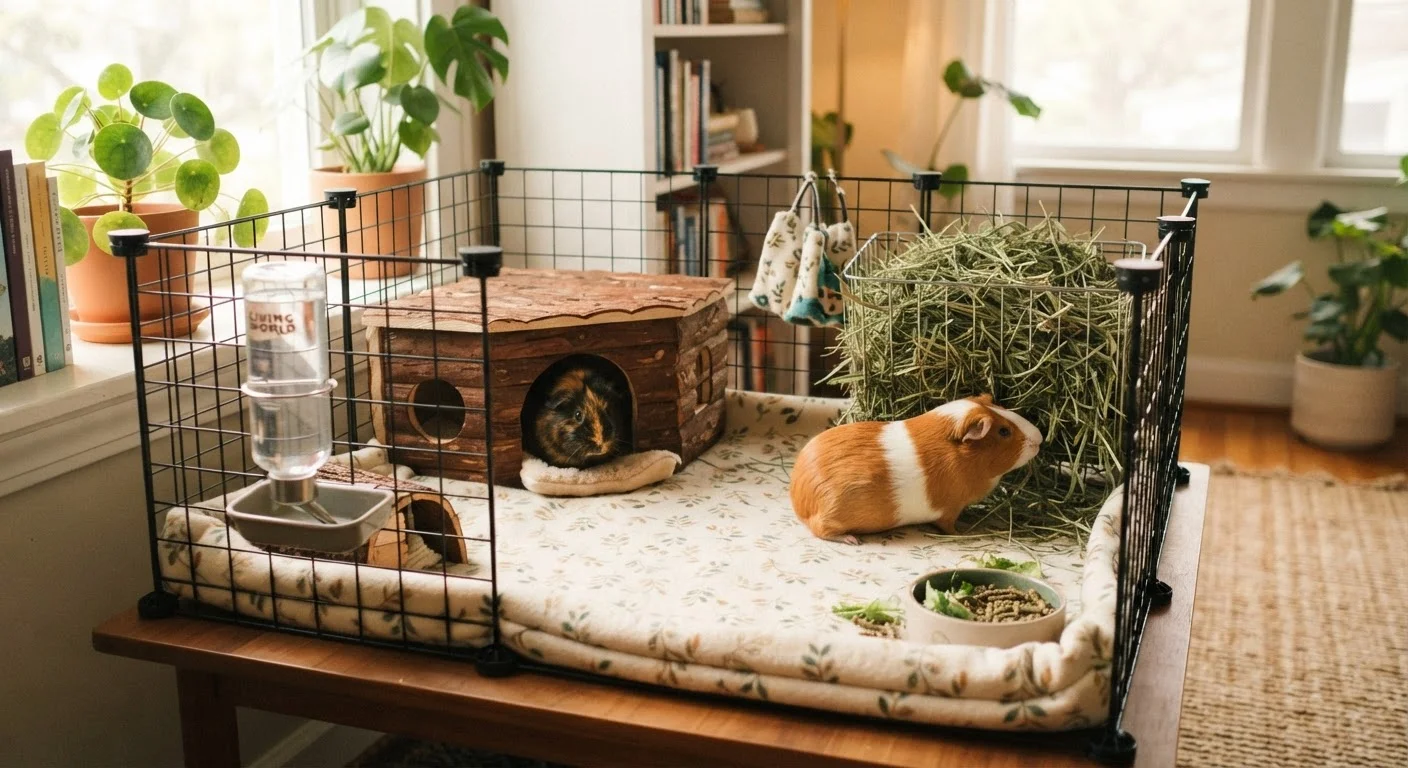
Photo credit: FaqBulletin.com | Information Made Easy
In this article
Everything you need to know about creating a safe, comfortable home for guinea pigs — cage size, bedding types, and layout considerations.
Key Takeaways
- Guinea pigs need significantly more floor space than most starter cages provide — bigger is always better.
- Bedding choice directly affects respiratory health, foot comfort, and how often you need to clean.
- Guinea pigs are social animals; their enclosure should comfortably accommodate at least two cavies.
- The habitat should include a hide, a hay station, a water source, and room to explore.
- Placement matters — avoid drafts, direct sunlight, and high-traffic areas that cause chronic stress.
- Indoor housing is generally safer and allows you to monitor your pets more closely.
Why Enclosure Size Is Non-Negotiable
Guinea pigs are active, curious animals that naturally roam several miles a day in the wild. In a home setting, their enclosure needs to compensate for that lost range — and most cages marketed as "guinea pig cages" in retail stores fall well short of what these animals actually require.
The widely cited minimum for a single guinea pig is 7.5 square feet of usable floor space. For a pair — which is the recommended minimum for social wellbeing — that figure climbs to at least 10.5 square feet. Many small-animal welfare groups encourage owners to go larger still, particularly for active or younger animals.
C&C (cubes and coroplast) enclosures have become popular with experienced owners because they're modular, affordable, and easy to size up. Traditional glass tanks are generally poor choices: they restrict airflow, trap ammonia, and make it difficult to interact with your guinea pigs from the side.
7.5 sq ft
Minimum recommended floor space for one guinea pig
Widely cited by small-animal welfare organizations as the lower bound for a single cavy; pairs need 10.5 sq ft or more.
2+
Recommended minimum number of guinea pigs to house together
Guinea pigs are highly social animals; solitary housing is associated with increased stress and behavioral problems according to animal welfare guidelines.
65–75°F
Safe ambient temperature range for indoor guinea pigs
Guinea pigs are sensitive to both heat and cold; temperatures above 80°F risk heat stroke, while drafty or cold conditions can cause respiratory illness.
Before committing to any enclosure, measure your available space and ensure the cage fits both your room and your guinea pigs' needs. If you're still preparing your home for a new pet, our household readiness checklist can help you work through the full setup process.
Choosing the Right Bedding
Bedding serves multiple functions: it cushions your guinea pig's feet, absorbs waste, controls odor, and — critically — affects their respiratory health. Choosing poorly in this area is one of the most common mistakes new owners make.
Paper-Based Bedding
Unscented, paper-based bedding is a reliable standard option. It's highly absorbent, dust-reduced (important for sensitive airways), and widely available. Look for versions free of dyes and artificial fragrances.
Fleece Liners
Washable fleece liners have gained a strong following among guinea pig owners. When properly layered with an absorbent underlayer, fleece wicks moisture away from the surface, keeping paws drier. The upfront cost is higher, but ongoing costs drop significantly. Fleece requires washing every two to three days to stay hygienic.
What to Avoid
- Cedar shavings: The phenols (aromatic oils) in cedar are toxic to small animals' respiratory systems — avoid entirely.
- Non-kiln-dried pine: Similar concerns apply; only kiln-dried pine is considered lower risk, and many owners choose to skip it altogether.
- Scented bedding: Artificial fragrances mask odor for humans but irritate guinea pig airways.
Test Fleece Before Committing
New fleece must be washed several times before use to break down the water-repellent finish applied during manufacturing. If water beads on the surface rather than soaking through, the fleece isn't ready — keep washing. A simple water-drop test on a flat piece tells you when it's absorbent enough to use safely.
Whichever bedding you use, maintaining a layer of loose hay — particularly timothy hay — in the enclosure doubles as enrichment and supports healthy digestion. Learn more about what guinea pigs need nutritionally in our guide to what guinea pigs actually eat.
Laying Out the Enclosure for Comfort and Enrichment
Once you have the right enclosure and bedding, thoughtful layout turns a bare cage into a functional home. A well-organized space reduces stress, encourages natural behaviors, and makes daily care easier for you.
Essential Zones to Include
- Hide / shelter:
- Every guinea pig needs at least one enclosed hideaway. For two guinea pigs, provide two hides — this prevents one animal from monopolizing the only retreat during social tension.
- Hay station:
- Unlimited timothy hay should be available at all times. A hay rack or hay bag keeps it off the floor and reduces waste.
- Water source:
- A water bottle or a heavy ceramic bowl both work; the key is freshness — change the water daily and clean the container weekly.
- Food bowl:
- Pellets and fresh vegetables are served in a heavy, tip-resistant bowl placed away from the hay area to minimize contamination.
- Open run space:
- Leave enough open floor area for your guinea pigs to move, "popcorn" (the happy jumping behavior), and explore without obstruction.
Placement of the enclosure in your home matters too. Keep it away from exterior walls that get cold in winter, windows with intense afternoon sun, and high-traffic areas that prevent your guinea pigs from settling into a calm routine. Guinea pigs placed near constant noise or vibration often show signs of chronic stress, which can make them harder to tame and handle over time.
Enclosure Placement and Household Noise
Guinea pigs have sensitive hearing and can be stressed by loud televisions, speaker systems, or heavy foot traffic nearby. Choose a room where the household has a relatively calm ambient noise level — a living room corner away from the main TV area or a quieter bedroom often works well. Consistent low-level background noise (like soft conversation) is far less stressful than sudden loud sounds.
Aim to refresh your layout occasionally — moving hides, adding a cardboard tunnel, or rearranging the food station gives your guinea pigs novel stimulation without requiring major investment.
Frequently Asked Questions

Author
Pets Editorial Team
Pets Editorial Team is the collective byline for our editorial team and contributor network. Articles published under this byline or an editorial pen name are researched, written, and reviewed according to our editorial standards for clarity, consistency, and independence before publication.
View all articles →