
What Guinea Pigs Actually Eat — and What to Keep Away From Them
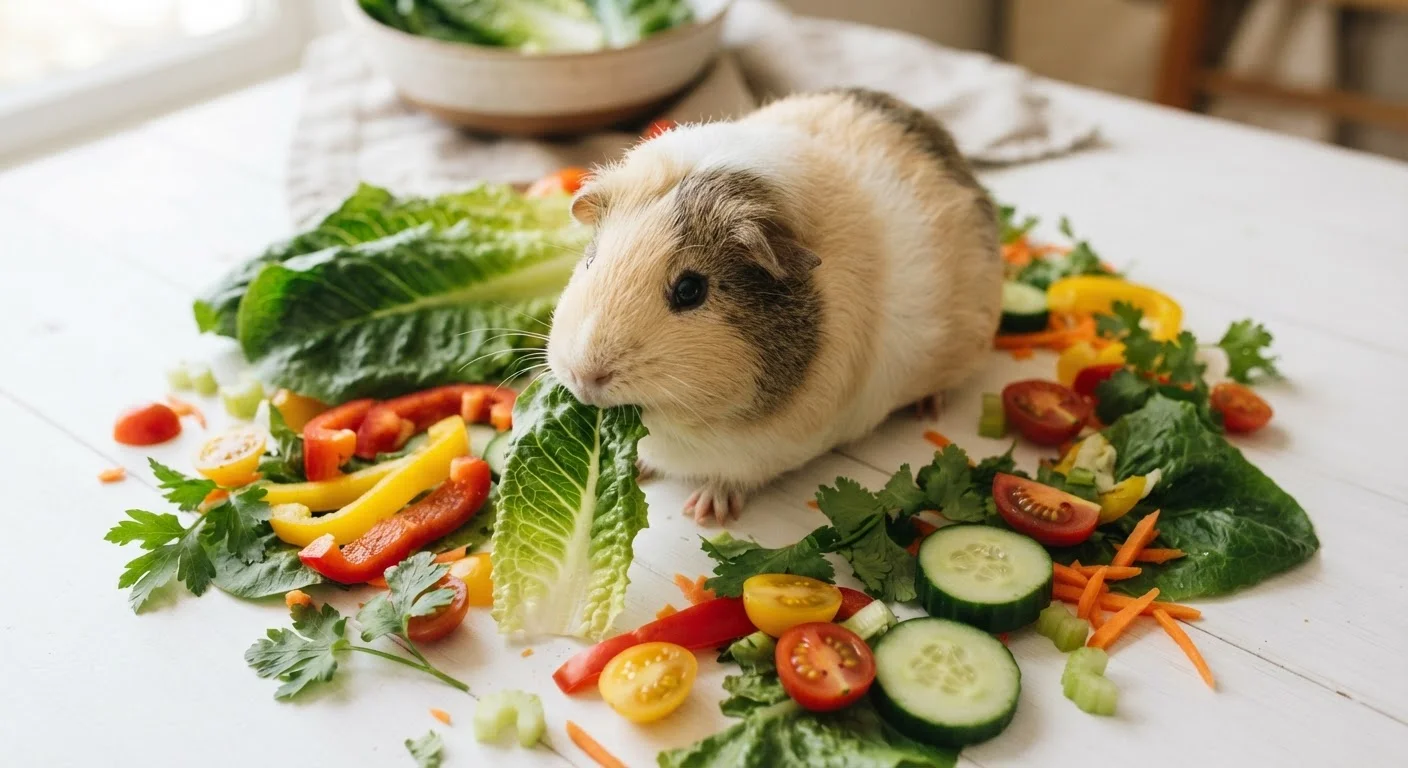
Photo credit: FaqBulletin.com | Information Made Easy
In this article
Guinea pig nutrition goes beyond pellets. Understand which fresh foods support their health and which common kitchen items are surprisingly dangerous.
The Foundation: What Guinea Pigs Need Every Day
Guinea pig nutrition is built on three pillars: unlimited grass hay, a measured portion of fresh vegetables, and a small daily serving of fortified pellets. Understanding why each matters — and in what proportion — is the most practical thing any owner can do for their pet's long-term health.
Hay: Non-Negotiable and Unlimited
Timothy hay (or another grass hay such as orchard grass or meadow hay) should make up roughly 80% of a guinea pig's diet. It keeps their continuously growing teeth worn down and provides the fiber their digestive system requires to function properly. A guinea pig that doesn't eat enough hay is at serious risk of dental and gut problems. Always keep the hay rack full.
Pellets: A Supplement, Not a Staple
Guinea pig-specific pellets fill nutritional gaps that hay alone can't cover. A standard guideline used by many exotic animal veterinarians is approximately one-eighth cup of plain, timothy-based pellets per guinea pig per day — though portion guidance should always be confirmed with your vet based on your pet's size and health. Avoid pellet mixes containing seeds, dried fruit, or colorful puffed pieces; these add sugar and encourage selective eating.
Vitamin C: The Critical Detail
Unlike many mammals, guinea pigs cannot synthesize their own vitamin C. Deficiency leads to scurvy — a serious, preventable condition. Fresh vegetables are the most reliable delivery method; avoid relying solely on vitamin C drops added to water, which degrade quickly and may go untouched.
Safe Fresh Foods — and How Much to Offer
Fresh vegetables should be offered daily, amounting to roughly one cup of mixed produce per guinea pig. Variety is important for both nutritional breadth and enrichment. The following are among the safest and most nutritionally valuable options:
- Bell peppers (all colors) — among the highest natural sources of vitamin C; red peppers are especially rich
- Leafy greens — romaine lettuce, green leaf lettuce, cilantro, and parsley are excellent choices
- Cucumber — hydrating and well-tolerated; feed with skin on
- Zucchini — mild and digestively gentle
- Herbs — fresh dill and basil add variety and vitamin value
Fruit can be offered sparingly — a small piece of strawberry or a thin apple slice (seeds removed) once or twice a week is fine. Fruit's sugar content makes it a treat, not a staple. Always introduce any new food gradually to avoid digestive upset, and remove uneaten fresh food within a few hours to prevent spoilage.
Scurvy
A disease caused by inadequate vitamin C, resulting in weakness, swollen joints, and poor wound healing. Guinea pigs are particularly vulnerable because they cannot synthesize their own vitamin C.
Solanine
A naturally occurring toxic compound found in members of the nightshade family, including green or raw potatoes. It is harmful to guinea pigs and several other small animals.
Persin
A fungicidal toxin found in avocado leaves, skin, pit, and flesh. It is toxic to many animals, including guinea pigs, and should be strictly avoided.
Oxalic acid
An organic compound found in certain foods like rhubarb and spinach. In large amounts, it can interfere with calcium absorption and cause urinary and kidney issues in small animals.
For a broader look at how diet fits into overall small pet care, see the full guide to guinea pig housing and setup, which covers the environmental side of keeping these animals thriving.
Foods That Are Dangerous — Keep These Away
Many common kitchen ingredients that seem harmless are genuinely toxic to guinea pigs. The following should never be offered:
- Onions, garlic, leeks, and chives — all members of the allium family damage red blood cells and can cause life-threatening anemia
- Potatoes — especially raw or green-tinged potatoes, which contain solanine, a compound toxic to small animals
- Rhubarb — the leaves are highly toxic; the stalks also contain oxalic acid in harmful amounts
- Avocado — contains persin, which is toxic to many small animals
- Mushrooms — risk varies by variety, but best avoided entirely
- Iceberg lettuce — not toxic outright, but very high in water and low in nutrients; regular feeding can cause loose stools
- Dairy, meat, or processed human food — guinea pigs are strict herbivores; these offer no nutritional benefit and can cause serious digestive harm
Because guinea pigs often mask discomfort until symptoms become pronounced, a dietary mistake may not be obvious until real damage has occurred. The guide to spotting early warning signs in small pets is worth reviewing alongside any changes to your feeding routine.
When to Call Your Vet
If your guinea pig stops eating, appears lethargic, has loose stools lasting more than a day, or shows signs of weight loss, contact an exotic animal veterinarian promptly. Small animals can decline quickly when unwell, and dietary-related issues are often treatable when caught early. Do not wait to see if symptoms resolve on their own.
Guinea pig diet needs share some similarities with rabbit nutrition, but the specifics differ in meaningful ways — particularly around vitamin C. See the truth about rabbit diet myths for a useful comparison.
This article is for general informational purposes only and is not a substitute for veterinary advice. Always consult a qualified exotic animal veterinarian for guidance specific to your pet's health and dietary needs.

Author
Pets Editorial Team
Pets Editorial Team is the collective byline for our editorial team and contributor network. Articles published under this byline or an editorial pen name are researched, written, and reviewed according to our editorial standards for clarity, consistency, and independence before publication.
View all articles →