
Hamster vs. Gerbil: Which Small Rodent Fits Your Household?
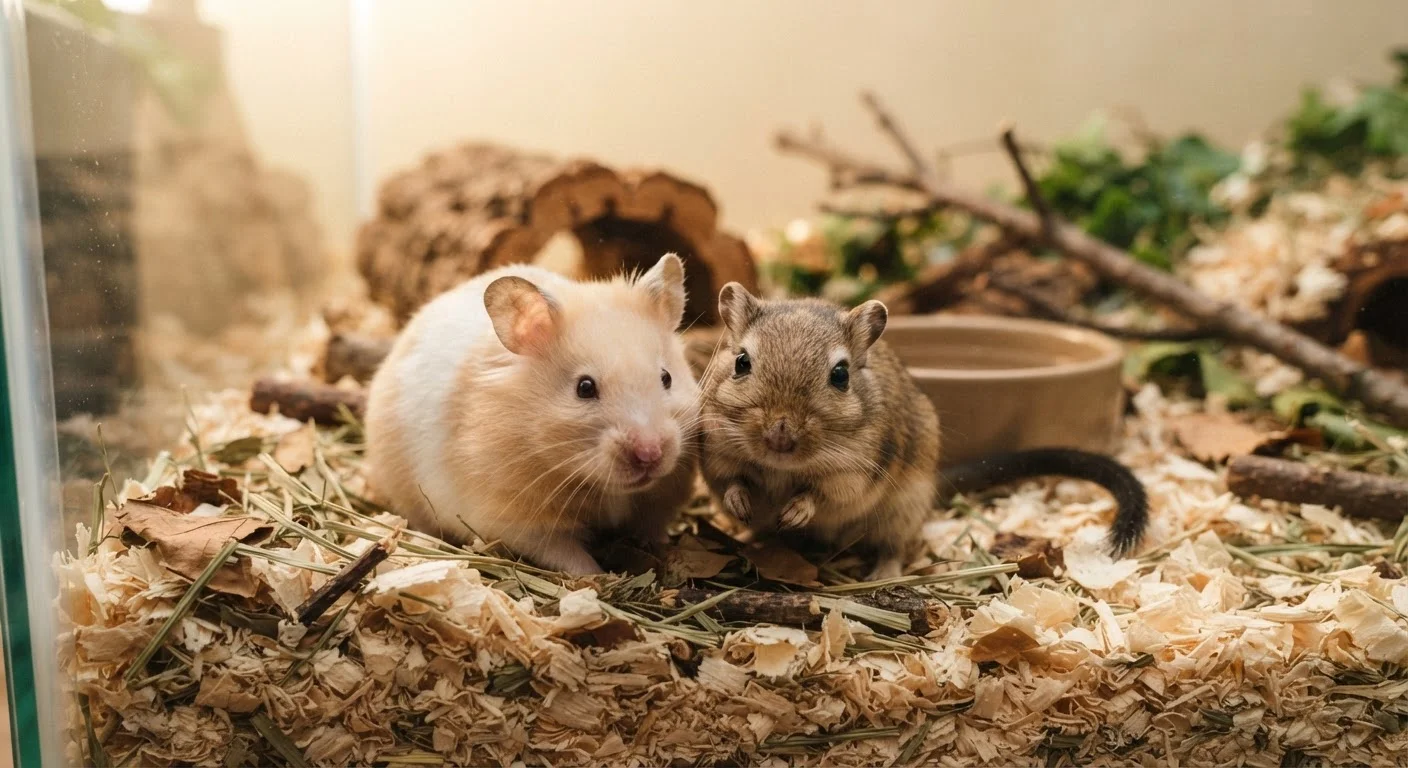
Photo credit: FaqBulletin.com | Information Made Easy
In this article
Hamsters and gerbils may look similar, but their social needs, activity patterns, and care requirements differ in important ways.
Key Takeaways
- Hamsters are solitary by nature; gerbils need to be housed in same-sex pairs or small groups.
- Most hamster species are primarily nocturnal, while gerbils are more active during daylight hours.
- Gerbils tend to live slightly longer on average — roughly 3–5 years compared to 2–3 years for most hamsters.
- Both species require gnawing materials, proper ventilation, and species-appropriate bedding depth.
- Gerbils are generally faster and harder for young children to handle safely than hamsters.
- Either species can thrive in a household that matches its specific social and environmental needs.
Social Needs and Housing Requirements
The single biggest difference between hamsters and gerbils is how they relate to members of their own species. Hamsters — especially the Syrian, or golden, hamster — are territorial and must be housed alone. Placing two Syrian hamsters together often results in serious fighting. Dwarf hamster species (such as Roborovski and Campbell's) can sometimes coexist in pairs, but this requires careful introduction and monitoring.
Gerbils, on the other hand, are highly social animals that suffer from stress and depression when isolated. Veterinary and animal welfare organizations consistently recommend keeping gerbils in same-sex pairs or small groups. A lone gerbil is widely considered an inadequate welfare arrangement.
This distinction shapes enclosure setup as well. A solitary hamster needs adequate square footage — typically a minimum of 450 square inches of unbroken floor space, though more is always better — along with deep bedding for burrowing. A gerbil pair benefits from a glass tank-style enclosure with deep substrate for tunneling, plus room for social play. Before committing to either species, review our household readiness checklist to make sure your space and setup are prepared.
| Criterion | Hamster | Gerbil |
|---|---|---|
| Social structure | Solitary (most species) | Pairs or small groups required |
| Activity pattern | Primarily nocturnal | Active in daytime bursts |
| Typical lifespan | 2–3 years | 3–5 years |
| Ease of handling | Generally calmer, hand-tames well | Fast-moving, requires dexterity |
| Minimum housing | 450+ sq in floor space, solo | Tank-style for pair, deep substrate |
| Burrowing needs | Deep bedding essential | Deep substrate for tunneling |
| Odor level | Moderate; regular cleaning needed | Generally lower odor |
| Cost of ownership | One animal's food and supplies | Budget for two animals minimum |
Activity Patterns and Handling
Hamsters are primarily nocturnal, meaning they sleep through much of the day and become active at dusk. This can frustrate children or owners who expect daytime interaction. Waking a sleeping hamster typically leads to stress for the animal and sometimes a defensive nip. If your household is most active in the evenings, a hamster's schedule may actually align well with yours.
Gerbils follow a more crepuscular and diurnal pattern — active in short bursts that can occur throughout the day and night. This makes them more visible and engaging during typical waking hours for most households.
When it comes to handling, Syrian hamsters are generally considered more manageable for children due to their slower movement and tendency to become hand-tame with regular, gentle interaction. Gerbils are quick, agile, and curious — qualities that make unsupervised handling by young children risky. For a realistic look at how either species fits into a family environment, see our guide on small pets for families with young children.
3–5 yrs
Average gerbil lifespan
Gerbils generally outlive most hamster species by one to two years, according to commonly cited small animal veterinary references.
450 sq in
Minimum hamster floor space
Many animal welfare organizations recommend at least 450 square inches of unbroken floor area as a baseline for a single hamster's enclosure.
2+
Gerbils needed for healthy social life
Veterinary and exotic animal welfare guidance consistently states that a solitary gerbil is insufficient for the species' social and psychological wellbeing.
Diet, Lifespan, and Everyday Care
Both hamsters and gerbils thrive on a base diet of commercially formulated pelleted or block food designed for their species, supplemented with small amounts of fresh vegetables and occasional protein sources such as mealworms. Seeds and mixes are popular with owners but can lead to selective feeding — animals may pick out high-fat seeds and leave behind the nutritious pellets. Always provide fresh, clean water via a sipper bottle or shallow dish appropriate to the species.
Lifespan is a meaningful consideration for households with children. Most Syrian hamsters live approximately 2–3 years; dwarf species tend to fall in a similar or slightly shorter range. Gerbils typically live 3–5 years, though individual variation is common. A longer lifespan means a longer commitment — and potentially more emotional investment if a child bonds closely with the animal.
Both species require routine cage cleaning (spot cleaning daily, full substrate changes regularly), gnawing materials to manage continuously growing teeth, and species-safe enrichment such as wheels, tunnels, and foraging opportunities. Housing decisions — including temperature, placement away from drafts, and ventilation — also affect long-term health. Our article on indoor vs. outdoor housing for small pets covers relevant environmental factors worth reviewing before you set up any small pet enclosure.
This article provides general educational information about hamsters and gerbils as pets. It is not a substitute for guidance from a veterinarian familiar with small animal or exotic pet care. Consult a qualified vet with questions about your specific animal's health, diet, or behavior.

Author
Pets Editorial Team
Pets Editorial Team is the collective byline for our editorial team and contributor network. Articles published under this byline or an editorial pen name are researched, written, and reviewed according to our editorial standards for clarity, consistency, and independence before publication.
View all articles →