
Scheduled Feeding vs. Free Feeding: How Each Approach Affects Cat Health
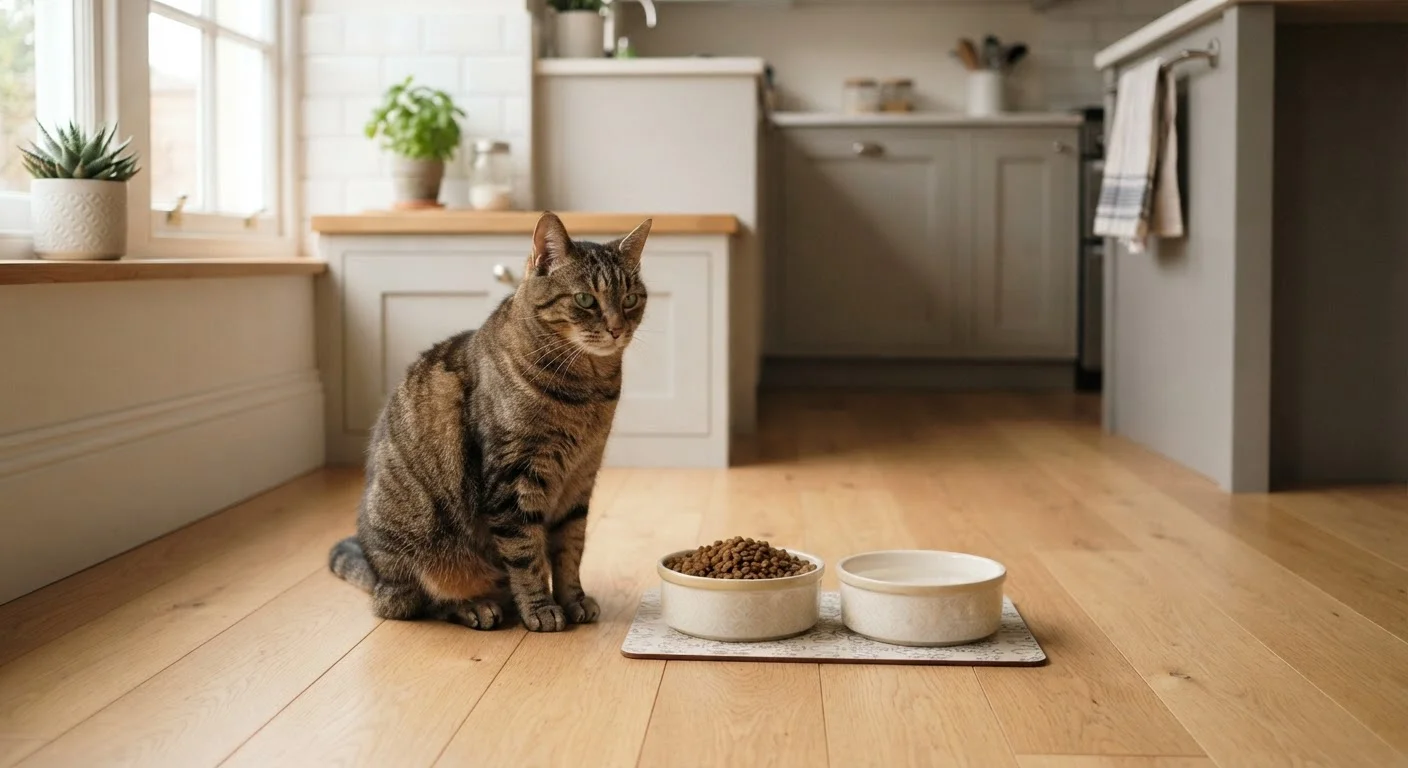
Photo credit: FaqBulletin.com | Information Made Easy
In this article
Leaving food out all day versus timed meals — a side-by-side look at how each feeding method influences weight, behavior, and digestion.
Key Takeaways
- Scheduled feeding makes it easier to monitor how much your cat eats each day.
- Free feeding suits some cats well but significantly increases obesity risk over time.
- Multi-cat households almost always benefit from scheduled, separate feeding stations.
- A cat's life stage — kitten, adult, or senior — should influence which method you choose.
- Your veterinarian is the best resource for tailoring a feeding routine to your individual cat.
What Each Feeding Method Actually Means
Scheduled feeding (also called meal feeding) involves offering your cat a measured portion at set times — typically twice daily for adults — then removing any uneaten food after 20 to 30 minutes. Free feeding means filling a bowl with dry food and allowing your cat to graze at will throughout the day.
A third approach, timed-dispenser or puzzle feeding, blends elements of both: food is rationed but released in small amounts across several sessions. This is worth considering if enrichment is a priority — see enrichment activities that satisfy a cat's natural hunting instincts for how puzzle feeders can support natural foraging behavior.
The method you choose shapes not just caloric intake but also your cat's daily routine, stress levels, and your ability to notice early signs of illness.
Weight Management and Caloric Control
Feline obesity is one of the most common preventable health conditions seen in veterinary practice. According to the Association for Pet Obesity Prevention, a significant proportion of cats in the United States are estimated to be overweight or obese — a trend closely linked to ad-libitum (unrestricted) access to food.
~60%
U.S. cats estimated overweight or obese
The Association for Pet Obesity Prevention has estimated that a majority of domestic cats in the U.S. carry excess body weight, with unrestricted feeding identified as a leading contributing factor.
2–4 hrs
Safe window for wet food at room temperature
Veterinary food safety guidelines generally recommend discarding uneaten wet cat food after two to four hours to reduce bacterial growth risk.
Scheduled feeding gives owners direct control over daily caloric intake. Because portions are measured, it's far easier to align food volume with the amount recommended by your veterinarian or the food manufacturer's guidelines. Weight adjustments — increasing or decreasing portions — can be made precisely.
Free feeding, by contrast, relies on the cat self-regulating. While some cats do manage their intake well, many do not — especially indoor cats with limited physical activity. Calorie-dense dry kibble sitting in a bowl around the clock creates a strong opportunity for habitual overeating. This matters even more as cats age; consult how a cat's needs change from kittenhood to senior years to understand how metabolism shifts over time.
Behavioral and Psychological Effects
Cats are crepuscular hunters by nature — wired to pursue small, frequent prey rather than graze continuously. Scheduled meals can mirror this instinct more closely, creating anticipation and routine. Many owners report that meal-fed cats are more engaged, playful, and attentive around feeding times, which can support a stronger human-cat bond.
Free feeding can reduce mealtime enthusiasm and, in some cases, contribute to boredom-driven eating — a behavior parallel to stress-eating in people. However, for cats with anxiety, constant food availability may provide a degree of comfort. Context matters here: a cat's indoor environment, activity level, and social situation all intersect with feeding behavior. Those factors are explored in depth in our guide on setting up a cat-friendly home.
Use Mealtime as a Health Check
One underrated advantage of scheduled feeding is that it turns every meal into a quick health assessment. If a cat that normally finishes its food leaves significant portions untouched, that's an early signal worth noting. Track appetite changes over two to three days and contact your veterinarian if a healthy cat consistently refuses food.
Multi-Cat Households: A Critical Consideration
In homes with more than one cat, feeding method has an outsized impact on social dynamics. Free feeding creates ambiguity about which cat is eating how much — dominant cats may guard the bowl, while shyer cats eat too little or too much depending on stress levels.
Scheduled feeding with separate stations — ideally in different rooms — removes food as a source of territorial competition. It also allows owners to monitor each cat's appetite independently, which is a key early-warning indicator for illness. Appetite changes are often the first sign something is wrong; you can only detect this reliably with meal feeding. For a deeper look at managing resources across multiple cats, see multi-cat household feeding and social tension.
| Criterion | Scheduled Feeding | Free Feeding | |
|---|---|---|---|
| Weight control | Precise — portions measured per meal | Difficult — cat self-regulates | |
| Appetite monitoring | Easy — any refusal is visible | Hard — changes easy to miss | |
| Multi-cat suitability | High — individual bowls, set times | Low — resource guarding risk | |
| Wet food compatibility | Fully compatible | Not compatible — spoilage risk | |
| Behavioral engagement | High — anticipation, routine | Lower — less mealtime drive | |
| Owner time commitment | Moderate — twice-daily routine | Low — refill as needed |
Digestive Health and Food Safety
Wet food cannot be safely left out for extended periods — bacteria can begin to develop within two to four hours at room temperature. This makes free feeding essentially incompatible with wet food, which many veterinary nutrition experts consider preferable for hydration. For a detailed breakdown of wet versus dry nutrition, see what veterinary nutrition research says about wet vs. dry food.
Dry kibble can sit out longer, but it absorbs ambient moisture, can become stale, and may attract insects depending on your environment. Scheduled feeding ensures your cat always receives fresh food in a controlled portion, which supports more consistent digestion and stool quality — both useful health indicators for owners and veterinarians alike.
This article is intended for general informational purposes only and does not constitute veterinary advice. Always consult a licensed veterinarian before making significant changes to your cat's diet or feeding routine, particularly if your cat has an existing health condition.

Author
Pets Editorial Team
Pets Editorial Team is the collective byline for our editorial team and contributor network. Articles published under this byline or an editorial pen name are researched, written, and reviewed according to our editorial standards for clarity, consistency, and independence before publication.
View all articles →