
Wet Food vs. Dry Food: What Veterinary Nutrition Research Actually Says
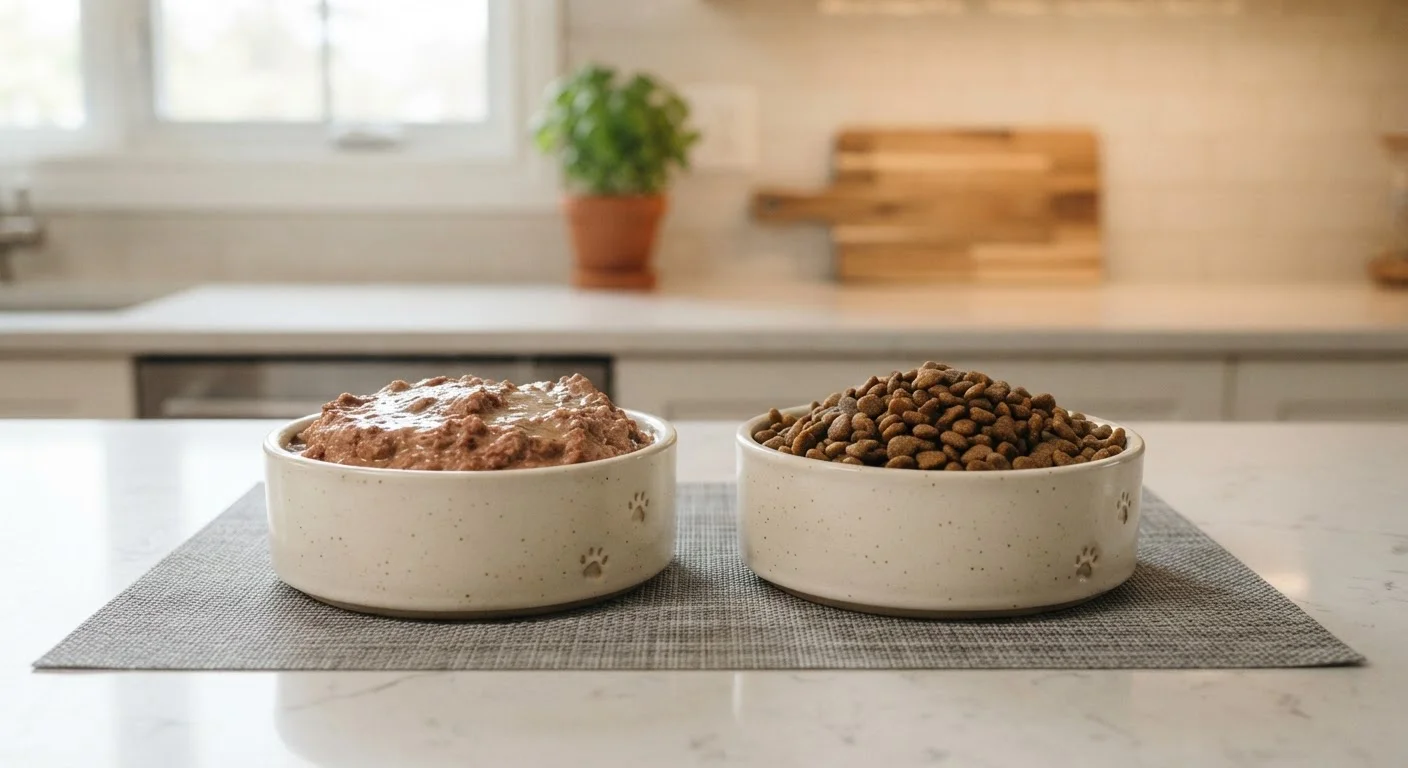
Photo credit: FaqBulletin.com | Information Made Easy
In this article
A science-backed look at the nutritional trade-offs between wet and dry cat food, from hydration to dental health to caloric density.
Key Takeaways
- Wet food typically contains 70–80% moisture, making it far superior for daily hydration.
- Dry food is more calorie-dense per ounce and easier to measure for portion control.
- Current veterinary evidence does not strongly support dry kibble as a reliable dental cleaning tool.
- Neither format is universally superior — the right choice depends on your cat's health profile.
- Cats with kidney disease or lower urinary tract issues generally benefit from increased dietary moisture.
- Consulting your veterinarian is the most reliable way to match food format to your cat's specific needs.
How Moisture Content Shapes Feline Health
Cats evolved as desert-adapted predators with a naturally low thirst drive. In the wild, they obtained most of their hydration from prey — which is roughly 70% water. This biological reality sits at the heart of the wet-versus-dry debate.
Wet cat food typically contains between 70% and 80% moisture, closely mirroring a cat's ancestral diet. Dry kibble, by contrast, usually contains just 6% to 10% moisture. For cats who don't drink enough water from a bowl — which research suggests is common — this difference has measurable health implications.
Veterinary nephrologists and internal medicine specialists have long linked chronic low fluid intake in cats to a higher risk of feline idiopathic cystitis, urolithiasis (bladder stones), and chronic kidney disease (CKD). Increasing dietary moisture through wet food is one of the most consistently cited dietary strategies for cats with these conditions, according to guidelines from organizations such as the American Association of Feline Practitioners (AAFP).
70–80%
Moisture content in typical wet cat food
Compared to just 6–10% in dry kibble, reflecting a major difference in dietary hydration contribution.
~30–40%
Estimated prevalence of CKD in older cats
Chronic kidney disease is among the most common conditions in cats over 10, according to veterinary internal medicine literature, making hydration support especially important.
~58%
U.S. cats estimated to be overweight or obese
According to the Association for Pet Obesity Prevention's annual surveys, making caloric density of food format a meaningful health consideration.
That said, healthy cats with access to fresh water and no predisposing conditions can do well on dry food, provided they drink adequately. The concern is that many simply don't. If you're unsure how your cat's hydration measures up, your veterinarian can assess urine specific gravity during a routine wellness visit — one of the simplest indicators of hydration status.
Calories, Protein, and Nutrient Density
Dry cat food is significantly more calorie-dense than wet food on a per-ounce basis. A typical dry kibble delivers roughly 300–400 calories per 100 grams, while a comparable wet food may provide only 80–100 calories per 100 grams. This gap matters for weight management.
Because cats eating wet food consume more volume for fewer calories, some research suggests it may help cats feel fuller — a potential advantage for cats prone to obesity. Obesity in cats is associated with diabetes, hepatic lipidosis (fatty liver disease), and joint problems, so caloric management is not a trivial concern. For more on how feeding schedules interact with weight and behavior, see our article on scheduled vs. free feeding.
On the protein front, wet food often (though not always) delivers a higher proportion of animal-based protein relative to carbohydrates. Cats are obligate carnivores, meaning they require nutrients — like taurine and arachidonic acid — found only in animal tissue. Both wet and dry foods formulated to meet AAFCO (Association of American Feed Control Officials) nutritional profiles must include these nutrients, so the format alone does not guarantee superior protein quality. Always check that a food carries the AAFCO nutritional adequacy statement for your cat's life stage.
| Criterion | Wet Cat Food | Dry Cat Food |
|---|---|---|
| Moisture content | 70–80% | 6–10% |
| Calories per 100g | ~80–100 kcal | ~300–400 kcal |
| Hydration support | High — aids urinary/kidney health | Low — relies on water bowl intake |
| Dental cleaning evidence | No clear benefit or harm | Minimal for standard kibble |
| Shelf life after opening | 1–3 days refrigerated | Weeks in airtight container |
| Cost per calorie | Generally higher | Generally lower |
| Palatability for picky eaters | Often higher | Variable |
| Ease of portion control | Moderate | Easy with measuring cup |
The Dental Health Question
One of the most persistent claims in cat nutrition is that dry kibble helps clean cats' teeth. This idea, while intuitive, is not strongly supported by current veterinary evidence.
Most cats don't chew kibble long enough or with enough lateral action to produce meaningful mechanical plaque removal. The Veterinary Oral Health Council (VOHC) maintains a list of products with demonstrated efficacy for plaque and tartar control — and the majority of standard dry kibble does not appear on it. Specialized dental diets with a larger kibble size or particular texture are a different matter and may offer some benefit, but these are distinct products from standard dry food.
Wet food does not inherently worsen dental health either. Periodontal disease in cats is primarily driven by plaque-forming bacteria, not by food moisture. The most effective prevention remains regular tooth brushing, professional veterinary dental cleanings, and VOHC-approved dental products — regardless of whether your cat eats wet or dry food.
If dental health is a concern, we'd also encourage a look at common cat health myths vets hear too often, which addresses several widespread misconceptions similar to this one.
This article is for general informational purposes only and does not constitute veterinary advice. Always consult a licensed veterinarian for guidance specific to your cat's health and nutritional needs.

Author
Pets Editorial Team
Pets Editorial Team is the collective byline for our editorial team and contributor network. Articles published under this byline or an editorial pen name are researched, written, and reviewed according to our editorial standards for clarity, consistency, and independence before publication.
View all articles →