
Raised Beds vs. In-Ground Planting: Which Suits Your Yard?
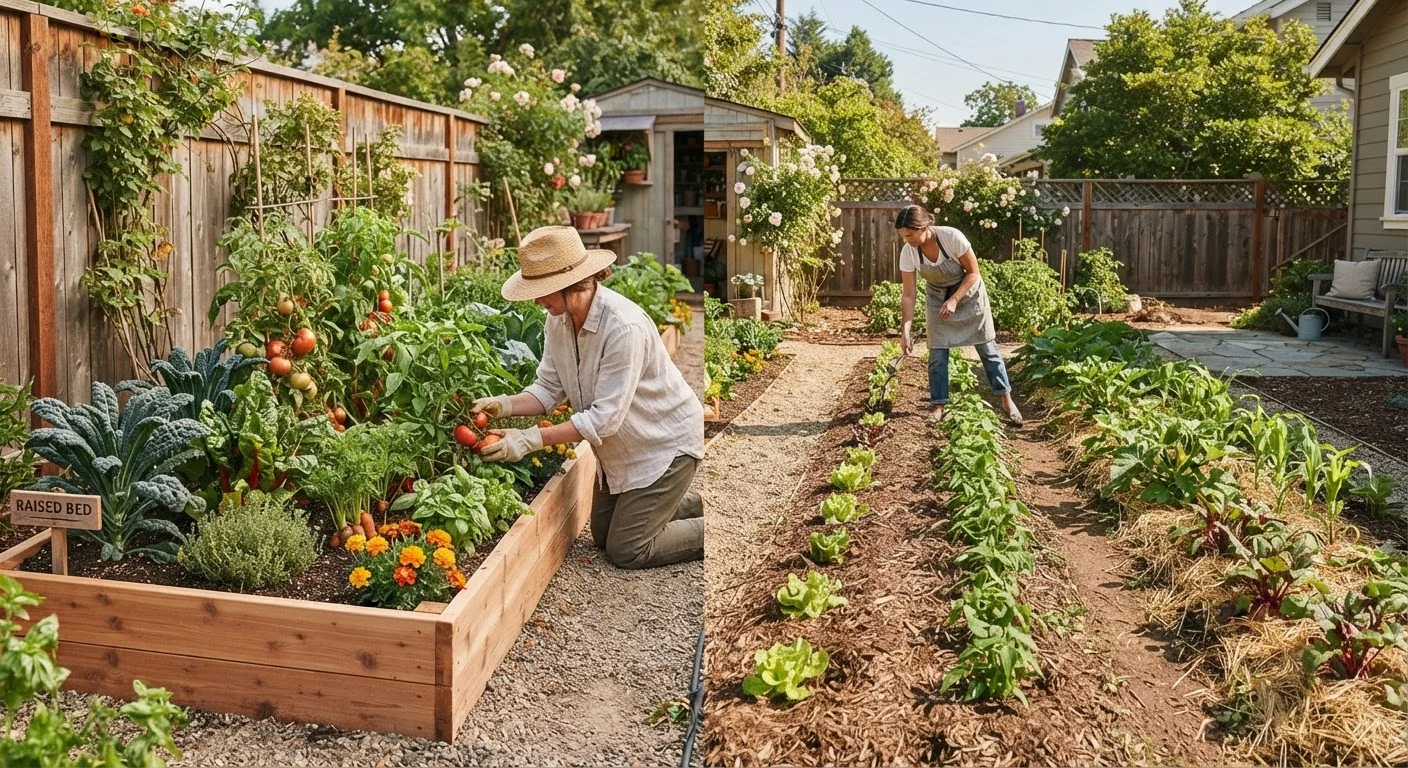
Photo credit: FaqBulletin.com | Information Made Easy
In this article
Compare raised bed and in-ground gardening across drainage, cost, soil control, and maintenance to choose the right approach for your space.
Key Takeaways
- Raised beds cost more upfront but deliver faster payoff in poor or compacted soil conditions.
- In-ground planting scales easily and costs less initially, but relies heavily on native soil quality.
- Soil control is the single biggest advantage raised beds hold over in-ground growing.
- Drainage, accessibility, and long-term maintenance needs differ significantly between the two methods.
- Most yards can support either method — your soil, budget, and physical needs should drive the choice.
The Core Difference: Control vs. Scale
Both raised beds and in-ground planting can yield productive, beautiful gardens — but they operate on fundamentally different logic. Raised beds are about control: you define the soil, the drainage, and the boundaries. In-ground planting is about scale: you work with what the earth gives you, amend as needed, and expand without structural limits.
Understanding which logic suits your yard starts with an honest look at three factors: your native soil quality, your physical space, and your budget. If you haven't already tested your soil, our guide on soil health and backyard garden foundations walks through exactly how to do that — it's a useful step before committing to either approach.
Neither method is universally superior. A gardener in the Pacific Northwest with rich, well-draining native soil has little reason to build raised beds just for the aesthetic. Conversely, a homeowner in the Southeast with heavy clay soil will spend years amending an in-ground bed to achieve what a raised bed delivers in one season.
| Criterion | Raised Beds | In-Ground Planting |
|---|---|---|
| Upfront cost | Higher (materials for frame + fill soil) | Lower (amendments only) |
| Soil control | Full — custom mix from day one | Limited by native soil quality |
| Drainage | Excellent; consistent | Variable; depends on native soil |
| Moisture retention | Lower; dries out faster | Higher; holds moisture longer |
| Weed pressure | Lower with proper base layer | Higher; ongoing management needed |
| Scalability | Limited by budget and space | Easily expanded at low cost |
| Accessibility | High — adjustable working height | Low — requires kneeling and bending |
| Season extension | Easier — soil warms faster in spring | Harder — soil heats more slowly |
Soil, Drainage, and Growing Conditions
Soil quality is where the two methods diverge most sharply. With in-ground planting, you inherit whatever the property offers — which could be excellent loam or a frustrating mix of clay and construction debris. Improvement is possible through composting, tilling, and cover cropping, but it takes consistent effort over multiple seasons. If you're regularly asking yourself why your vegetable garden keeps underperforming, compacted or nutrient-depleted native soil is often the answer.
Raised beds sidestep that problem. You fill them with a custom blend — typically a mix of topsoil, compost, and an aerating material like perlite or aged bark — and plants respond immediately. Drainage is also more predictable: water moves down through the loose fill and away from roots, reducing the waterlogging that plagues clay-heavy in-ground plots during heavy rain.
That said, raised beds dry out faster in summer, requiring more frequent watering. In-ground beds, especially those with clay content, retain moisture longer — a genuine advantage during dry stretches. Pairing either method with a well-chosen mulch layer helps regulate both moisture and soil temperature; see our article on mulching strategies for garden beds for practical guidance.
6–8 weeks
Earlier spring planting in raised beds
Raised bed soil warms faster than in-ground soil in spring, commonly allowing planting several weeks ahead of traditional beds in many U.S. climates.
50%+
Reduction in weed growth
University extension research consistently finds that raised beds with proper base preparation can reduce weed emergence by half or more compared to untreated in-ground beds.
18–24 in
Optimal raised bed height for accessibility
Occupational therapy and gardening accessibility guides generally recommend beds built to this height range to allow comfortable tending without kneeling.
Cost, Effort, and Long-Term Maintenance
Upfront costs tell very different stories. An in-ground bed requires little more than soil amendment materials, basic tools, and seed or transplant costs. A raised bed adds the cost of lumber, composite boards, or stone for the frame, plus enough bulk soil or custom mix to fill the volume — costs that increase significantly with bed height and size.
Over time, the gap narrows. Raised beds typically require less weeding (especially if cardboard or landscape fabric is laid beneath them at installation), and the defined boundaries make watering, fertilizing, and crop rotation easier to manage systematically. In-ground beds demand more ongoing weed control and periodic deep-soil amendments, though they rarely need structural repairs.
Accessibility is a practical consideration that often tips the decision for many households. Standard in-ground beds require kneeling and bending. Raised beds built at 18–24 inches can be tended from a seated or standing position — a meaningful difference for anyone managing joint pain or limited mobility. If you're building out your yard from the ground up, our guide to starting a backyard garden from scratch covers how to integrate either method into an overall garden plan.
For gardeners with minimal outdoor space, it's also worth knowing that container gardening offers a third path — particularly useful on patios or balconies where neither raised beds nor in-ground planting is feasible.

Author
Home & Garden Editorial Team
Home & Garden Editorial Team is the collective byline for our editorial team and contributor network. Articles published under this byline or an editorial pen name are researched, written, and reviewed according to our editorial standards for clarity, consistency, and independence before publication.
View all articles →