
Native Plants and the Low-Maintenance Landscape
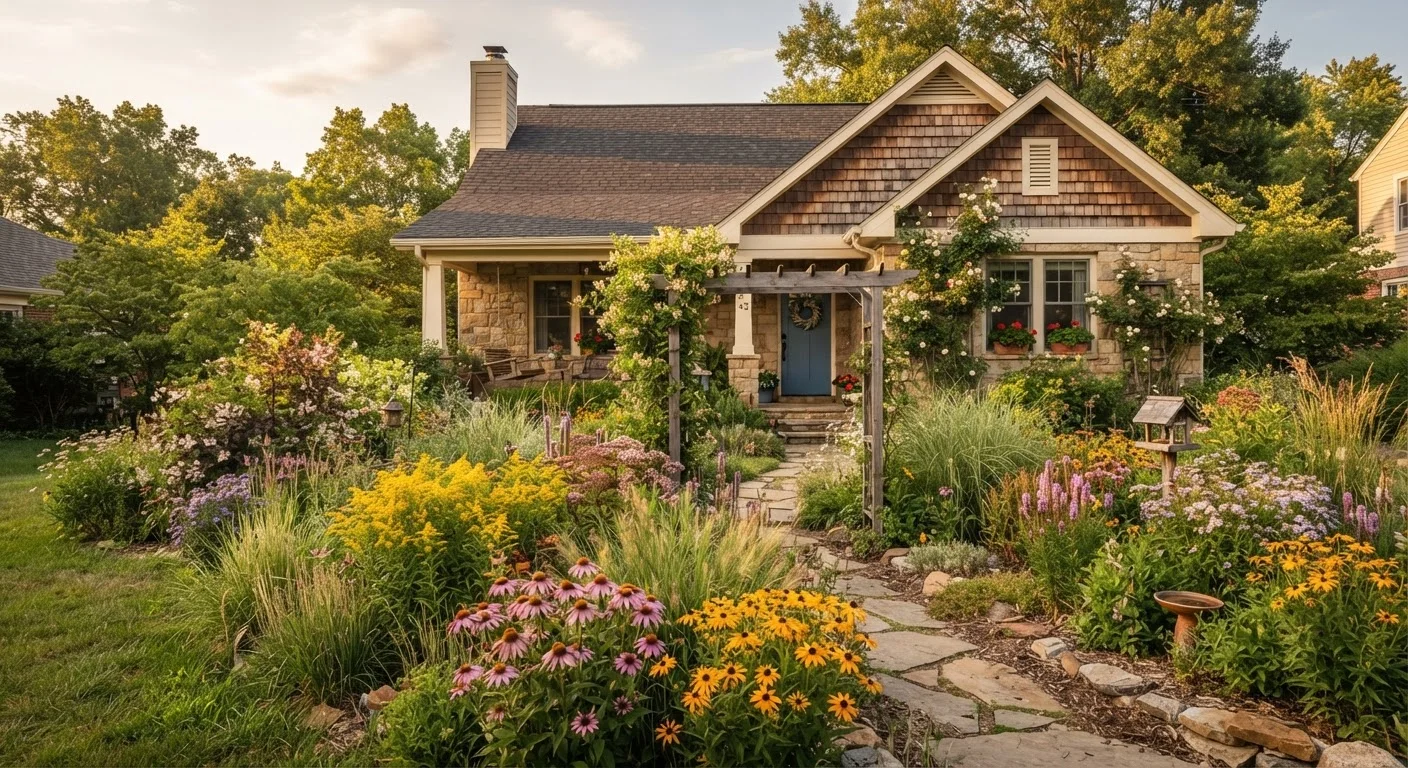
Photo credit: FaqBulletin.com | Information Made Easy
In this article
Explore how planting regionally native species can reduce watering, cut chemical use, support local wildlife, and simplify outdoor upkeep.
Key Takeaways
- Native plants are adapted to local soils and rainfall, reducing the need for irrigation and amendments.
- Establishment takes one to three years; patience is essential before low-maintenance benefits kick in.
- Native plantings actively support local pollinators, birds, and beneficial insects.
- Sourcing true regional natives—not just native cultivars—matters for maximum ecological benefit.
- A mixed approach combining natives with some adapted non-natives often works best for most households.
Dramatically reduced irrigation needs after establishment
Deep root systems allow native plants to access subsoil moisture that shallow-rooted turf and ornamentals cannot reach, cutting supplemental watering significantly in most U.S. climates.
Little to no fertilizer or pesticide required
Because natives evolved alongside local soil conditions and pest populations, they rarely need chemical inputs to stay healthy, reducing both household costs and environmental runoff.
Strong support for pollinators and local wildlife
Native plants provide the specific pollen, nectar, seeds, and shelter that local bees, butterflies, and birds have evolved to depend on — benefits that most non-native ornamentals cannot replicate.
Lower long-term maintenance time commitment
Once established, native landscapes typically require far less mowing, pruning, and seasonal intervention than conventional turf-heavy yards.
Resilience during weather extremes
Regional natives are adapted to local drought and flood cycles, often recovering more quickly than non-native plants after severe weather events.
Slow establishment period of one to three years
Native perennials and shrubs prioritize root development before visible above-ground growth, requiring patient, consistent care before low-maintenance benefits are realized.
Sourcing true regional natives can be difficult
Many retail nurseries stock cultivated varieties of natives that may lack the full ecological value of straight species; finding regionally appropriate plants sometimes requires specialty nurseries or native plant societies.
May conflict with neighborhood aesthetic expectations
Some HOAs or local ordinances regulate plant height or require manicured appearances; a naturalistic native planting may require proactive communication or design compromises to meet those standards.
Upfront research and planning investment is significant
Matching the right native species to your yard's specific microclimate, soil type, and sun exposure takes time and research that goes beyond choosing plants by appearance alone.
Weed pressure is high during establishment
Before native plants fill in and shade out competition, the bare soil between new plantings is highly vulnerable to weed colonization, requiring active management in the early seasons.
What Makes a Plant 'Native'?
A native plant is one that evolved in a specific region over thousands of years, developing relationships with local soils, rainfall patterns, insects, and wildlife. The term is geographic and specific — a plant native to the mid-Atlantic is not necessarily native to the Pacific Northwest, even if it grows well there.
This distinction matters when you're making planting decisions. Regional natives are adapted to local conditions in ways that imported ornamentals simply aren't. Before purchasing, confirm that a plant is native to your ecoregion, not just North America broadly. Your local cooperative extension office is a reliable starting point for regional plant lists. If you're just beginning to plan your outdoor space, the backyard garden planning guide covers soil and layout fundamentals that apply equally to native landscapes.
Cultivars vs. Straight Species
Many plants sold as 'natives' in garden centers are actually cultivated varieties (cultivars) bred for traits like compact size or unusual flower color. While these plants are derived from native species, research suggests that some cultivars — particularly those with altered flower structures or pigmentation — may provide reduced benefit to native pollinators compared to straight-species plants. When ecological support is a priority, look for plants labeled with just the genus and species name, without an additional cultivar name in single quotes.
The Advantages of Going Native
The strongest case for native plants is practical: they're engineered by evolution to thrive where they're planted.
Dramatically reduced irrigation needs after establishment
Deep root systems allow native plants to access subsoil moisture that shallow-rooted turf and ornamentals cannot reach, cutting supplemental watering significantly in most U.S. climates.
Little to no fertilizer or pesticide required
Because natives evolved alongside local soil conditions and pest populations, they rarely need chemical inputs to stay healthy, reducing both household costs and environmental runoff.
Strong support for pollinators and local wildlife
Native plants provide the specific pollen, nectar, seeds, and shelter that local bees, butterflies, and birds have evolved to depend on — benefits that most non-native ornamentals cannot replicate.
Lower long-term maintenance time commitment
Once established, native landscapes typically require far less mowing, pruning, and seasonal intervention than conventional turf-heavy yards.
Resilience during weather extremes
Regional natives are adapted to local drought and flood cycles, often recovering more quickly than non-native plants after severe weather events.
Once established, most natives need little supplemental watering because their root systems — often far deeper than those of turf grass or ornamentals — access moisture efficiently. This is especially meaningful in drought-prone regions. Pair a native landscape with smart watering habits; the common garden watering myths article explains why less frequent, deeper watering typically outperforms daily light watering for most garden plants.
Native landscapes also tend to require less fertilizing and fewer pesticides, since they've co-evolved with local pest pressure and aren't dependent on soil amendments to survive. That translates directly to lower annual maintenance costs and less chemical runoff into local waterways.
The Honest Drawbacks
No landscape approach is without trade-offs, and native plantings are no exception.
Slow establishment period of one to three years
Native perennials and shrubs prioritize root development before visible above-ground growth, requiring patient, consistent care before low-maintenance benefits are realized.
Sourcing true regional natives can be difficult
Many retail nurseries stock cultivated varieties of natives that may lack the full ecological value of straight species; finding regionally appropriate plants sometimes requires specialty nurseries or native plant societies.
May conflict with neighborhood aesthetic expectations
Some HOAs or local ordinances regulate plant height or require manicured appearances; a naturalistic native planting may require proactive communication or design compromises to meet those standards.
Upfront research and planning investment is significant
Matching the right native species to your yard's specific microclimate, soil type, and sun exposure takes time and research that goes beyond choosing plants by appearance alone.
Weed pressure is high during establishment
Before native plants fill in and shade out competition, the bare soil between new plantings is highly vulnerable to weed colonization, requiring active management in the early seasons.
The most common frustration is the establishment period. Most native perennials and shrubs follow the gardening adage: sleep, creep, leap — spending the first year building roots, the second spreading slowly, and the third growing vigorously. During that window, weeding and supplemental watering are still necessary, which can disappoint gardeners expecting instant results.
Sourcing can also be a challenge. Garden centers sometimes sell plants labeled as natives that are actually heavily bred cultivars. These cultivars may offer less wildlife value than their straight-species counterparts, so it pays to ask questions before buying. See the year-round garden maintenance checklist for timing guidance that applies during the establishment phase.
~50%
Potential outdoor water savings with native landscaping
The U.S. Environmental Protection Agency estimates that conventional landscapes use roughly 50% of residential water, and switching to climate-appropriate native plants can substantially reduce that share.
4,000+
Native bee species in the United States
According to the USDA, the U.S. is home to over 4,000 native bee species, most of which depend on regionally native flowering plants for food and nesting resources.
Making the Transition Work
A gradual approach beats an all-at-once overhaul for most households. Start by replacing one high-maintenance area — perhaps a struggling lawn strip or a water-hungry flower bed — with a cluster of regional natives suited to that spot's light and soil conditions.
Layering mulch around new plantings is one of the most effective steps you can take during establishment. It suppresses competing weeds, retains soil moisture, and moderates soil temperature. The guide to mulching explains how to choose the right type and depth for your garden.
Consider mixing natives with well-adapted non-invasive plants where needed — a purely native purist approach isn't required to gain most of the practical benefits. The goal is a resilient, lower-input landscape, not a museum exhibit. For yards where turf grass still plays a role, seasonal lawn care guidance can help you manage the remaining grass areas efficiently alongside your new plantings.

Author
Home & Garden Editorial Team
Home & Garden Editorial Team is the collective byline for our editorial team and contributor network. Articles published under this byline or an editorial pen name are researched, written, and reviewed according to our editorial standards for clarity, consistency, and independence before publication.
View all articles →