
Drip Irrigation vs. Sprinkler Systems for Home Gardens
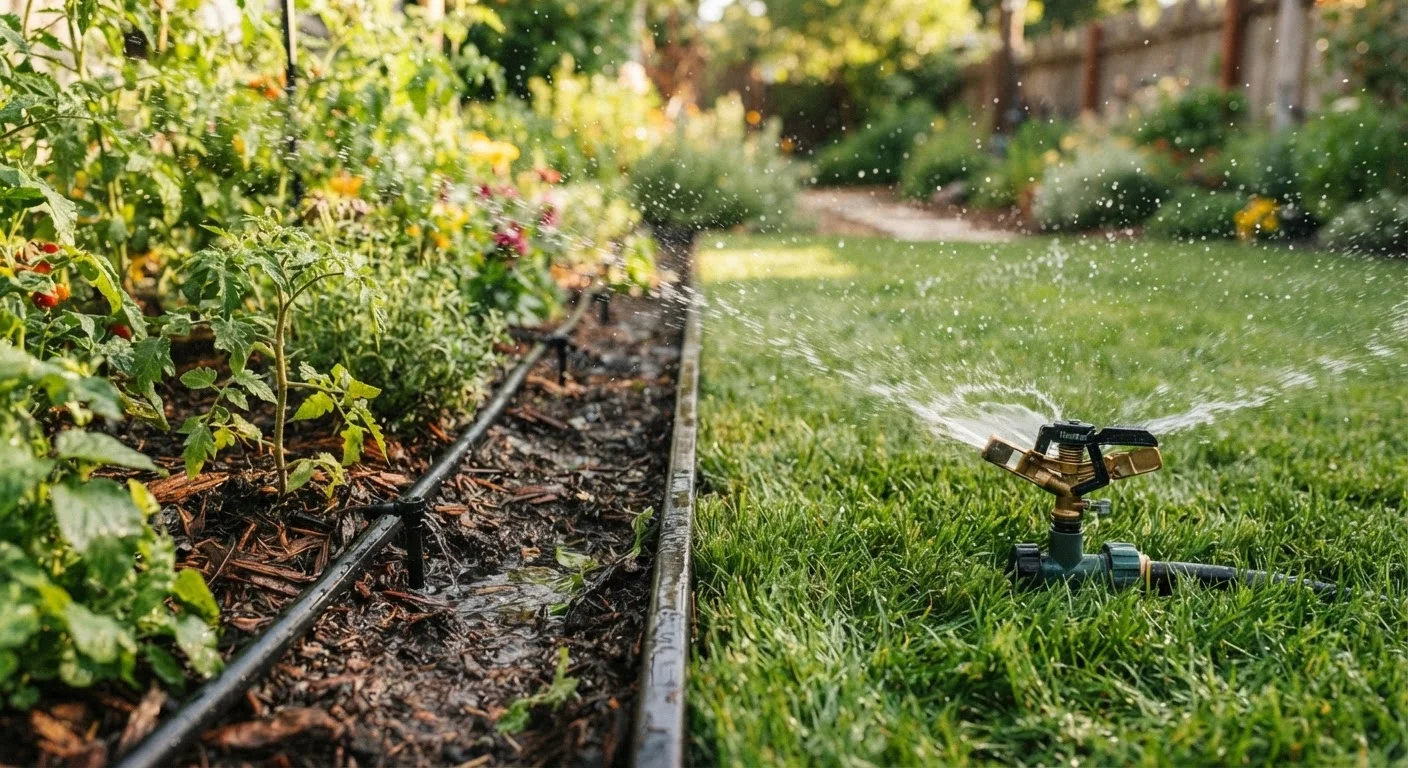
Photo credit: FaqBulletin.com | Information Made Easy
In this article
Side-by-side look at drip and sprinkler irrigation—covering water efficiency, installation complexity, plant compatibility, and upkeep.
Key Takeaways
- Drip irrigation delivers water directly to the root zone, significantly reducing evaporation and runoff.
- Sprinkler systems excel at covering large turf areas but lose more water to evaporation and wind drift.
- Drip systems reduce fungal disease risk by keeping foliage dry; sprinklers wet leaves regularly.
- Installation complexity and cost differ substantially — drip is DIY-friendly, in-ground sprinklers often require professional help.
- Your plant mix and garden layout should drive the irrigation choice, not aesthetics alone.
How Each System Works
Understanding the core mechanics of each approach makes every other comparison easier to follow.
Drip irrigation runs low-pressure tubing along the soil surface or just below it. Water seeps out through emitters — small fittings spaced along the line — directly into the root zone of each plant. Flow rates are measured in gallons per hour rather than gallons per minute, which is what keeps the delivery so targeted. Most home drip systems connect to a standard outdoor spigot and use a pressure regulator and filter to protect the emitters.
Sprinkler systems work under higher pressure, pushing water through a network of pipes to pop-up heads or rotary nozzles that broadcast water through the air over a set radius. In-ground systems are buried below the frost line and divided into zones, each controlled by a valve and timer. Above-ground oscillating or impact sprinklers are simpler and portable, but still operate on the same broadcast principle.
The fundamental difference is where water is applied: at the root with drip, or through the air onto the entire plant and soil surface with sprinklers. That single difference drives most of the practical trade-offs below.
Water Efficiency and Plant Health
| Criterion | Drip Irrigation | Sprinkler Systems |
|---|---|---|
| Water efficiency | High — minimal evaporation | Moderate — subject to wind and heat loss |
| Best coverage area | Beds, shrubs, trees, rows | Lawns and large open areas |
| Foliage wetness | Leaves stay dry | Leaves wetted regularly |
| DIY installation | Straightforward, no trenching | Complex; often requires professionals |
| Typical upfront cost | Lower | Higher (in-ground systems) |
| Freeze-season prep | Drain or store tubing | Blow-out or drain buried lines |
| Permits often required | Rarely | Commonly (verify locally) |
Drip systems consistently outperform sprinklers on raw water efficiency. Because water is delivered slowly at ground level, losses from evaporation and wind drift are minimal. Overhead sprinklers can lose a meaningful portion of applied water before it reaches the soil, particularly during warm or windy conditions — a factor worth considering in regions with seasonal water restrictions.
Plant health is another dimension where delivery method matters. Wet foliage left overnight is a known contributor to fungal diseases such as powdery mildew and leaf blight. Drip lines keep leaves dry by design. If you grow tomatoes, squash, roses, or other disease-prone plants, this alone can justify the switch. For more on common watering mistakes that quietly damage gardens, see garden watering myths that harm plants.
Lawn grasses, by contrast, are well-adapted to overhead watering and typically show no disease issues from sprinkler use when systems are timed to run in the early morning, allowing foliage to dry before nightfall.
30–50%
Potential water savings with drip vs. overhead
The U.S. Environmental Protection Agency (EPA) notes that drip irrigation can use significantly less water than conventional sprinkler systems, depending on climate and plant type.
~50%
Residential outdoor water used on landscaping
According to the EPA's WaterSense program, roughly half of residential water use goes outdoors, much of it applied inefficiently through overhead watering.
Installation, Cost, and Maintenance
Drip irrigation is genuinely DIY-accessible. A starter kit for a single raised bed or small garden area requires only basic hand tools, no trenching, and no permits in most jurisdictions. Tubing can be cut, extended, and reconfigured as your garden evolves — an advantage that's easy to underestimate if you tend to move plants around or expand beds over time. If you're weighing whether a raised bed setup makes sense alongside drip irrigation, the comparison of raised beds vs. in-ground planting may help clarify your overall garden layout first.
In-ground sprinkler systems are a different undertaking. Installing a multi-zone system typically involves trenching, PVC or poly pipe buried at regulated depths, backflow prevention devices (often required by local plumbing codes), and a controller wired to zone valves. This is work most households contract out, and costs scale with yard size and zone count. Permits may be required depending on your municipality — always verify local requirements before beginning.
Maintenance differs too. Drip emitters can clog and should be flushed seasonally; the system should be drained or brought indoors before freezing temperatures arrive. Sprinkler heads crack, nozzles wear, and heads can be struck by mowers — but in-ground components are generally more durable year-round where winters are mild. Folding both systems into a seasonal garden maintenance checklist helps ensure neither is neglected.
Check Local Codes Before Installing
In-ground sprinkler systems often require a permit and a licensed plumber or irrigation contractor, particularly where backflow prevention devices are mandated by local plumbing codes. Requirements vary significantly by municipality. Always contact your local building or water authority before starting any underground irrigation project to confirm what is required in your area.
Choosing the Right System for Your Garden
There is no universal answer — the right choice depends on your specific planting goals, yard layout, local climate, and how much you want to invest up front versus over time.
Choose drip irrigation if your garden is primarily composed of trees, shrubs, vegetables, or perennials in defined beds; if you are in a water-restricted area; or if you want to get started without professional installation. It pairs especially well with native and drought-tolerant plants that benefit from infrequent, deep watering at the root zone.
Choose sprinkler coverage if a healthy lawn is your main concern or if you have a large open area where running individual drip lines would be impractical. For households that want consistent lawn care results, a well-zoned in-ground system with a smart timer can remove much of the guesswork from watering.
Many households ultimately use both: drip tubing running through planting beds on one controller zone, sprinkler heads covering the lawn on separate zones. This hybrid approach gives each area precisely what it needs without compromise, and is worth planning for when you first design your irrigation layout.

Author
Home & Garden Editorial Team
Home & Garden Editorial Team is the collective byline for our editorial team and contributor network. Articles published under this byline or an editorial pen name are researched, written, and reviewed according to our editorial standards for clarity, consistency, and independence before publication.
View all articles →