
The Pre-Road-Trip Vehicle Safety Check Every Family Should Run
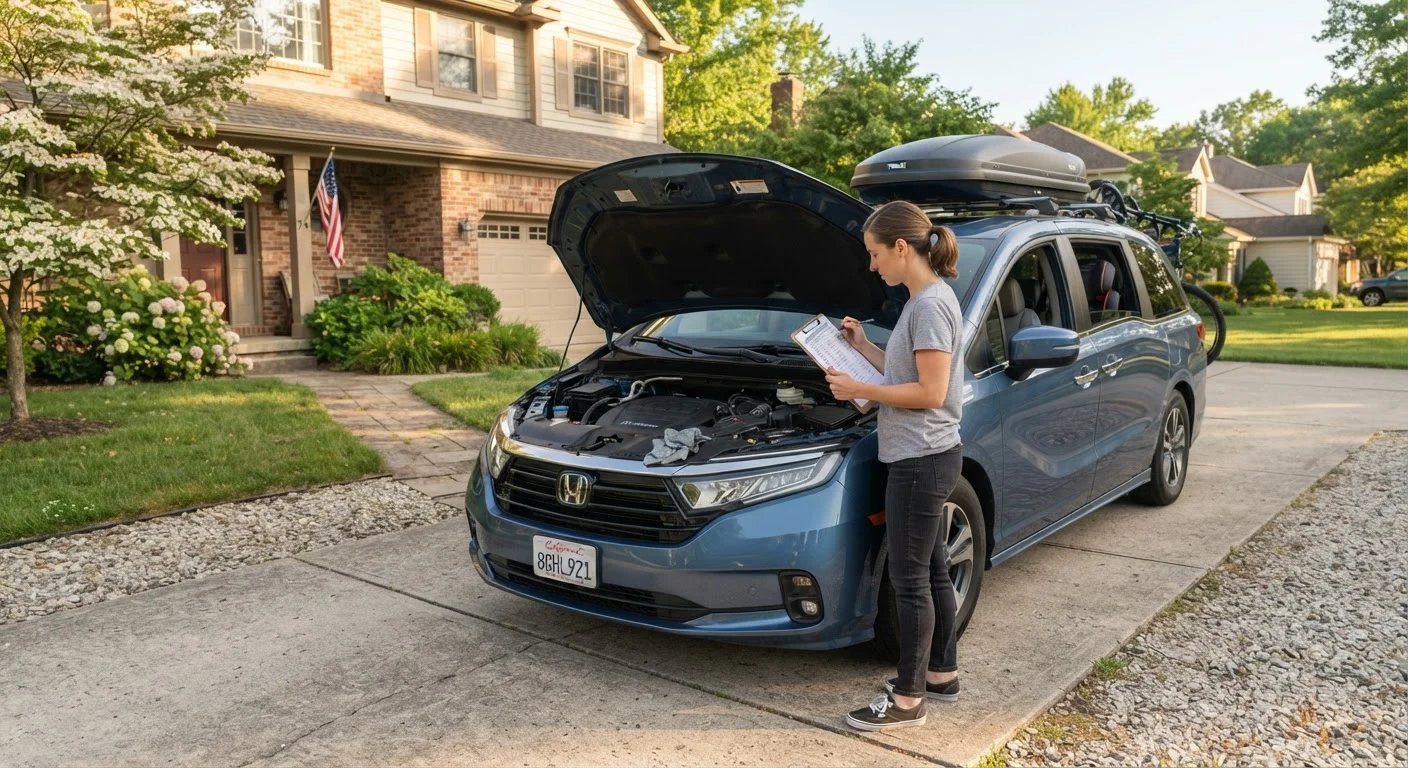
Photo credit: FaqBulletin.com | Information Made Easy
In this article
A thorough checklist covering tires, lights, fluids, brakes, and emergency gear before you load up the car and hit the highway.
Key Takeaways
- Tire pressure and tread depth are among the most critical safety checks before any long drive.
- Fluids - oil, coolant, brake fluid, and windshield washer - should all be verified at least 48 hours before departure.
- Brake performance and all exterior lights must be confirmed working before the family loads up.
- An emergency kit in the trunk is not optional - it's a safety baseline for every family road trip.
- Child safety seats should be inspected for correct installation every time, not just once at purchase.
- Most of these checks can be done at home without special tools in under 90 minutes.
Why a Pre-Trip Vehicle Check Isn't Optional
Most road-trip breakdowns are preventable. A tire that was already low, a battery that was already weak, a wiper blade that had already started skipping - these failures rarely arrive without warning. They arrive when families haven't looked carefully enough before leaving the driveway.
This checklist is designed to be run the day before departure, giving you time to address anything that needs a mechanic's attention before the trip clock is ticking. It covers every major vehicle system - tires, fluids, brakes, lights, belts, and emergency gear - without requiring professional tools or technical expertise. Most items take seconds to verify. A few require a short test drive around the block.
For families planning an extended trip, pair this checklist with the full family road trip planner to cover logistics alongside vehicle readiness. And if you're crossing state lines, review what families need to verify before crossing state lines for documentation and insurance requirements.
Don't Skip Brake Concerns Before Departure
Grinding, squealing, or a soft brake pedal are signs of a potentially serious braking system issue. These symptoms should be evaluated by a qualified mechanic before you load the family in the car - not after you reach the highway. Brakes are not a component to monitor and hope for the best.
Tire Blowouts Are More Likely on Underinflated Tires
Underinflated tires generate excess heat at highway speeds, significantly increasing the risk of a sudden blowout. Always check pressure when tires are cold - before driving more than a mile - since heat from driving artificially raises the PSI reading and can cause you to underinflate.
How to Use This Checklist
Work through the checklist in the order presented - it follows a logical path from ground level (tires) up through the engine bay and into the cabin. Print a copy or pull it up on your phone, and physically confirm each item rather than checking from memory.
If you discover an issue you're unsure how to evaluate - an unfamiliar noise, a dashboard warning light you can't identify, or brake behavior that feels off - have the vehicle inspected by a qualified mechanic before the trip. Some checks, such as brake pad thickness and belt condition, benefit from a professional eye if your vehicle is older or has high mileage.
Tire pressure gauge
Accurately measures PSI in each tire so you can inflate or deflate to the manufacturer's recommended level.
Penny (for tread test)
Used to quickly gauge whether tire tread depth is sufficient for safe highway driving.
Flashlight or work light
Illuminates the underside, engine bay, and dim tire sidewalls for a thorough visual inspection.
Owner's manual
Specifies correct fluid types, levels, and maintenance intervals specific to your vehicle make and model.
Portable jump starter
Allows you to restart a dead battery without needing another vehicle - essential emergency gear for family trips.
Tread depth gauge
Provides a precise tread depth measurement in 32nds of an inch, more accurate than the penny test alone.
For a year-round maintenance perspective that goes beyond pre-trip preparation, the seasonal car maintenance checklist is worth keeping in the glove box. And once the vehicle check is complete, see how to pack the car for a family trip to ensure the load is balanced and accessible.
Tires
Fluids
Brakes and Steering
Lights and Visibility
Belts, Battery, and Engine
Child Passenger Safety
Emergency and Safety Gear
After the Checklist: What to Keep in the Trunk
A completed vehicle check is only half the equation. Roadside emergencies happen even to well-maintained vehicles - a road hazard blowout, a dead battery from a dome light left on, or an unexpected breakdown on a rural stretch. Your emergency kit should be ready before you leave, not assembled at the last minute.
The emergency supplies every car should carry covers the complete list of roadside essentials, including warning triangles, first-aid basics, and traction aids. Make it a fixed part of the trunk, not something that migrates in and out.
Child Seat Misuse Remains Dangerously Common
Studies by safety organizations consistently find that a significant percentage of child safety seats are improperly installed or used. Before every trip, physically test the seat - it should not move more than one inch in any direction at the belt path. When in doubt, seek a free inspection at a certified Child Passenger Safety Technician (CPST) check station.
For child passenger safety specifics - including how to verify that your seat is appropriate for your child's current age, weight, and height - the parent's roadmap to child passenger safety walks through each developmental stage and the federal guidelines that govern seat transitions.
Complete these checks, load the car thoughtfully, and your family's trip starts not with anxiety but with confidence.

Author
Automotive Editorial Team
Automotive Editorial Team is the collective byline for our editorial team and contributor network. Articles published under this byline or an editorial pen name are researched, written, and reviewed according to our editorial standards for clarity, consistency, and independence before publication.
View all articles →