
Child Passenger Safety From Birth to Booster: A Parent's Roadmap
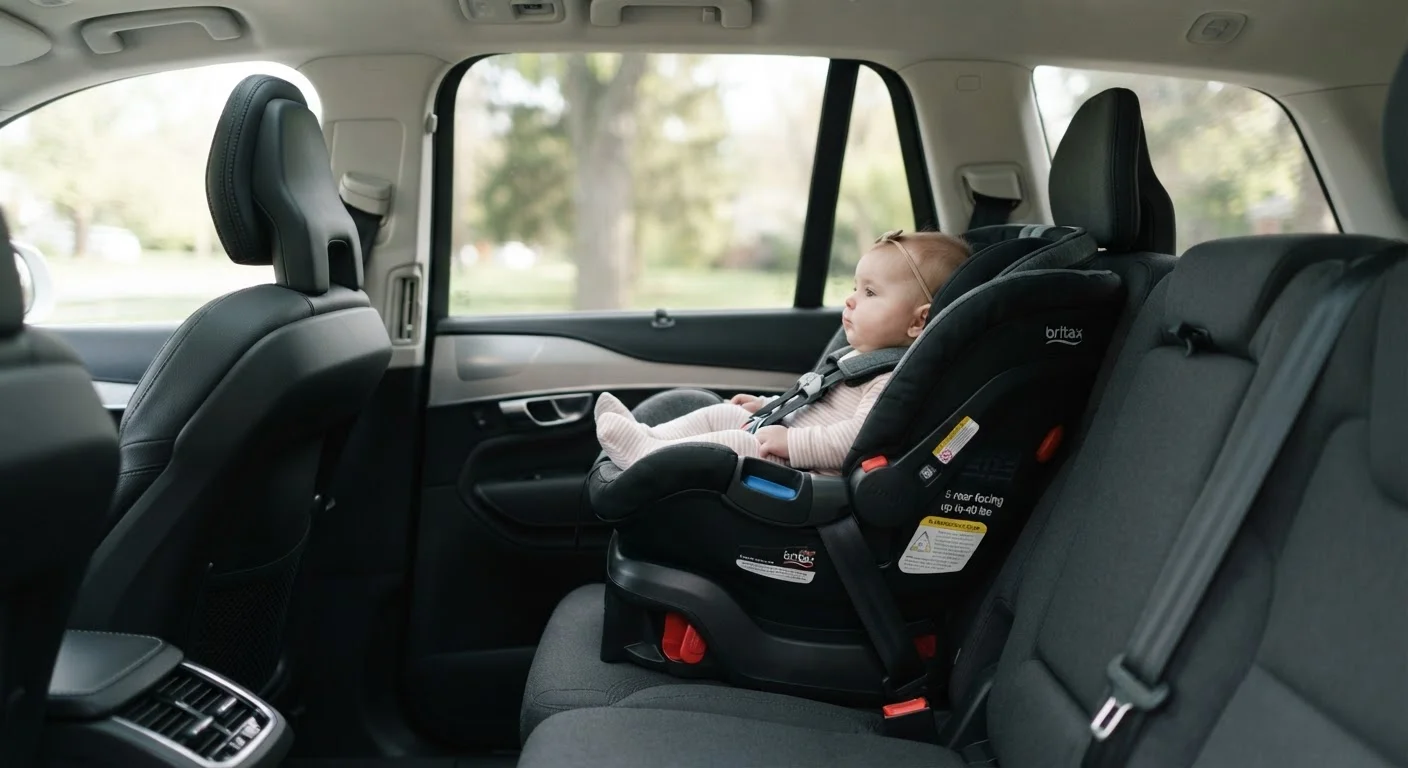
Photo credit: FaqBulletin.com | Information Made Easy
In this article
Understand the stages of child car seat use—rear-facing, forward-facing, booster—and what federal guidelines say about each transition.
Key Takeaways
- Children should remain rear-facing until they reach the maximum height or weight limit of their seat.
- Federal guidelines favor keeping children in each stage as long as the seat allows, not rushing transitions.
- A booster seat is only appropriate when a child can sit correctly in it for an entire trip without slouching.
- Improper installation is one of the most common - and preventable - car seat safety failures.
- All children under 13 should ride in the back seat whenever possible.
Why Car Seat Stage Matters More Than Age
Parents often assume car seat transitions are driven by birthdays. In reality, each stage is governed by physical size and the limits of the current seat - not a calendar. A large two-year-old may need to move stages sooner than a petite four-year-old. Understanding this distinction prevents two common errors: advancing children too early because of age, or holding them back because of perceived convenience.
Federal motor vehicle safety standards, administered by the National Highway Traffic Safety Administration (NHTSA), establish baseline requirements for car seat manufacturing. Guidance on when and how to use those seats comes from pediatric health organizations and child passenger safety (CPS) technicians. Together, these form the framework this article follows.
For a broader look at how passive safety systems protect occupants, see our overview of active versus passive safety.
Five-point harness
A restraint system with five attachment points - two at the shoulders, two at the hips, and one at the crotch - that secures a child across the strongest parts of the body during a crash.
LATCH system
Lower Anchors and Tethers for Children - a standardized set of metal anchor points built into vehicles and car seats that allow installation without routing through the seatbelt.
Convertible seat
A car seat that can be configured rear-facing for infants and then repositioned forward-facing as the child grows, extending the usable life of the seat.
Child Passenger Safety Technician (CPST)
A trained and nationally certified professional who can inspect car seat installation, verify correct fit, and walk caregivers through proper use.
Harness slot
The opening on the car seat shell through which shoulder straps are threaded. The correct slot position - at or below shoulder level for rear-facing, at or above for forward-facing - affects crash protection.
Stage 1: Rear-Facing Car Seats
Rear-facing is the safest position for infants and toddlers. In a frontal crash - the most common and often most severe type - a rear-facing seat cradles and moves with the child, distributing crash forces across the back, shoulders, and buttocks. This protects the head, neck, and spine at a stage when those structures are still developing.
Two types of seats work rear-facing:
- Infant-only seats: Designed exclusively for rear-facing use, typically accommodating children up to 22-35 pounds depending on model. They include a detachable carrier base.
- Convertible seats: Can be used rear-facing for infants and then converted to forward-facing as the child grows, usually accommodating higher weight and height limits rear-facing.
The American Academy of Pediatrics recommends keeping children rear-facing until they reach the maximum height or weight allowed by the seat manufacturer. There is no minimum age for transitioning - only the seat's limits apply. Most convertible seats allow rear-facing up to 40-50 pounds, meaning many children can remain rear-facing well past age two.
Stay Rear-Facing as Long as Possible
There is no developmental reason to rush the transition to forward-facing. Rear-facing seats provide significantly more protection for a child's head and neck in frontal crashes, which account for a large share of serious collisions. Check your seat's manual for its maximum rear-facing weight and height limits - many convertible seats accommodate children well past 40 pounds rear-facing.
Stage 2: Forward-Facing Car Seats
Once a child has outgrown the rear-facing limits of their seat, a forward-facing seat with a five-point harness is the next step. The harness - two shoulder straps, two hip straps, and a crotch strap - distributes crash forces across the strongest parts of a child's body and limits forward movement of the head and torso.
Forward-facing seats are rated for specific weight and height ranges, typically from around 22 pounds up to 65-80+ pounds depending on the model. As with rear-facing, the goal is to keep children in a harness for as long as the seat allows before moving to a booster.
Don't Advance Stages Prematurely
Moving a child to a booster seat before they've outgrown the forward-facing harness limits removes a critical layer of crash protection. A harness restrains far more of the body's surface area than a seatbelt alone. Check the seat's label or manual for the exact upper weight and height limits - and use every pound and inch of that allowance.
The top harness slot should be at or just above the child's shoulders when forward-facing. The chest clip should sit at armpit level. These two adjustments directly affect how crash forces are managed.
Stage 3: Booster Seats and the Seatbelt Transition
A booster seat doesn't have its own harness - it uses the vehicle's seatbelt. Its purpose is to position that seatbelt correctly across a child's body. Without a booster, the lap belt often sits across the soft abdomen and the shoulder belt crosses the neck, both of which can cause serious internal injuries in a crash.
Two booster types are available:
- High-back boosters: Provide head and neck support and are appropriate for vehicles without headrests or with low seat backs.
- Backless boosters: Suitable for vehicles with adequate head restraints; generally appropriate for older, more cooperative children.
A child is ready to graduate from a booster to a seatbelt alone when they can consistently sit with their back flat against the seat cushion, feet flat on the floor, and the shoulder belt crossing the chest and collarbone - not the neck. Most children reach this point between ages 8 and 12 and at roughly 4 feet 9 inches tall. All children under 13 should continue to ride in the back seat. For more on how seatbelts perform across crash types, see our seatbelt effectiveness guide.
Installation, Fit, and Common Mistakes
According to NHTSA research, a significant percentage of car seats are used incorrectly. The most common errors include:
- Installing the seat at the wrong recline angle (especially for rear-facing newborns, who need a more reclined position to keep airways open)
- Leaving harness straps too loose - the standard check is that you should not be able to pinch excess webbing at the child's shoulder
- Routing the seatbelt or LATCH strap through the wrong path
- Using a seat that has exceeded its expiration date (most seats expire 6-10 years from manufacture)
- Placing bulky winter coats under the harness, which compresses in a crash and creates slack
The most reliable way to verify correct installation is a visit to a certified Child Passenger Safety Technician (CPST). NHTSA maintains a searchable directory of fitting stations at SaferCar.gov. Many fire stations, hospitals, and community health organizations offer free inspection events.
Before any family road trip, a car seat check is a smart addition to your pre-departure checklist. Our pre-road-trip vehicle safety check covers this alongside tires, lights, and other critical items.
This article provides general educational information about child passenger safety. Always follow the specific instructions provided with your car seat and consult a certified Child Passenger Safety Technician for guidance tailored to your child and vehicle.
Frequently Asked Questions

Author
Automotive Editorial Team
Automotive Editorial Team is the collective byline for our editorial team and contributor network. Articles published under this byline or an editorial pen name are researched, written, and reviewed according to our editorial standards for clarity, consistency, and independence before publication.
View all articles →