
Seatbelt Effectiveness Across Different Crash Scenarios
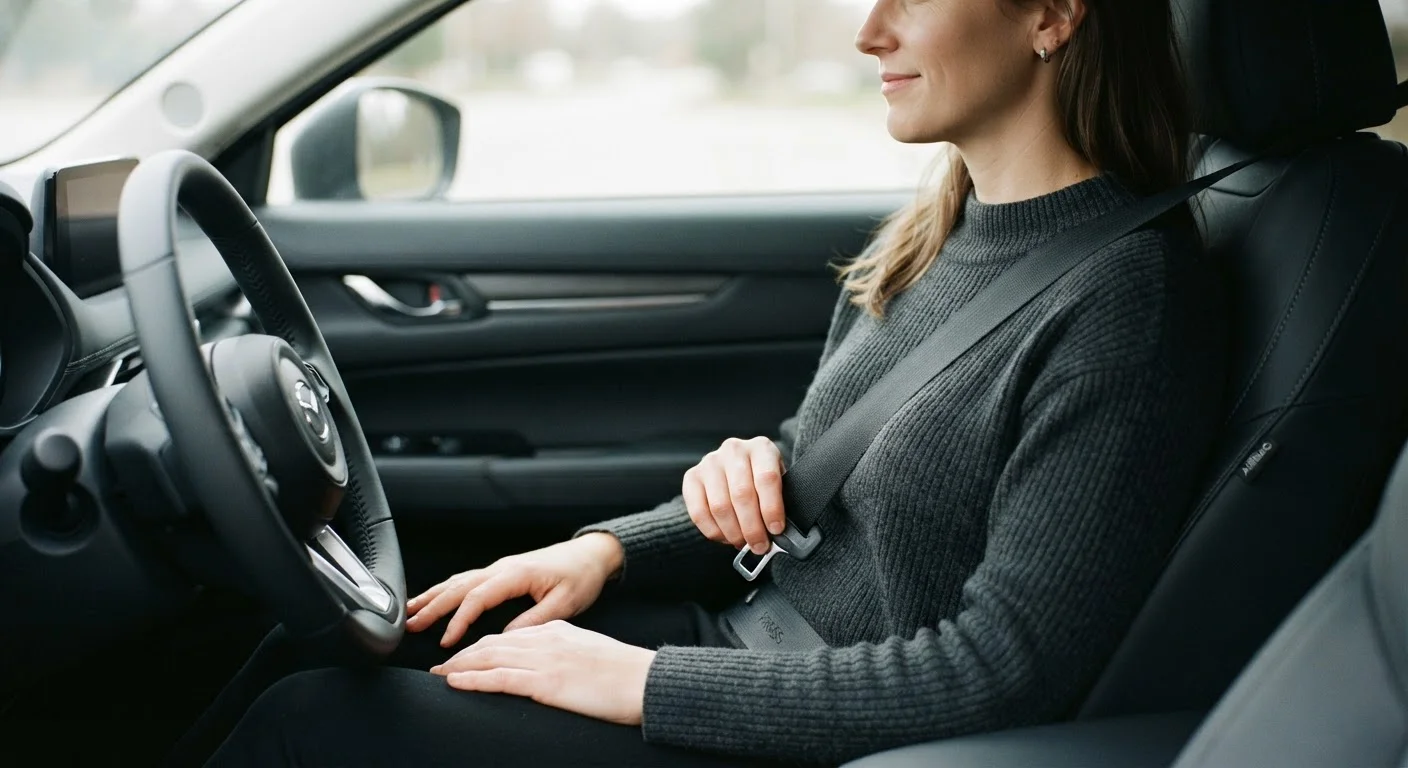
Photo credit: FaqBulletin.com | Information Made Easy
In this article
Seatbelts work differently depending on crash type, speed, and seating position. Here's what the data shows about when and why they matter most.
Key Takeaways
- Seatbelts reduce the risk of death for front-seat passengers by approximately 45% in car crashes.
- Effectiveness varies by crash type - frontal impacts see the highest benefit, while rollover crashes also show significant protection.
- Rear-seat passengers are often underestimated in seatbelt compliance and face serious injury risk when unbelted.
- Correct belt positioning - across the chest, not the neck or under the arm - is essential for the belt to work as designed.
- Seatbelts and airbags are designed to work together; an airbag without a seatbelt can itself cause serious injury.
Why Crash Type Changes the Equation
Not all crashes are alike, and seatbelt performance reflects that reality. The three most common collision types - frontal impacts, side impacts, and rollovers - each place different mechanical demands on restraint systems, and seatbelts respond differently in each scenario.
Frontal crashes are the most common serious collision type and the scenario where seatbelts perform best. A three-point belt (the standard lap-and-shoulder design) keeps the occupant from pitching forward into the steering wheel, dashboard, or windshield. Combined with a front airbag, the seatbelt manages deceleration forces across the body's strongest areas - the chest, pelvis, and shoulder - dramatically reducing head and chest trauma.
Side-impact crashes present a different challenge. The seatbelt's primary role here is to keep the occupant inside the vehicle and properly positioned for side-curtain or torso airbag deployment. Without a belt, lateral sliding means the airbag may miss entirely or strike the occupant at an ineffective angle. See how airbags work in side crashes for a deeper look at that interaction.
Rollover crashes carry the highest ejection risk. NHTSA data indicates that ejection from the vehicle - entirely preventable with a seatbelt - is involved in a disproportionate share of rollover fatalities. A belted occupant is contained within the vehicle's protective structure, including reinforced roof rails, rather than being thrown clear of it.
~45%
Reduction in front-seat fatality risk
NHTSA estimates seatbelts reduce the risk of death for front-seat car occupants by approximately 45% in crashes.
~74%
Reduction in rollover fatality risk for SUV occupants
NHTSA data attributes approximately 74% reduction in rollover fatality risk to seatbelt use among SUV occupants.
~14,000
Lives saved by seatbelts annually in the US
NHTSA estimates that seatbelts save approximately 14,000 to 15,000 lives in the United States each year.
Speed, Seating Position, and Real-World Nuance
Impact speed is a fundamental variable in seatbelt effectiveness. At lower speeds, an unbelted occupant may still contact the vehicle interior with enough force to cause concussions or facial injuries. At highway speeds, the kinetic energy involved increases exponentially, and the difference in outcomes between belted and unbelted occupants becomes dramatic.
Seating position also matters. Front-seat occupants have been the primary focus of both seatbelt design and public safety messaging. But rear-seat passengers carry meaningful risk when unbelted - and compliance rates are historically lower among rear-seat occupants. An unbelted rear-seat passenger in a frontal crash can be thrown forward with enough force to seriously injure front-seat occupants in addition to themselves.
For children, the seatbelt equation changes further. Adult belts are engineered for adult body geometry. A standard three-point belt worn by a child who has not yet reached the appropriate size threshold may sit across the abdomen rather than the pelvis, increasing the risk of internal injuries. This is why booster seats exist - to reposition the belt correctly on a smaller body. Child passenger safety guidelines outline the transitions from car seats to boosters to belts alone.
Check the Fit Every Time You Buckle
Before driving or riding, confirm the shoulder belt crosses the center of your chest and collarbone - not your neck. The lap portion should sit low and snug across the hip bones, not the abdomen. A two-finger gap between the belt and your body is acceptable; more than that indicates excess slack that should be removed.
Common Misuses That Undermine Protection
A seatbelt worn incorrectly offers significantly less protection than one worn as designed - and in some cases, may cause additional injury. The most frequent misuses include:
- Shoulder belt behind the back: Removes upper-body restraint entirely, greatly increasing the risk of the occupant pitching forward and striking the interior.
- Shoulder belt under the arm: Concentrates crash forces on unprotected ribs and soft tissue, increasing internal injury risk.
- Lap belt too high: A belt positioned across the abdomen rather than the pelvis can cause serious abdominal trauma in a frontal crash.
- Slack in the belt: Excess slack means the occupant travels further before the belt engages, increasing the severity of the restraint force when it does.
Modern vehicles include pretensioners - devices that automatically tighten the belt at crash onset - and load limiters that manage peak forces. These systems are calibrated for a correctly positioned, properly worn belt. Misuse defeats both. Understanding these nuances is part of what separates passive safety knowledge from actual protection. Passive safety systems like seatbelts only perform as designed when used correctly.
It is also worth addressing the persistent myth that seatbelts are unnecessary for short trips or slow-speed city driving. A significant proportion of serious crashes occur within a few miles of home, at speeds well below highway limits. Common car safety myths persist partly because most short trips end without incident - but that pattern does not reflect crash risk accurately.
Frequently Asked Questions

Author
Automotive Editorial Team
Automotive Editorial Team is the collective byline for our editorial team and contributor network. Articles published under this byline or an editorial pen name are researched, written, and reviewed according to our editorial standards for clarity, consistency, and independence before publication.
View all articles →