
The Seasonal Car Maintenance Checklist Every Driver Should Keep in the Glove Box
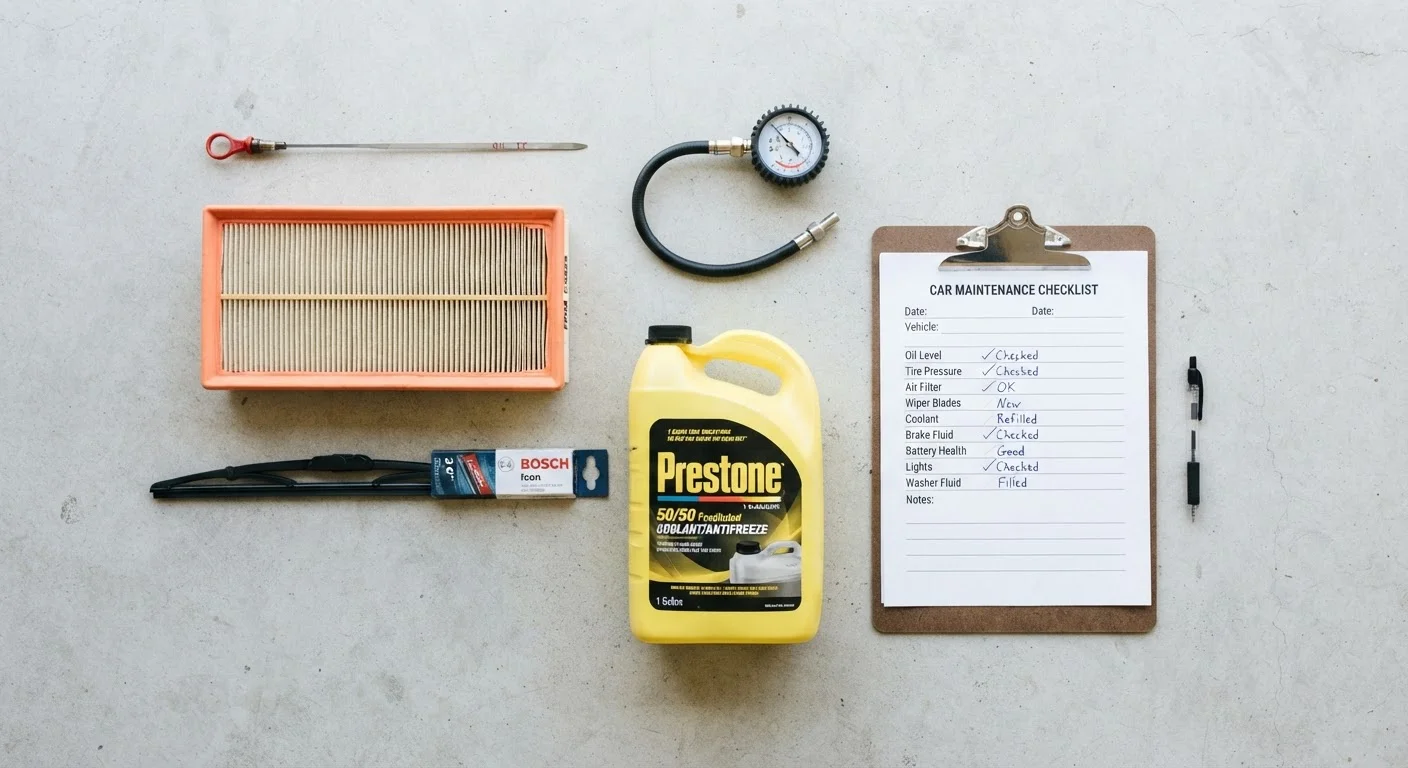
Photo credit: FaqBulletin.com | Information Made Easy
In this article
A practical, season-by-season checklist covering fluids, tires, brakes, and filters to keep your vehicle road-ready year-round.
Key Takeaways
- Seasonal maintenance checks catch minor issues before they escalate into expensive repairs.
- Tires, fluids, brakes, and filters are the four pillars of year-round vehicle health.
- Cold and hot weather affect your battery, coolant, and tire pressure in opposite but equally serious ways.
- Many checks require only basic tools and take under five minutes each.
- Keeping a physical checklist in your glove box ensures you never skip a critical item.
Why Seasonal Checks Beat Waiting for a Warning Light
Modern vehicles are more reliable than ever, but they still follow predictable wear cycles tied closely to temperature swings, mileage, and road conditions. A warning light signals that something has already gone wrong - seasonal maintenance is about staying ahead of that moment.
Most drivers interact with their vehicles daily yet inspect them rarely. A structured, season-by-season approach removes guesswork and builds the kind of ownership habits that extend vehicle life and protect safety. The full picture of vehicle maintenance spans every major milestone from purchase onward - this checklist slots neatly into that longer framework, giving you four natural checkpoints each year.
Print this checklist and fold it into your glove box. Run through it at the start of each season, and you'll address the issues that predictably arise rather than the ones that catch you off guard.
Tire Pressure Gauge
Accurately measures PSI in all four tires and the spare each season.
Tread Depth Indicator or Coin
Verifies that tire tread meets the minimum safe depth for the upcoming season.
Battery Load Tester
Determines whether a battery can deliver sufficient cranking power under cold conditions.
Antifreeze Test Strips or Hydrometer
Measures the freeze protection level of your coolant before winter arrives.
Flashlight or Headlamp
Allows thorough inspection under the hood and under the vehicle in low light.
Brake Fluid Test Strips
Gives a quick indication of moisture contamination in brake fluid.
How to Use This Checklist
Work through each seasonal group in order. Items marked must are non-negotiable safety or reliability items. Items marked should are strongly recommended for most drivers. Items marked nice to have add an extra layer of preparedness. Tasks you can handle yourself are noted; anything involving brake hydraulics, suspension components, or electrical systems should be evaluated by a qualified mechanic if you're unsure.
For a deeper look at what's under the hood, the fluid-by-fluid reference guide explains what each reservoir does and when to check it. And if a road trip is coming up, run the pre-road-trip safety check in addition to the seasonal checklist.
Never Delay a Brake or Tire Concern
If you notice brake pulsation, pulling, grinding sounds, or a tire that repeatedly loses pressure, do not wait for the next seasonal check. These symptoms can signal an immediate safety risk. Have the vehicle inspected by a qualified mechanic as soon as possible and avoid highway driving until the issue is diagnosed.
Spring (After Winter)
Summer (Before Heat Peaks)
Fall (Before Cold Sets In)
Winter (Ongoing During Cold Months)
Seasonal Priorities Worth Extra Attention
Winter battery risk. Cold temperatures reduce a battery's cranking power significantly. If your battery is more than three years old, have it load-tested before the first hard freeze. A battery that passes a summer test may still fail in January. For region-specific cold-weather prep, see the guide on winterizing your car by state.
Brake inspection timing. Spring is ideal for brake checks because winter road salt and moisture accelerate rotor corrosion and can degrade brake fluid. If you hear grinding, feel pulsing in the pedal, or notice pulling to one side, have brakes inspected immediately. The brake maintenance primer for new drivers explains pads, rotors, and fluid in plain language.
Emergency supplies. Every seasonal check is a good moment to audit your trunk. Jumper cables, a warning triangle, a basic first-aid kit, and a flashlight are minimum standards. The complete emergency supplies reference covers what earns a place in your trunk and why.
DIY Limits: Know When to Call a Mechanic
Fluid top-offs, filter swaps, and visual inspections are appropriate for most drivers with basic tools. However, brake hydraulic work, suspension components, tire mounting, and electrical diagnostics carry real injury and liability risk if done incorrectly. When in doubt, have a licensed mechanic perform the inspection - the cost is nearly always less than the repair that follows a skipped check.
Keeping your service records organized alongside this checklist gives you an accurate picture of what's been done and what's due. The guide to keeping vehicle records in order walks through which documents to retain and how to store them.

Author
Automotive Editorial Team
Automotive Editorial Team is the collective byline for our editorial team and contributor network. Articles published under this byline or an editorial pen name are researched, written, and reviewed according to our editorial standards for clarity, consistency, and independence before publication.
View all articles →