
Carry-On Packing: What Seasoned Travelers Actually Bring
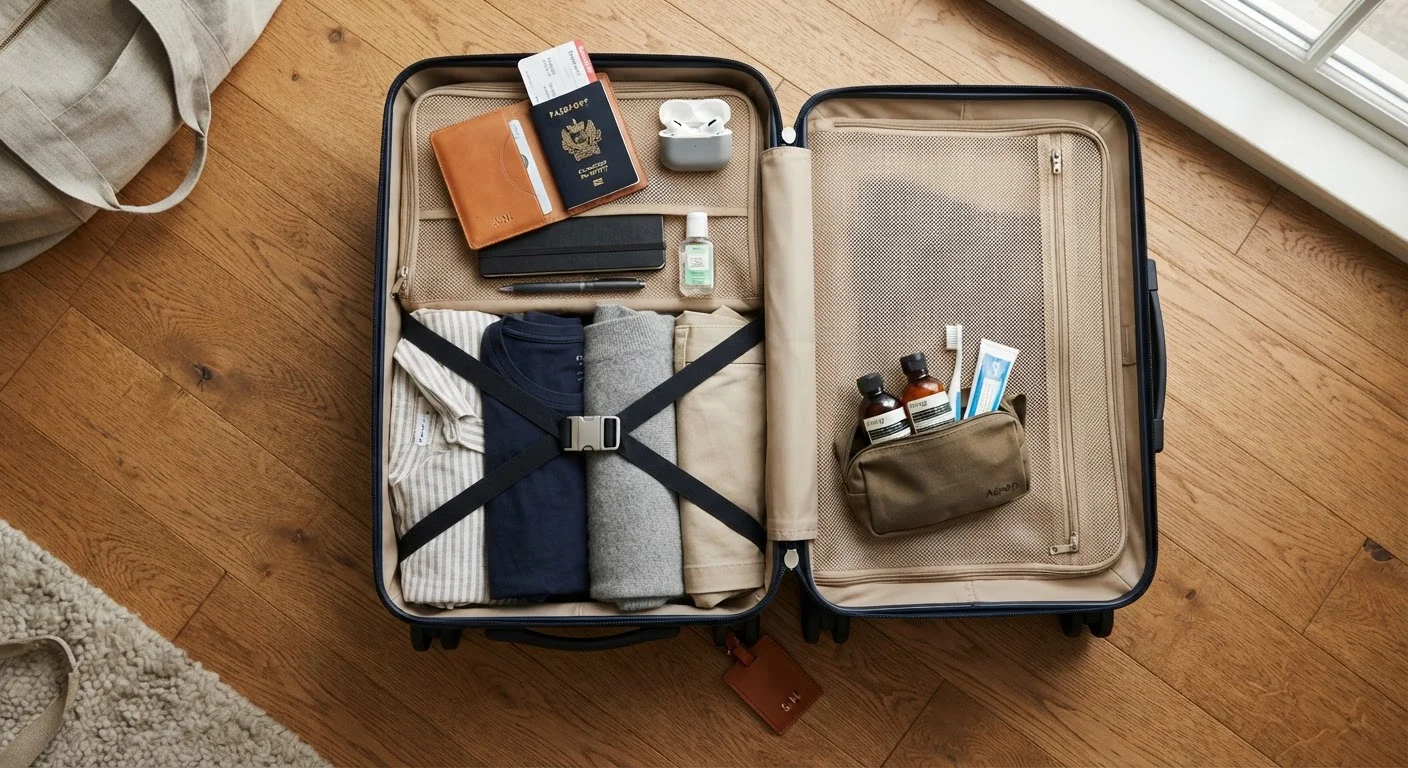
Photo credit: FaqBulletin.com | Information Made Easy
In this article
Strip your carry-on down to what truly earns its place. Learn the logic behind smart packing choices frequent flyers swear by.
Key Takeaways
- Frequent flyers choose items that serve multiple functions rather than packing for every possible scenario.
- A disciplined packing edit — removing anything without a clear purpose — consistently reduces travel stress.
- Keeping critical items like medication, documents, and a change of clothes in your carry-on protects against checked bag delays.
- Lightweight packing cubes and a tested toiletry system can cut packing time significantly on repeat trips.
- What you leave out matters as much as what you put in.
The Seasoned Traveler's Golden Rule: Every Item Earns Its Place
Ask a frequent flyer to open their carry-on and you'll notice something immediately: there's room to spare. That's not an accident. Experienced travelers have usually learned the hard way — after lugging overstuffed bags through cobblestone streets or paying gate-check fees — that disciplined editing is the real skill.
The guiding principle is deceptively simple: every item must justify why it's coming along. If you can't name a specific use for something on this trip, it stays home. This means resisting the "just in case" impulse that turns a sensible carry-on into a rolling storage unit.
Before we get into what to bring, it's worth knowing why carry-on strategy matters in the first place. If you're still weighing whether to check a bag at all, the carry-on vs. checked bag breakdown is a good starting point. For the rest of us committed to carry-on life, here's how the pros actually pack.
The Core Packing Practices Frequent Flyers Rely On
These aren't abstract tips — they're the specific habits that separate travelers who breeze through airports from those who wrestle with overhead bins.
Build your wardrobe around a single color palette that mixes and matches
Packing clothes that coordinate with each other exponentially increases outfit combinations without adding items. Choosing neutrals — navy, gray, black, white — means every top works with every bottom. This single habit can cut your clothing count nearly in half.
Use a pre-filled, dedicated toiletry pouch that you never fully unpack
Rebuilding your toiletry kit from scratch before every trip wastes time and guarantees you'll forget something. A permanently stocked travel pouch with TSA-compliant sizes means you're always ready. Replenish items as they run low, not the night before departure.
Roll clothing instead of folding to compress volume and spot wrinkles
Rolling compresses soft items into tighter cylinders, creating more usable space and making the contents of a bag visible at a glance. It also reduces fold-line creases on certain fabrics. Pairing rolling with packing cubes keeps categories contained without rummaging.
Apply the 'return test' before zipping up
Before closing your bag, mentally walk through the return trip. Will you realistically use everything you've packed? If something has a low probability of being touched, it's adding weight for no gain. This final check catches the speculative items that sneak in.
Wear your bulkiest items on travel day
Shoes, jackets, and heavier layers take up disproportionate space in a bag. Wearing them on the plane solves the volume problem entirely. It's an old traveler's trick that keeps the bag lighter without sacrificing what you need at the destination.
Once your system is dialed in, you'll find that packing for a four-day trip takes about the same effort as packing for ten days. The formula scales.
Start Now: Quick Wins Before Your Next Flight
You don't need to overhaul your entire packing system before your next trip. A few targeted changes this week can make a noticeable difference at the airport. Pair these habits with smart security checkpoint prep and you'll move through terminals with a lot more confidence.
The Items Seasoned Travelers Never Skip
Beyond general principles, experienced travelers tend to converge on a handful of non-negotiables — items that have proven their worth across enough trips to become permanent fixtures.
- A change of clothes in the main cabin: Lost checked bags are rare, but when it happens to you, it's a full-day disruption. A fresh outfit in your carry-on is insurance that costs nothing extra.
- Medications and medical documents: Never go in checked luggage. Full stop. If a bag is delayed, you need these with you.
- A compact, packable layer: Planes are cold. Airports are unpredictable. A lightweight layer folds flat and eliminates the need to buy something at your destination.
- Offline entertainment and a power bank: Wi-Fi outages, long layovers, and delayed flights happen. A downloaded playlist, show, or book costs nothing and saves your sanity. A charged power bank means your phone survives the journey too — especially useful if you're working through a tight connection.
- A reusable water bottle (empty through security): Hydration is one of the simplest things you can do to land feeling decent, and buying bottled water in terminals adds up fast. Filling up post-security is easy at most major airports — and pairs well with the broader comfort strategies in our guide to surviving long-haul flights.
Test Your Bag Before You Need It
Pack your carry-on completely at home a day or two before your trip and walk around with it for an hour. You'll immediately feel whether it's too heavy, awkwardly balanced, or harder to manage than expected. This dry run gives you time to edit without the stress of a departure morning.
Family travel adds a layer of complexity that solo carry-on packing doesn't. If you're coordinating bags across a household, the same logic applies — but the family road trip packing guide covers shared-load strategies that translate well.

Author
Travel Editorial Team
Travel Editorial Team is the collective byline for our editorial team and contributor network. Articles published under this byline or an editorial pen name are researched, written, and reviewed according to our editorial standards for clarity, consistency, and independence before publication.
View all articles →