
Traveling on a Long Flight: How to Arrive Feeling Human
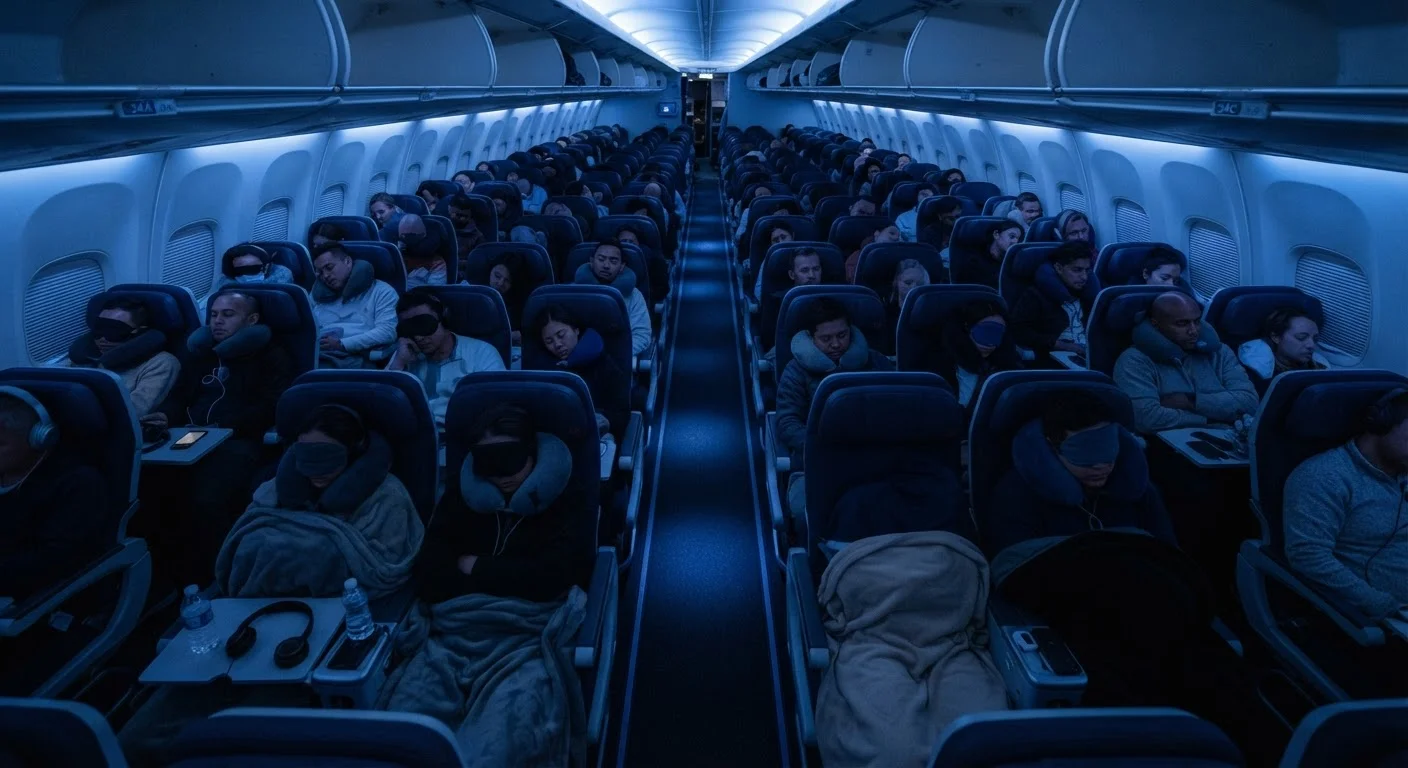
Photo credit: FaqBulletin.com | Information Made Easy
In this article
Hydration, movement, sleep strategy—here's a practical approach to surviving double-digit flights without wrecking your first day.
Key Takeaways
- Hydration is the single most effective tool for managing in-flight fatigue and stiffness.
- Syncing your sleep to destination time starts before you board, not after you land.
- Regular movement every 60–90 minutes reduces swelling and circulation issues.
- What you pack in your carry-on directly shapes your comfort on long-haul flights.
- Avoiding alcohol and caffeine mid-flight preserves sleep quality and reduces dehydration.
Why Long Flights Feel So Rough
A ten-hour flight isn't just a long sit — it's a sustained physical stressor. Cabin pressure is typically set to an equivalent altitude of 6,000–8,000 feet, which lowers the oxygen saturation in your blood slightly and accelerates moisture loss through your respiratory system. Low humidity (often below 20% in-flight) dehydrates skin, eyes, and mucous membranes faster than most people expect. Add in immobility, disrupted circadian rhythm, and the low-grade anxiety of travel logistics, and it's no wonder passengers step off trans-oceanic routes feeling like they've been wrung out.
The good news: most of what makes a long flight miserable is manageable with a bit of intentional preparation. For a deeper look at what happens to your body clock specifically, see why jet lag hits some people harder than others. This guide focuses on what you can do from booking through touchdown to protect your comfort and energy.
What You'll Need Before You Board
Preparation isn't optional on long-haul flights — it's the foundation. Pulling together the right items before you leave home is half the battle. See what seasoned travelers actually bring in their carry-on for a broader packing framework; below are the flight-specific essentials.
What you will need
Noise-canceling headphones or earplugs
Block ambient engine noise to reduce fatigue and improve sleep quality during the flight.
Reusable water bottle (empty, for security)
Fill post-security to maintain consistent hydration without relying on infrequent drink cart service.
Compression socks (travel grade)
Promote healthy circulation and reduce leg swelling during extended periods of sitting.
Neck pillow
Supports head and neck alignment when sleeping upright in an economy seat.
Eye mask
Blocks cabin lighting and screen glare so your body can register darkness and ease into sleep.
Moisturizer and lip balm
Counteract the extremely low cabin humidity that dries out skin and lips over long flights.
Snacks from home
Provide steady, familiar nutrition between airline meal services to avoid energy crashes.
Step-by-Step: Surviving the Flight With Your Sanity Intact
Follow these steps in order — some begin days before departure and others kick in the moment you're airborne. Skipping early steps tends to make in-flight steps harder to execute well.
Shift your sleep schedule before departure
In the two to three days before a major eastward flight, try going to bed 30–60 minutes earlier than usual each night. For westward flights, push bedtime slightly later. This gradual nudge reduces the shock your circadian rhythm experiences on arrival and makes in-flight sleep easier to time strategically.
Hydrate aggressively from the gate onward
Start drinking water before you board, not after you're in the air. A general guideline often cited by aviation medicine professionals is roughly 8 ounces of water per hour of flight, though individual needs vary. Avoid waiting until you feel thirsty — at altitude, thirst can lag behind actual dehydration. Ask flight attendants for water proactively between service rounds.
Put on compression socks before takeoff
Compression socks are most effective when worn from the start of the flight, not after swelling has already begun. Gravity and immobility cause blood and fluid to pool in the lower legs during long sits — compression socks apply gentle, graduated pressure to keep circulation moving. This reduces puffiness and, more importantly, lowers the risk of discomfort associated with prolonged immobility.
Time your meals to destination local time
If it's the middle of the night at your destination, skip or minimize the airline's meal if one is served. Eating signals your digestive system — and by extension your internal clock — that it's active daytime. Accepting every meal tray on the plane's schedule often anchors your body to departure-city time rather than helping it transition. Pack light snacks so you're not hungry if you choose to skip a service.
Move your body every 60–90 minutes
Set a quiet timer if needed. Stand up, walk the aisle to the galley and back, and do a few simple calf raises or ankle circles. Even 3–5 minutes of light movement reactivates circulation, relieves spinal compression, and fights the creeping stiffness that makes economy seats feel like torture devices by hour eight. Stretch your hip flexors briefly by standing and extending one leg back at the galley if space allows.
Protect your sleep window deliberately
Once you've decided when to sleep based on destination time, treat it seriously. Eye mask on, noise-canceling headphones playing white noise or nothing, screen off. Tell your seatmates if possible. Resist the temptation to watch "just one more" episode. Even 3–4 hours of quality sleep at the right phase for your destination can dramatically improve how functional you feel on landing day.
Power through to local bedtime after landing
Unless you've landed and it's already evening local time, resist the pull to nap immediately. Napping too soon resets your clock to the wrong phase and prolongs jet lag by days. Get outside, get some natural daylight (a powerful circadian cue), eat a meal appropriate to local time, and aim to stay awake until at least 9 p.m. local. It's tough — but it's the fastest path to feeling human again.
Common Mistakes That Undo Your Efforts
Even travelers who arrive well-prepared can fall into predictable traps mid-flight. Drinking alcohol to "relax" is one of the most common — cabin pressure amplifies alcohol's dehydrating effects, and what feels like a sleep aid typically fragments sleep quality. Similarly, relying on the plane's meal service timing to guide your sleep schedule often backfires; airlines schedule meals for operational convenience, not passenger circadian alignment.
Wearing tight clothing, skipping compression socks, and staying glued to a screen for the entire flight are equally counterproductive. If you're traveling with kids, the calculus changes further — traveling with children on long flights brings its own set of strategies worth reviewing before you go.
Plan Your Trip From the Start
Long-flight comfort is just one layer of a well-planned international trip. For a full primer on visas, customs, currency, and first-time border crossing, check out our first international trip guide. Getting the logistics right before you leave means less stress eating into your in-flight recovery strategy.

Author
Travel Editorial Team
Travel Editorial Team is the collective byline for our editorial team and contributor network. Articles published under this byline or an editorial pen name are researched, written, and reviewed according to our editorial standards for clarity, consistency, and independence before publication.
View all articles →