
Checked Bag vs. Carry-On: Which Makes More Sense for Your Trip
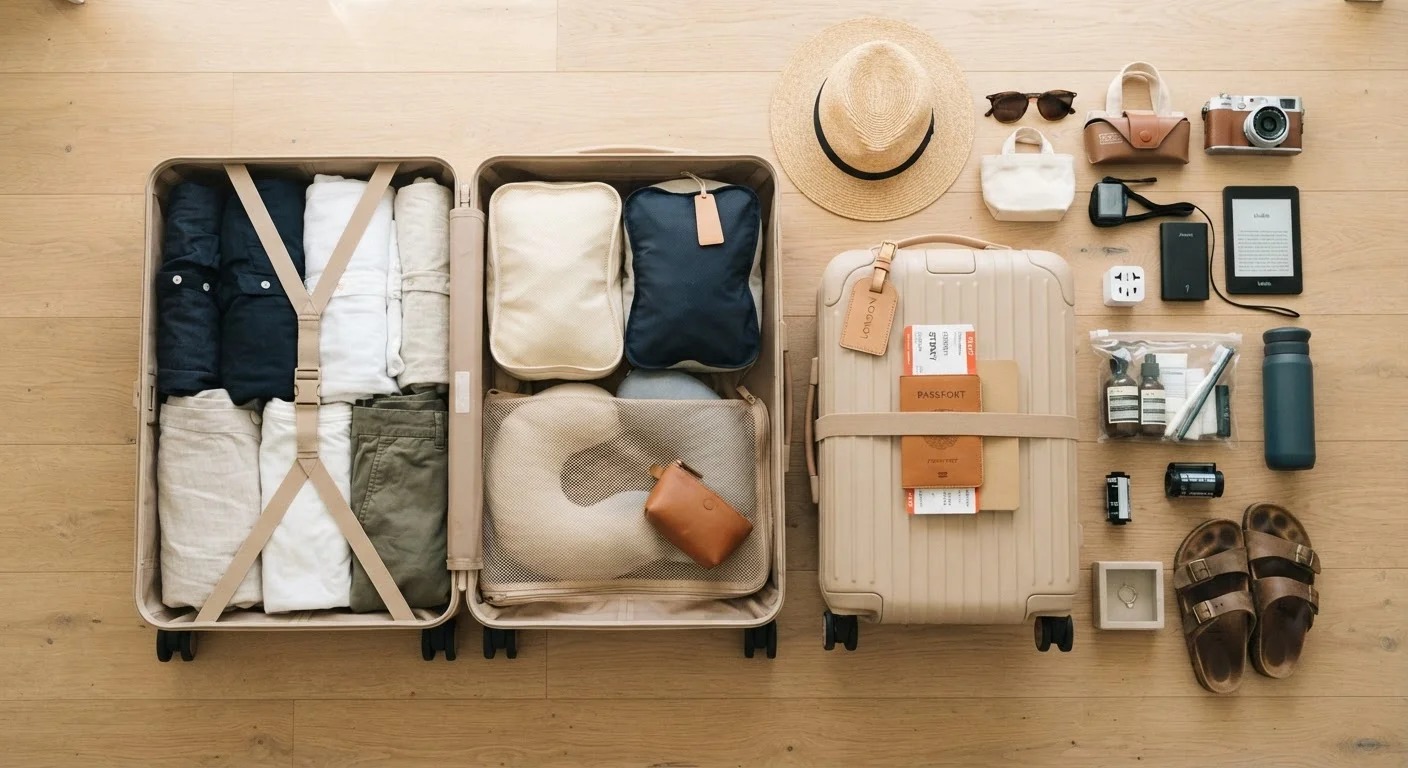
Photo credit: FaqBulletin.com | Information Made Easy
In this article
Fees, convenience, and trip length all factor in. Here's how to decide which baggage approach fits the journey you're taking.
Key Takeaways
- Checked bag fees typically range from $30–$40 per bag each way on major US carriers, adding real cost to a round trip.
- Carry-on travel eliminates baggage wait time and virtually removes the risk of airlines losing your belongings.
- Trip length, destination type, and travel party size are the three biggest factors in choosing the right baggage approach.
- Many airline elite status holders and co-branded cardholders receive free checked bags — worth confirming before you pay.
- Checking a bag makes sense when you need specialty items, travel with children, or face strict liquids rules for longer stays.
The Real Cost Comparison
Before anything else, run the numbers. Most major US carriers charge between $30 and $40 for a first checked bag each way, meaning a round trip can cost you $60–$80 before you've paid for a single meal. On ultra-low-cost carriers, that figure can climb higher still. Over several trips a year, those fees compound quickly.
Carry-on bags, by contrast, are generally included at no extra charge on most full-service airlines — though basic economy fares on some carriers have changed that calculus, occasionally charging for overhead bin access as well. Always read your fare class fine print before assuming your carry-on flies free.
One variable that tilts the math toward checking: airline loyalty perks. Many co-branded airline credit cards and elite status tiers include one or more free checked bags per traveler. If that applies to you, the fee argument for carry-on evaporates. Check your card benefits and frequent flyer status before deciding.
| Criterion | Checked Bag | Carry-On |
|---|---|---|
| Typical fee (round trip) | $60–$80+ per bag | Usually free (fare-dependent) |
| Packing capacity | High (50 lb limit typical) | Limited (22" × 14" × 9" typical) |
| Airport time | Longer (check-in + baggage claim) | Faster (skip both) |
| Risk of loss or delay | Present — airline mishandles bags | Minimal — stays with you |
| Liquids / toiletries | Full-size items allowed | TSA 3-1-1 rule applies |
| Best trip length | 7+ days or specialty gear trips | Weekend to 4–5 day trips |
| Flight flexibility | Lower — tied to checked bag | Higher — easier to rebook |
Time, Convenience, and What You're Actually Risking
Money isn't the only currency at stake. Time matters enormously, especially if you're connecting through a busy hub or have a tight schedule at your destination.
Carry-on travel lets you skip the check-in counter, move through security with your bag, and walk straight off the plane to ground transportation. That time savings can easily be 30–60 minutes at a busy airport. For a short domestic flight, that buffer can feel even more meaningful than the flight itself.
Checked bags introduce a different layer of risk: delayed or mishandled luggage. US Department of Transportation data consistently shows that airlines mishandle hundreds of thousands of bags annually. While most are eventually returned, a delayed bag can derail the first day of a trip. If your checked bag contains essential medication, a wedding outfit, or sports gear tied to a specific activity window, that's a real vulnerability worth weighing. For peace of mind on checked luggage, it's worth reviewing what travel insurance covers for lost bags before you fly.
$35
Average first checked bag fee (one way)
Based on standard published fees from major US legacy carriers; basic economy and ultra-low-cost fares may vary significantly.
2.3M+
Bags mishandled by US airlines annually
US Department of Transportation Air Travel Consumer Reports have consistently recorded millions of mishandled bag reports industry-wide each year.
45 min
Typical baggage claim wait time
Industry estimates and traveler surveys suggest average baggage claim waits at major US airports range from 30 to 60 minutes.
Trip Type and Packing Reality
The honest truth: trip length and destination should drive your decision more than any other factor. A four-night city break is almost always conquerable with a single carry-on, especially if you pack with intention. Seasoned travelers will tell you that most people check bags because they overpack, not because they genuinely need the extra space. For a deep dive on streamlining your load, see what frequent flyers actually bring in a carry-on.
That said, checked bags make clear, practical sense in specific scenarios:
- Trips of a week or more, where clothing variety and toiletry needs outpace carry-on capacity.
- Beach or ski trips requiring bulky gear — wetsuits, ski boots, and similar items simply don't fit overhead.
- Family travel with young children, where the sheer volume of kid-specific supplies (and the unpredictability of those supplies) demands extra room.
- International trips with strict 100ml liquids rules, where full-size toiletries in a checked bag sidestep the security line shuffle entirely.
If you're still deciding whether to fly at all versus road-tripping, our comparison of flying vs. driving to US family destinations can help you think through the full picture. And if you do drive, packing strategies for family road trips offer a whole different kind of luggage logic.

Author
Travel Editorial Team
Travel Editorial Team is the collective byline for our editorial team and contributor network. Articles published under this byline or an editorial pen name are researched, written, and reviewed according to our editorial standards for clarity, consistency, and independence before publication.
View all articles →