
Flying vs. Driving to Your US Family Destination
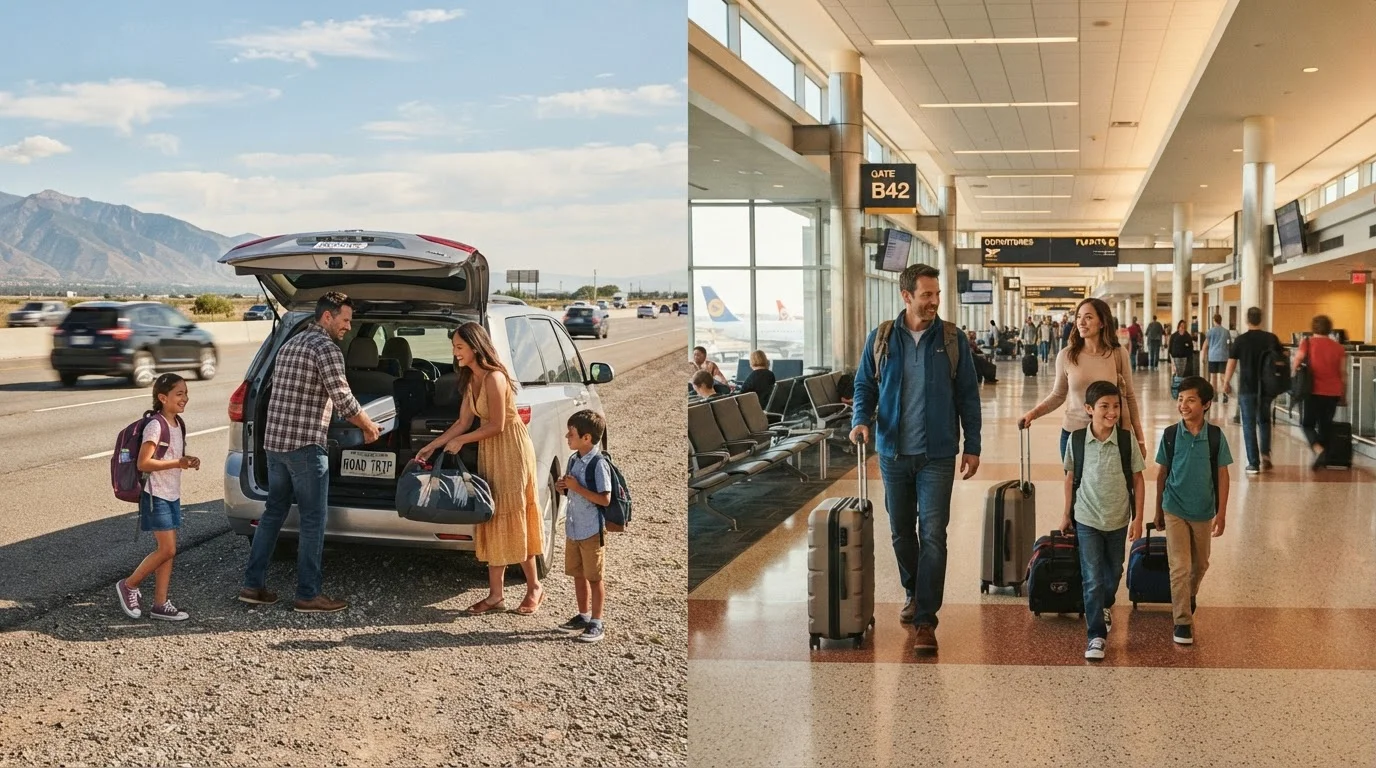
Photo credit: FaqBulletin.com | Information Made Easy
In this article
Weigh the real costs, convenience factors, and family experience of flying versus driving for your next American getaway.
Key Takeaways
- Flying saves time on long hauls but adds per-person costs that multiply fast for families of four or more.
- Driving offers unmatched flexibility and luggage freedom, but fatigue and fuel costs are real factors.
- The break-even distance for cost is roughly 400–600 miles, depending on family size and airline fees.
- Hidden costs on both sides — baggage fees, airport parking, roadside hotels — can blow a family budget.
- Trip purpose and destination type often matter more than distance when choosing how to travel.
The Real Cost Breakdown: What Families Actually Pay
Sticker shock cuts both ways. Flying looks expensive upfront, but driving hides its true cost in fuel, overnight stops, and meals on the road. Before you commit to either, it's worth doing the full math — not just the headline number.
For a family of four flying round-trip, the base ticket cost is only the beginning. Checked bags, seat selection fees, and airport parking or rideshare costs to the terminal can easily add $300–$500 to what looked like a manageable fare. If your trip involves renting a car at the destination, that's another layer on top. As our guide on common family vacation budget mistakes explains, these secondary costs are exactly where trip budgets quietly collapse.
Driving, meanwhile, carries real expenses too: fuel at current pump prices, wear on the vehicle, food stops that add up across six hours, and — if the drive spans two days — hotel stays en route. For destinations under 400 miles, driving frequently wins on cost. Beyond 600 miles, the math often shifts toward flying, especially if the family values time as a currency.
| Criterion | Flying | Driving |
|---|---|---|
| Upfront cost (family of 4) | Higher — per-person fares multiply fast | Lower — fuel + tolls shared by group |
| Hidden fees | Baggage, seat selection, parking | Fuel, meals, roadside hotels |
| Travel time | Fastest for long distances | Can be 6–20+ hours depending on route |
| Luggage flexibility | Weight limits, fees per bag | Pack what fits — no weight rules |
| Flexibility & spontaneity | Fixed schedules, limited detours | Stop anywhere, change plans freely |
| With young children (under 5) | Airport stress, confined seating | Stop-on-demand, car seat comfort |
| Best distance range | 700+ miles | Under 500 miles |
Convenience, Comfort, and the Kid Factor
Distance tells only half the story. The other half is what it actually feels like to travel with your family — and that experience differs dramatically between a terminal gate and a highway onramp.
Air travel compresses the journey but concentrates its stress: TSA lines, gate changes, delayed connections, and the particular adventure of keeping young kids occupied in a middle seat at 35,000 feet. For families with children under six, the airport experience alone can be genuinely exhausting. That said, a two-hour flight versus a twelve-hour drive is a trade most families with older kids will take without hesitation.
Road trips offer a different rhythm. You leave when you're ready, stop when someone needs a bathroom, and arrive with everything you packed — no baggage carousel, no weight limit, no stroller check-in. For families who like spontaneity — a detour through a scenic canyon, a roadside diner that becomes a trip memory — driving delivers that in spades. See our tips on packing the car for a family road trip to make the most of your cargo space.
90%
Of US trips under 50 miles are taken by car
According to the US Department of Transportation's National Household Travel Survey, personal vehicle use dominates short- and medium-distance domestic travel.
$30–$70
Typical per-bag airline fee (each way)
Most major US carriers charge checked bag fees that significantly raise the effective ticket price for families with standard luggage needs.
3–4 hrs
Average added time for airport process
When factoring check-in, security, boarding, and baggage claim, travelers typically spend 3–4 additional hours around a domestic flight beyond the flight itself.
How to Make the Call for Your Specific Trip
No formula works for every family, but a few key questions sharpen the decision fast. Start with distance, then layer in family size, trip length, and what kind of experience you actually want.
- Distance under 400 miles: Driving is almost always the more practical and cost-effective choice.
- Distance 400–700 miles: This is the genuine toss-up zone. Compare total costs (including all fees) and weigh time value honestly.
- Distance over 700 miles: Flying typically wins on time, and often on sanity — but validate the total cost math before booking.
- Family size matters: A family of five or six can often drive the equivalent of two business-class fares. Larger groups tilt toward road trips almost universally.
- Destination accessibility: Some places — national parks, rural coastlines, small mountain towns — are awkward to navigate without a personal vehicle anyway, making driving a natural fit.
Also consider what's happening at the other end. If your destination has unique state-level requirements or entry factors, check our state-by-state travel considerations guide before finalizing plans. And if you do fly, our breakdown on checked bags vs. carry-ons can help you avoid unnecessary fees on the back end.

Author
Travel Editorial Team
Travel Editorial Team is the collective byline for our editorial team and contributor network. Articles published under this byline or an editorial pen name are researched, written, and reviewed according to our editorial standards for clarity, consistency, and independence before publication.
View all articles →