
Parakeets, Cockatiels, and Conures: Choosing the Right Bird for Your Home
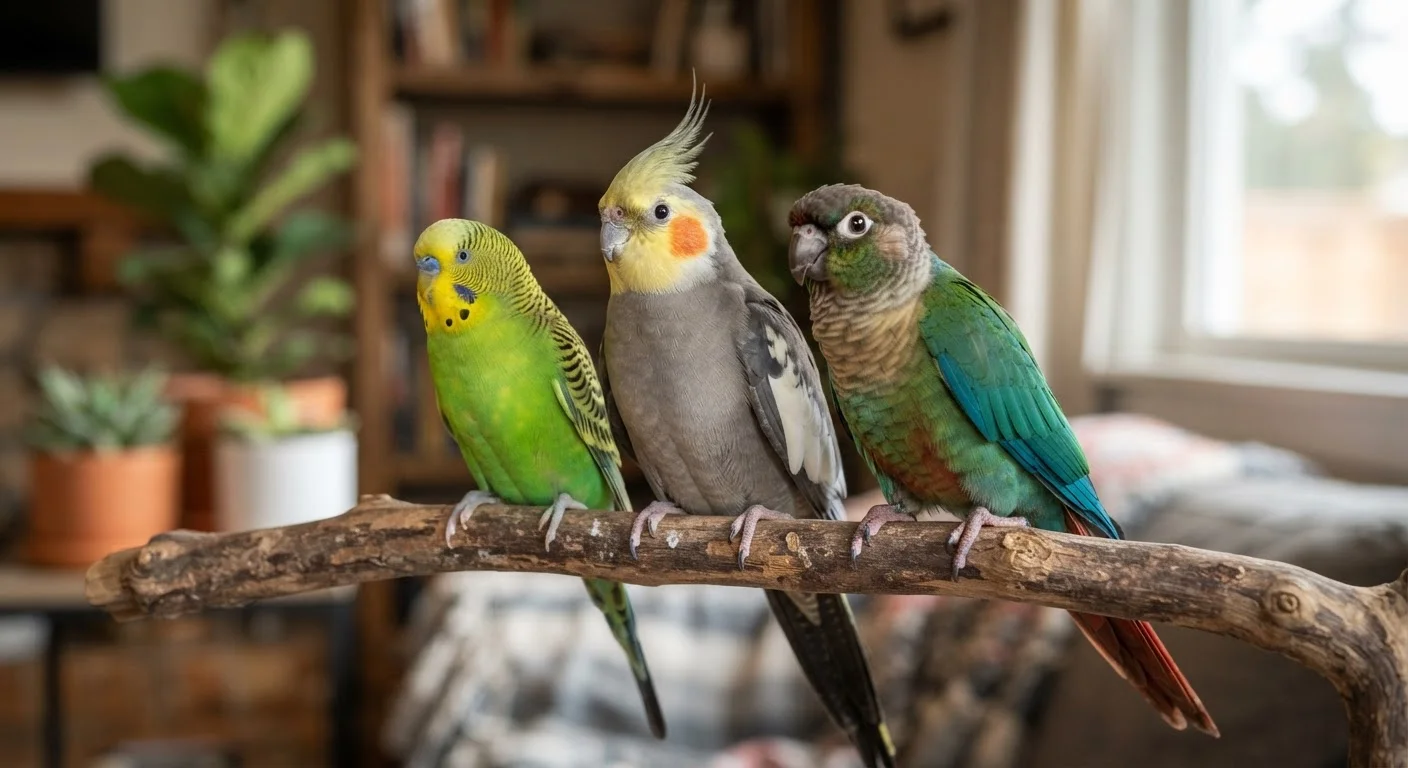
Photo credit: FaqBulletin.com | Information Made Easy
In this article
Not all pet birds have the same needs. Compare temperament, noise level, lifespan, and care demands across three popular small bird species.
Key Takeaways
- Parakeets are the most beginner-friendly option — smaller, quieter, and less demanding of hands-on time.
- Cockatiels are affectionate and moderately vocal, making them strong all-around companions for most households.
- Conures are bold, loud, and highly social — best suited for experienced owners with plenty of daily interaction time.
- All three species need daily out-of-cage time, mental stimulation, and annual veterinary check-ups.
- Lifespan ranges from roughly 10 years for parakeets to 20-plus years for some conure species — a genuine long-term commitment.
How These Three Birds Actually Differ
Parakeets (also called budgerigars or budgies), cockatiels, and conures are all popular small-to-medium parrots sold widely across the United States — but grouping them together as "small birds" glosses over meaningful differences in personality, noise, and daily care. Before you visit a breeder or rescue, it helps to understand what each species genuinely requires rather than what each looks like on a store shelf.
For a broader readiness check before adopting any bird, see our household readiness checklist — it covers budget, space, and schedule considerations that apply equally to birds.
| Parakeet | Cockatiel | Conure | |
|---|---|---|---|
| Adult size | 6–8 inches | 12–13 inches | 9–19 inches (species vary) |
| Typical lifespan | 8–12 years | 15–20 years | 15–25 years |
| Noise level | Low to moderate | Moderate | Moderate to very high |
| Handling & bonding | Can be hands-on with effort | Readily tames, affectionate | Strongly bonded, demands interaction |
| Suitable for beginners | Yes | Yes | Better for experienced owners |
| Daily time commitment | 1–2 hours | 2–3 hours | 3+ hours |
| Apartment-friendly | Generally yes | Usually yes | Often no (sun conures especially) |
Parakeets: The Accessible Starting Point
Parakeets are the smallest of the three and typically the easiest for a first-time bird owner to manage. Adults average 6–8 inches in length and weigh less than two ounces. Their vocalizations — chirping, soft warbling, and mimicked words — are generally tolerable even in apartments with thin walls. While parakeets can learn to talk, their voices remain quiet and somewhat indistinct compared to larger parrots.
They are social birds that benefit from either a cage companion or consistent daily interaction with their owner. A lone parakeet left without stimulation for long stretches can become withdrawn or develop feather-destructive behaviors. Their lifespan typically runs 8–12 years with good care, though some individuals live into their mid-teens. Diet centers on high-quality pellets supplemented with fresh vegetables — seed-only diets are nutritionally incomplete and a common mistake among new owners.
Pair or Solo? Know Before You Buy
Parakeets kept singly bond more deeply with their owner but require consistent daily interaction to stay emotionally healthy. A bonded pair of parakeets may be less interested in human interaction but will be more self-sufficient during busy weeks. Decide which dynamic fits your schedule before bringing one home — it shapes the bird's socialization from the start.
Cockatiels: The Well-Rounded Companion
Cockatiels occupy a comfortable middle ground. At 12–13 inches and around 3 ounces, they are noticeably larger than parakeets but still manageable for most households. Their signature crest is an emotional readout — raised when curious or excited, flattened when stressed — which makes reading their mood more intuitive than with many other species.
Cockatiels whistle melodically, and males in particular can be persistent singers. They are rarely described as screamingly loud, though they do have contact calls they use when separated from their flock (which, in a home setting, means you). Most cockatiels tame readily with patient handling and respond well to step-up training. Lifespan averages 15–20 years in good health, so this is a genuine long-term relationship. Families considering a cockatiel alongside young children should read our realistic guide to small pets and kids for supervision expectations.
Conures: Big Personality, Bigger Commitment
Conures encompass dozens of species — green cheeks, sun conures, and nanday conures are among the most common in American homes — and they vary in size and loudness. Sun conures, for instance, are widely acknowledged as among the loudest small parrots kept as pets. Their contact screams can exceed 100 decibels in some documented observations, making them genuinely unsuitable for shared-wall housing unless neighbors are unusually tolerant.
What conures offer in return is extraordinary personality: they are playful, curious, and deeply bonded to their owners when socialized well. They demand several hours of out-of-cage interaction daily and can develop behavioral problems — screaming, biting, feather plucking — when those needs go unmet. Lifespan for most commonly kept conure species ranges from 15 to 25 years depending on species and care quality. If you're bringing home a bird that may be nervous or hand-shy, our guide to taming skittish small pets covers trust-building techniques grounded in animal behavior research.
Health and Veterinary Considerations for All Three
All three species share one critical care requirement: access to an avian veterinarian. General-practice vets often have limited bird experience, so identifying an avian specialist before you bring a bird home is strongly recommended. Annual wellness exams, not just sick visits, are the standard of care endorsed by avian veterinary organizations.
Birds are prey animals that instinctively mask illness, which means symptoms often appear only once a condition is advanced. Common concerns across all three species include respiratory infections, psittacosis (a bacterial infection transmissible to humans), nutritional deficiencies from poor diets, and overgrown beaks or nails. Our companion article on how small pets hide illness outlines the behavioral and physical cues to watch for.
This article is for general informational purposes only and does not constitute veterinary advice. Always consult a licensed avian veterinarian for guidance specific to your bird's health and care needs.

Author
Pets Editorial Team
Pets Editorial Team is the collective byline for our editorial team and contributor network. Articles published under this byline or an editorial pen name are researched, written, and reviewed according to our editorial standards for clarity, consistency, and independence before publication.
View all articles →