
Companion Planting Combinations That Actually Work
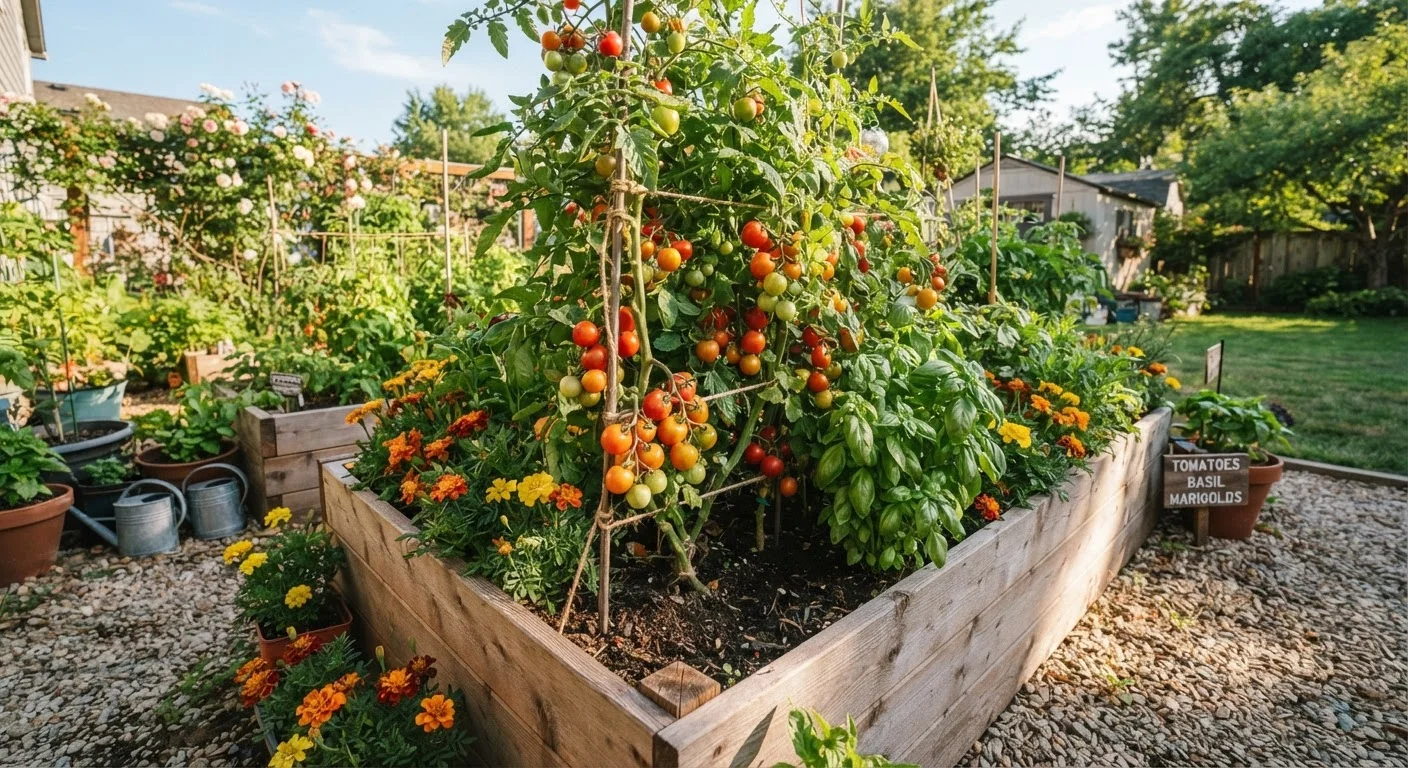
Photo credit: FaqBulletin.com | Information Made Easy
In this article
A curated look at well-supported plant pairings—tomatoes with basil, carrots with onions—and the science and tradition behind each combination.
Key Takeaways
- Companion planting works by combining plants that mutually benefit each other through pest deterrence, pollination, or nutrient sharing.
- Tomatoes and basil is one of the most widely practiced pairings, with evidence supporting pest-repelling effects.
- The Three Sisters method—corn, beans, and squash—is a time-tested combination rooted in Indigenous agricultural tradition.
- Not all popular pairings have rigorous scientific backing; understanding the reasoning helps you evaluate claims critically.
- Soil health and spacing still matter—companion planting works best alongside good foundational garden practices.
Why Companion Planting Deserves a Spot in Your Garden Plan
Companion planting is the practice of growing different plants in close proximity so they support one another—whether by repelling insects, attracting pollinators, fixing nitrogen in the soil, or simply making better use of space. It draws on centuries of agricultural tradition and, increasingly, on horticultural research.
It's worth being clear-eyed about what companion planting can and can't do. Some pairings have solid evidence behind them; others are based on gardener folklore that's been passed down without much testing. This list focuses on combinations that have a credible mechanism—either traditional, experimental, or both—so you can plant with confidence rather than guesswork.
If your vegetable patch has been struggling, companion planting alone won't fix everything. Our guide on why vegetable gardens underperform covers the foundational issues—soil, spacing, and watering—that should be addressed first. And for building the kind of soil that makes any planting strategy work, see our piece on soil health basics.
Tomatoes and Basil
This is the most popular companion pairing in North American home gardens, and there's reasonable support for its effectiveness. Basil contains volatile compounds—including linalool and eugenol—that have been shown in controlled studies to repel thrips and aphids when plants are in close proximity. Some gardeners also report that basil may improve tomato flavor, though this claim has less consistent research backing.
Plant basil around the base of tomato plants, about 12 inches apart. As a bonus, both plants prefer similar watering and sunlight conditions, making them easy to manage together.
Basil's volatile oils have measurable insect-repelling properties that benefit neighboring tomato plants.
Carrots and Onions (or Chives)
Carrot flies and onion flies are both destructive pests—and conveniently, each is deterred by the scent of the other's companion. Interplanting carrots and onions (or chives, which are easier to manage in smaller beds) creates a scent barrier that can confuse and discourage both insects from laying eggs near the roots.
This is an example of a pairing with a logical aromatic mechanism that has long been practiced in European kitchen gardens. Alternate rows or interplant in blocks for best effect. Chives also attract pollinators when they flower, adding a secondary benefit.
Alternating carrots and onions exploits each plant's scent to deter the other's most common pest.
The Three Sisters: Corn, Beans, and Squash
Developed over centuries by Indigenous peoples across North America, the Three Sisters is one of the most ecologically sophisticated companion planting systems ever devised. Corn provides a vertical trellis for climbing beans. Beans are legumes that fix atmospheric nitrogen into the soil, feeding the corn and squash. Squash spreads low across the ground, shading out weeds and retaining soil moisture with its broad leaves.
This combination works best in larger garden spaces where corn can reach full height. Plant corn first, add beans once corn is several inches tall, and introduce squash last. The symbiosis is real and well-documented by agricultural researchers.
The Three Sisters system is a self-supporting cycle of structure, nitrogen fixation, and ground cover.
Marigolds and Vegetable Crops
French marigolds (Tagetes patula) are among the most studied companion plants. They release a compound called alpha-terthienyl from their roots, which suppresses certain soil nematodes—microscopic worms that can damage vegetable root systems. Research from institutions including Rothamsted Research in the UK has supported this effect, particularly when marigolds are grown densely for a full season before vulnerable crops are planted.
As a border plant around tomatoes, peppers, or brassicas, marigolds also attract beneficial insects and deter whiteflies above ground. Plant them as a perimeter row or intersperse throughout beds.
French marigolds suppress harmful soil nematodes through root-released compounds, with documented research support.
Brassicas and Dill or Nasturtiums
Cabbage, broccoli, kale, and other brassicas are vulnerable to cabbage worms and aphids. Dill attracts parasitic wasps that prey on cabbage worm caterpillars—making it a genuinely functional companion rather than just a pleasant addition. Allow dill to flower to maximize this benefit.
Nasturtiums serve a different role: they act as trap crops, attracting aphids away from brassicas and other vegetables. Rather than eliminating aphids, nasturtiums concentrate them where they're easy to manage or remove. Plant nasturtiums at the edges of brassica beds and monitor them regularly, removing heavily infested plants as needed.
Dill attracts aphid-eating wasps; nasturtiums draw aphids away from crops as a deliberate trap plant.
Lettuce and Tall Plants (Tomatoes or Sunflowers)
Lettuce is prone to bolting—going to seed prematurely—when exposed to intense afternoon heat. Pairing it with taller plants like tomatoes or sunflowers provides natural shade during the hottest part of the day, extending the lettuce growing season into late summer without any chemical intervention.
This is a spatial and microclimate pairing rather than a chemical one, but it's highly practical. Position lettuce on the north or east side of taller plants (in the Northern Hemisphere) so it receives morning sun and afternoon shade. This technique also makes efficient use of vertical growing space.
Tall plants cast afternoon shade that prevents lettuce from bolting in summer heat.
Putting These Pairings to Work in Your Garden
The most practical approach is to start with one or two combinations that fit the crops you're already growing. Trying to redesign your entire garden layout around companion planting all at once can create more confusion than benefit.
Start Small and Observe Results
Choose one or two pairings from this list that match crops you're already planning to grow. Introduce them intentionally in one section of your garden and leave a control area without the companion plant. This lets you compare results and build real knowledge rather than relying entirely on general claims.
Keep a simple garden journal noting which pairings you tried and what you observed—pest pressure, plant vigor, and harvest results. Over two or three seasons, your own notes will become your most reliable guide.
Companion planting pairs especially well with container setups, where you can fine-tune proximity and control soil conditions more precisely. Our container gardening guide covers how to adapt these combinations for patios and small spaces. And since many companion plants are heavy organic matter producers, linking your planting plan with a home compost system—see our composting at home guide—closes the loop on a more self-sustaining garden cycle.

Author
Home & Garden Editorial Team
Home & Garden Editorial Team is the collective byline for our editorial team and contributor network. Articles published under this byline or an editorial pen name are researched, written, and reviewed according to our editorial standards for clarity, consistency, and independence before publication.
View all articles →