
Defensive Driving Principles That Reduce Crash Risk in Everyday Conditions
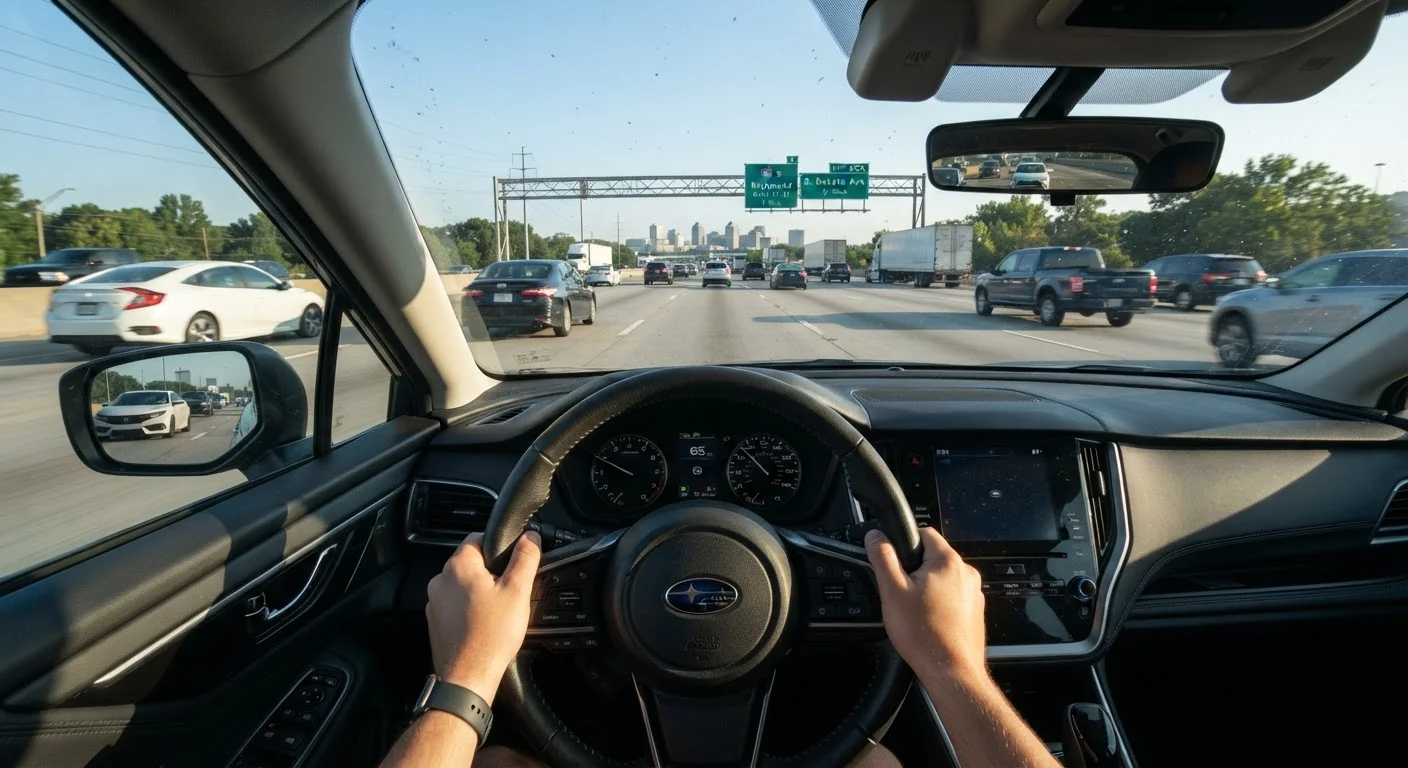
Photo credit: FaqBulletin.com | Information Made Easy
In this article
Defensive driving isn't just for new drivers. These evidence-backed habits help experienced drivers anticipate and avoid dangerous situations.
Key Takeaways
- Maintaining a three-second following distance is one of the single most effective crash-prevention habits available to any driver.
- Scanning 12-15 seconds ahead - not just the car in front - gives drivers time to react before a hazard becomes unavoidable.
- Distraction, complacency, and overconfidence are as dangerous as poor road conditions or mechanical failure.
- Defensive driving principles apply regardless of experience level and become more valuable as traffic complexity increases.
- Modern driver-assistance technologies support but do not replace attentive, skilled driving behavior.
What Defensive Driving Actually Means
Defensive driving is often described as expecting other drivers to make mistakes - and positioning yourself to avoid the consequences when they do. It's a collection of deliberate, evidence-supported habits that reduce crash exposure in ordinary, everyday conditions: highways, intersections, parking lots, and school zones.
The concept originated from formal driver education research and has been incorporated into programs endorsed by organizations such as the National Safety Council. The core premise is that most crashes are preventable, and that driver behavior - not just road conditions or vehicle failure - is the dominant variable.
Experienced drivers sometimes assume defensive technique is only for beginners. The data suggests otherwise. A significant proportion of serious crashes involve drivers with years of experience behind the wheel, often because familiarity breeds complacency. Understanding common safety myths that experienced drivers hold is a useful starting point for honest self-assessment.
Maintain a minimum three-second following distance under normal conditions
Rear-end collisions are among the most common crash types in the United States, and the majority occur because drivers underestimate how much space is needed to stop safely. A three-second gap provides reaction time and braking distance; increase this to four or more seconds in rain, fog, or heavy traffic.
Scan 12-15 seconds ahead of your vehicle, not just the car in front of you
Drivers who focus only on the vehicle immediately ahead react to problems rather than anticipating them. Scanning further up the road allows you to identify braking patterns, merging vehicles, and hazards with enough time to respond smoothly.
Eliminate all non-driving distractions before moving
Cognitive and visual distraction measurably increases crash risk. Research consistently shows that even hands-free phone conversations impair hazard detection. Programming navigation, adjusting music, and addressing passengers should happen when stopped, not while moving.
Check mirrors every five to eight seconds and before every lane change
Traffic situations change continuously. Regular mirror checks build an accurate mental model of the vehicles around you, reducing surprise encounters during merges and lane changes. A glance at blind-spot areas over your shoulder is still necessary even in vehicles equipped with blind-spot monitoring.
Adjust speed for conditions, not just the posted limit
Speed limits are set for ideal conditions. Rain, ice, heavy traffic, poor visibility, and road construction all reduce the margin of safety at the posted limit. Driving at a speed appropriate to actual conditions - even below the limit when necessary - is a core defensive principle.
Communicate your intentions clearly and early
Other drivers can only respond to what they can predict. Using turn signals well in advance, avoiding sudden braking, and making eye contact with pedestrians at crosswalks all reduce the likelihood that others will be caught off guard by your movements.
Core Defensive Driving Practices
The practices below represent well-established techniques drawn from driver safety research and professional driver training curricula. Each one can be applied immediately in ordinary driving conditions.
How Technology Fits Into a Defensive Mindset
Modern vehicles increasingly include advanced driver-assistance systems (ADAS) - features like automatic emergency braking, lane-keeping assist, and blind-spot monitoring. These tools are genuinely useful, but they work best when paired with skilled, attentive driving rather than as a substitute for it.
A driver who relies on blind-spot monitoring to skip a shoulder check has shifted responsibility to a system that has documented limitations in certain conditions. Understanding what each system does - and where it falls short - is itself a defensive habit. Our ADAS feature comparison breaks down what these systems actually deliver in real-world scenarios.
Similarly, understanding the difference between active safety (crash prevention) and passive safety (crash protection) helps drivers appreciate where their own behavior has the greatest leverage. See our overview of active vs. passive safety systems for a fuller picture.
Vehicle condition also matters. Worn tires and poorly adjusted mirrors erode the margin of safety that defensive technique is designed to create. Staying current on routine car maintenance is an often-overlooked dimension of crash prevention.
94%
Crashes with driver behavior as a factor
The National Highway Traffic Safety Administration has attributed approximately 94% of serious crashes to driver choice or error, rather than vehicle failure or environment alone.
3 sec
Recommended minimum following distance
Driver safety programs broadly recommend a three-second gap as the minimum safe following distance in normal conditions, increasing to four or more seconds in adverse weather.
3x
Increased crash risk from phone use while driving
Studies referenced by the NHTSA indicate that using a handheld phone while driving can increase crash risk by approximately three times compared to undistracted driving.
Special Conditions That Demand Extra Vigilance
Certain driving environments amplify crash risk and require a more deliberate application of defensive principles. Night driving is one of the most underestimated of these. Fatal crash rates are disproportionately high after dark - a consequence of reduced visibility, increased fatigue, and a higher prevalence of impaired drivers on the road. Our guide on night driving risks most people underestimate covers the specific adjustments that help.
Teen drivers represent another elevated-risk group. Inexperience, peer influence, and underdeveloped hazard perception combine to make motor vehicle crashes a leading cause of death among American teenagers. Families with new drivers on the road should review what parents and teen drivers need to understand about road safety.
Even the most skilled defensive driver may eventually be involved in a crash. Knowing what steps to take at the scene - safely, legally, and clearly - is its own form of preparedness. Our guide on what to do immediately after a car accident provides a clear sequence of actions.
Defensive Driving Courses Are Available to All Drivers
Many states offer accredited defensive driving courses that can fulfill court requirements, reduce points on a license, or qualify drivers for an insurance discount - though terms vary by state and insurer. These courses are also available voluntarily and cover hazard perception, space management, and emergency response techniques. Check with your state's motor vehicle authority for approved programs in your area.

Author
Automotive Editorial Team
Automotive Editorial Team is the collective byline for our editorial team and contributor network. Articles published under this byline or an editorial pen name are researched, written, and reviewed according to our editorial standards for clarity, consistency, and independence before publication.
View all articles →