
Night Driving Risks Most People Underestimate
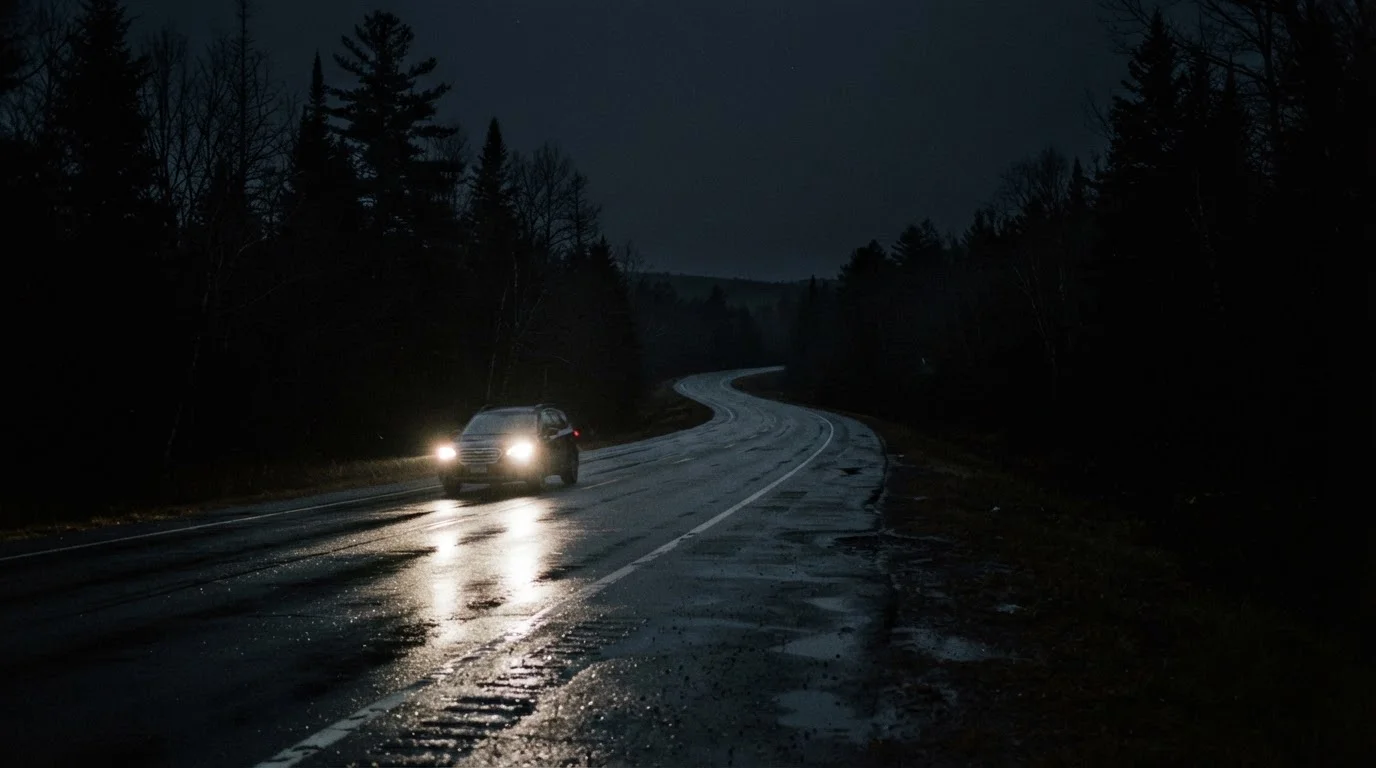
Photo credit: FaqBulletin.com | Information Made Easy
In this article
Fatal crash rates rise sharply after dark. Understand why nighttime driving is disproportionately dangerous and what adjustments actually help.
Key Takeaways
- Fatal crash rates per mile driven are roughly three times higher at night than during the day.
- Human night vision degrades significantly with age, making older drivers especially vulnerable after dark.
- Overdriving headlights - going faster than your stopping distance - is one of the most common and dangerous nighttime errors.
- Fatigue and impaired driving are disproportionately concentrated in nighttime hours, compounding crash risk.
- Simple adjustments - clean headlights, reduced speed, increased following distance - meaningfully reduce nighttime risk.
Why Night Driving Is Genuinely More Dangerous
Most drivers intuitively know that driving at night carries more risk, but few appreciate how dramatic that difference actually is. According to the National Safety Council, traffic fatalities occur at a disproportionately high rate after dark - roughly three times the per-mile fatality rate compared to daytime driving, even though traffic volume is significantly lower. The combination of reduced visibility, impaired depth perception, and a higher concentration of fatigued and impaired drivers creates conditions that most people seriously underestimate.
Human eyes adapt to darkness, but that adaptation is far from perfect. Contrast sensitivity falls sharply, peripheral vision narrows, and the ability to judge distance and speed becomes less reliable. For drivers over 50, these limitations are meaningfully more pronounced - a detail worth understanding if you regularly drive family members in that age group. If you've already reviewed common car safety myths, you know that confidence behind the wheel can actually inflate perceived competence beyond actual ability. Nowhere is that gap more consequential than after dark.
~3x
Higher fatal crash rate per mile at night
The National Safety Council estimates that traffic fatalities are roughly three times more likely per mile driven at night than during daylight hours.
50%+
Headlight output lost to lens oxidation
Studies from the AAA Foundation for Traffic Safety indicate that severely degraded headlight lenses can cut usable light output by more than half.
The Most Underestimated Nighttime Mistakes
The errors below aren't rare lapses in judgment - they're patterns that show up repeatedly in crash data and driver behavior research. Understanding why they happen is the first step toward correcting them.
Overdriving your headlights - traveling at a speed where stopping distance exceeds the distance illuminated by headlights.
Why it happens: Drivers calibrate speed to road conditions based on habit and posted limits rather than actual visibility. Standard headlights on low beam illuminate roughly 160 feet; at 60 mph, stopping takes about 200 feet.
Failing to account for fatigue, especially during late-night or early-morning hours when the body's circadian rhythm demands sleep.
Why it happens: Drivers often don't recognize that fatigue impairs reaction time and judgment in ways similar to alcohol - and that the feeling of alertness can lag significantly behind actual impairment.
Using high beams incorrectly - either leaving them off when no oncoming traffic is present, or failing to dim them for approaching vehicles.
Why it happens: Many drivers treat high beams as an occasional luxury rather than a default tool on dark rural roads, while others forget to switch back to low beams when oncoming traffic appears.
Neglecting headlight maintenance - driving with oxidized lenses, misaligned beams, or burned-out bulbs that significantly reduce nighttime illumination.
Why it happens: Headlight degradation happens gradually, making it easy to overlook. Drivers adapt to reduced light output without realizing how compromised their visibility has become.
Staring into oncoming headlights, which causes temporary night blindness and disrupts forward vision for several seconds.
Why it happens: The instinct is to look toward a light source. Drivers don't always realize this momentary glare can reduce visual acuity precisely when they most need to see the road ahead.
Drowsy Driving Is Not a Minor Risk
Being awake for 18 consecutive hours produces impairment comparable to a blood alcohol concentration of 0.05%, according to research cited by the National Highway Traffic Safety Administration. Driving after 20-24 hours without sleep approaches the impairment level of 0.10% BAC. If you're planning an overnight drive, recognize that fatigue is not a discomfort to push through - it is a meaningful safety threat that warrants stopping or rescheduling the trip.
Nighttime driving also demands greater attention to pedestrians and cyclists, who are far harder to see and may not always be using reflective gear. For guidance on navigating visibility challenges beyond darkness - rain, fog, snow - see our bad weather driving guide.
What Actually Helps at Night
Some adjustments are mechanical, some are behavioral, and all of them are within any driver's control. Keeping headlights clean is one of the most overlooked maintenance tasks in American households - oxidized, yellowed headlight lenses can reduce light output by more than 50 percent. Aim for a professional restoration or replacement if lenses are visibly degraded.
Reduce your speed on unfamiliar or unlit roads, not just to react to hazards sooner, but to bring your stopping distance inside the range your headlights actually cover. Increase your following distance beyond the standard three-second rule at night - four to five seconds gives you meaningful additional buffer. If you're driving with newer or teen drivers, nighttime miles should come only after significant daytime experience; the teen driver safety guide covers how graduated licensing frameworks approach this risk specifically.
Also review your mirror adjustments before driving at night. Glare from vehicles behind you can temporarily degrade forward vision - use your rearview mirror's night setting (the small tab on most mirrors) and be aware that blind spots shift in low-light conditions as your visual field narrows. These aren't dramatic changes. They are consistent, deliberate habits that compound into substantially safer driving over time.

Author
Automotive Editorial Team
Automotive Editorial Team is the collective byline for our editorial team and contributor network. Articles published under this byline or an editorial pen name are researched, written, and reviewed according to our editorial standards for clarity, consistency, and independence before publication.
View all articles →