
Why Your Blind Spot Is Bigger Than You Think
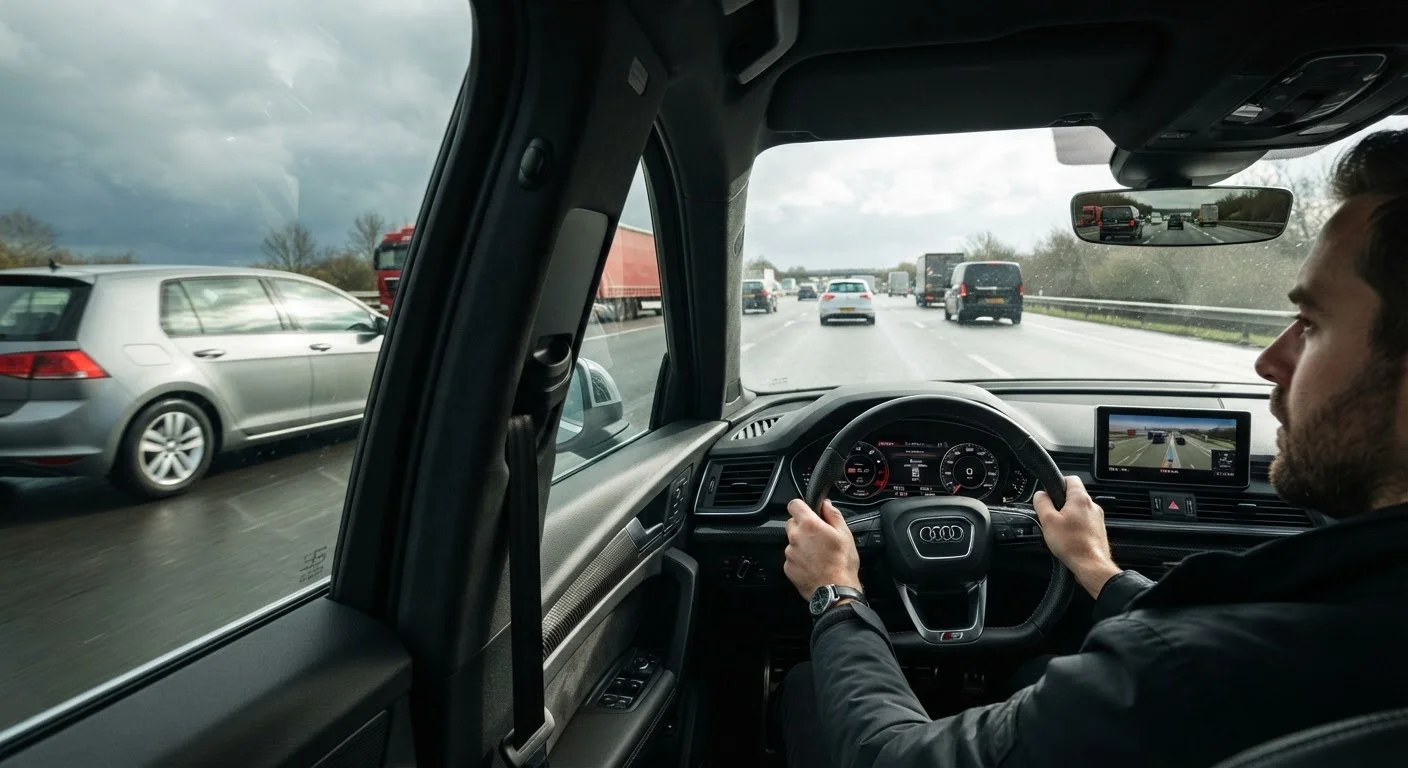
Photo credit: FaqBulletin.com | Information Made Easy
In this article
Blind spots vary dramatically by vehicle type and mirror adjustment. Here's what drivers often miss and how to compensate effectively.
Key Takeaways
- Blind spot size varies dramatically depending on vehicle type - SUVs and trucks have substantially larger zones than sedans.
- Incorrect mirror adjustment is the single most controllable factor that makes blind spots worse.
- Shoulder checks remain essential even when blind-spot monitoring systems are equipped.
- Pedestrians, cyclists, and motorcyclists are most vulnerable to blind-spot-related incidents.
- Rear cross-traffic alerts and camera systems help but have their own detection limits.
Why Blind Spots Are More Serious Than Drivers Expect
Most drivers understand that blind spots exist, but underestimate how large they are and how quickly a vehicle can move through them. At highway speeds, a car in an adjacent lane can travel from the edge of mirror coverage to directly alongside you in roughly one second - well within the time it takes to glance at a navigation screen or check a gauge.
The problem is compounded by the fact that blind spot size is not constant. It changes with vehicle type, mirror position, seat height adjustment, and even the driver's own seated posture. A driver who moves from a compact sedan to a midsize SUV may be managing a rear-quarter blind zone that is 30-50% larger without being aware of it. Common safety assumptions - like believing an SUV's height gives you better overall visibility - can actually create complacency around these expanded blind zones.
840,000+
Annual US blind-spot-related crashes
The National Highway Traffic Safety Administration has attributed approximately 840,000 crashes per year in the US to blind-spot-related lane-change incidents.
~300 ft
Forward blind zone length for large trucks
Safety research has documented forward blind zones of up to approximately 20 feet directly in front of large SUVs and pickups, with some configurations exceeding that in low-clearance parking scenarios.
50%+
Of motorcyclist fatalities involve cars turning or changing lanes
NHTSA data consistently shows that a significant proportion of fatal motorcycle crashes involve the other vehicle's failure to detect the motorcyclist - closely tied to blind-spot and inattention factors.
How Vehicle Design Shapes Your Blind Zones
Vehicle architecture is the primary driver of blind spot geometry. The B-pillar - the structural post between the front and rear side windows - is a significant source of lateral blind spots. In modern vehicles designed to meet rollover-protection standards, B-pillars have grown thicker, which can obscure a substantial arc of view when checking mirrors or performing shoulder checks.
Pickup trucks and full-size SUVs introduce an additional forward blind zone caused by the hood's length and height. Studies by safety organizations have documented that the area directly in front of large trucks can conceal multiple small children from the driver's seated position - a factor particularly relevant in residential driveways and parking lots.
Sedans and hatchbacks, by contrast, tend to have thinner pillars, lower beltlines, and smaller overall blind zones - though they are not immune. Fastback rooflines on some models reduce rear window size and limit rearview mirror coverage significantly.
Mirror Adjustment: The Most Overlooked Fix
Properly set mirrors can eliminate a meaningful portion of the traditional rear-quarter blind spot. The conventional habit of positioning side mirrors so that the driver sees their own vehicle's flank wastes significant coverage area - that space is already visible directly out the side window. The recommended technique, advocated by safety researchers, is to angle each mirror further outward until the vehicle's body is barely or not visible at the inner edge.
This wider setting creates a near-seamless coverage band: the center rearview mirror covers directly behind you, the side mirrors cover the adjacent lanes, and a brief shoulder check closes the remaining gap. Many drivers who adopt this adjustment report that the traditional blind spot largely disappears.
Recalibrate Mirrors Every Time You Sit Down
Before you start moving, spend five seconds confirming your side mirrors are angled so your own vehicle is barely visible - or not visible - at the inner edge of each mirror. This quick habit compensates for seat adjustments, posture changes between trips, and mirrors bumped in parking lots. Combine it with a shoulder check before any lane change and you close most of the gap that blind spots create.
It is also worth noting that mirror adjustment is not a one-time task. Seat position changes between drivers sharing a vehicle, or even shifts in your own posture over a long drive, can alter effective mirror coverage. A quick recalibration before any trip is a practical habit.
Driver Assistance Technology: Help With Real Limits
Blind-spot monitoring (BSM) systems, now standard or available on many vehicles, use radar sensors mounted in the rear bumper to detect vehicles in adjacent lanes and alert the driver - typically with a light in or near the side mirror. These systems have meaningfully improved lane-change safety, but they operate within defined parameters that drivers should understand.
BSM sensors have detection range limits and may not flag fast-moving motorcycles approaching from distance, vehicles in non-adjacent lanes merging toward you, or stationary objects when reversing. Rear cross-traffic alert systems address some parking-lot scenarios but also rely on radar geometry that can be affected by certain environments. For a thorough comparison of what these systems actually do in practice, see our breakdown of driver assistance technologies.
The consistent guidance from safety professionals is that technology assists the driver - it does not replace the shoulder check. Treating BSM alerts as a final word rather than one input among several is where the risk re-enters.
Vulnerable Road Users and the Blind Spot Problem
Motorcyclists, cyclists, and pedestrians face a disproportionate risk from driver blind spots because their smaller profile makes them easier to miss even within a zone the driver believes they checked. A motorcyclist traveling at highway speed can be present in a side mirror's coverage gap for a fraction of a second - long enough to be missed, not long enough to register consciously.
Urban and suburban driving adds complexity. Cyclists approaching intersections from the right, pedestrians stepping off curbs, and children near parked vehicles all occupy zones where driver sightlines are frequently limited. Nighttime conditions amplify these risks significantly, as reduced contrast makes it harder to detect movement in peripheral zones.
Developing deliberate habits - slowing before lane changes, checking mirrors twice within two seconds, and performing a shoulder check as a reflex rather than an afterthought - substantially reduces the risk these gaps create for everyone on the road.
This article provides general driver education and is not a substitute for professional driver training. Mirror adjustment techniques and technology descriptions reflect widely cited safety guidance; consult your vehicle's owner's manual for model-specific information.
Frequently Asked Questions

Author
Automotive Editorial Team
Automotive Editorial Team is the collective byline for our editorial team and contributor network. Articles published under this byline or an editorial pen name are researched, written, and reviewed according to our editorial standards for clarity, consistency, and independence before publication.
View all articles →