
Driving in Bad Weather: Rain, Snow, Ice, and Fog
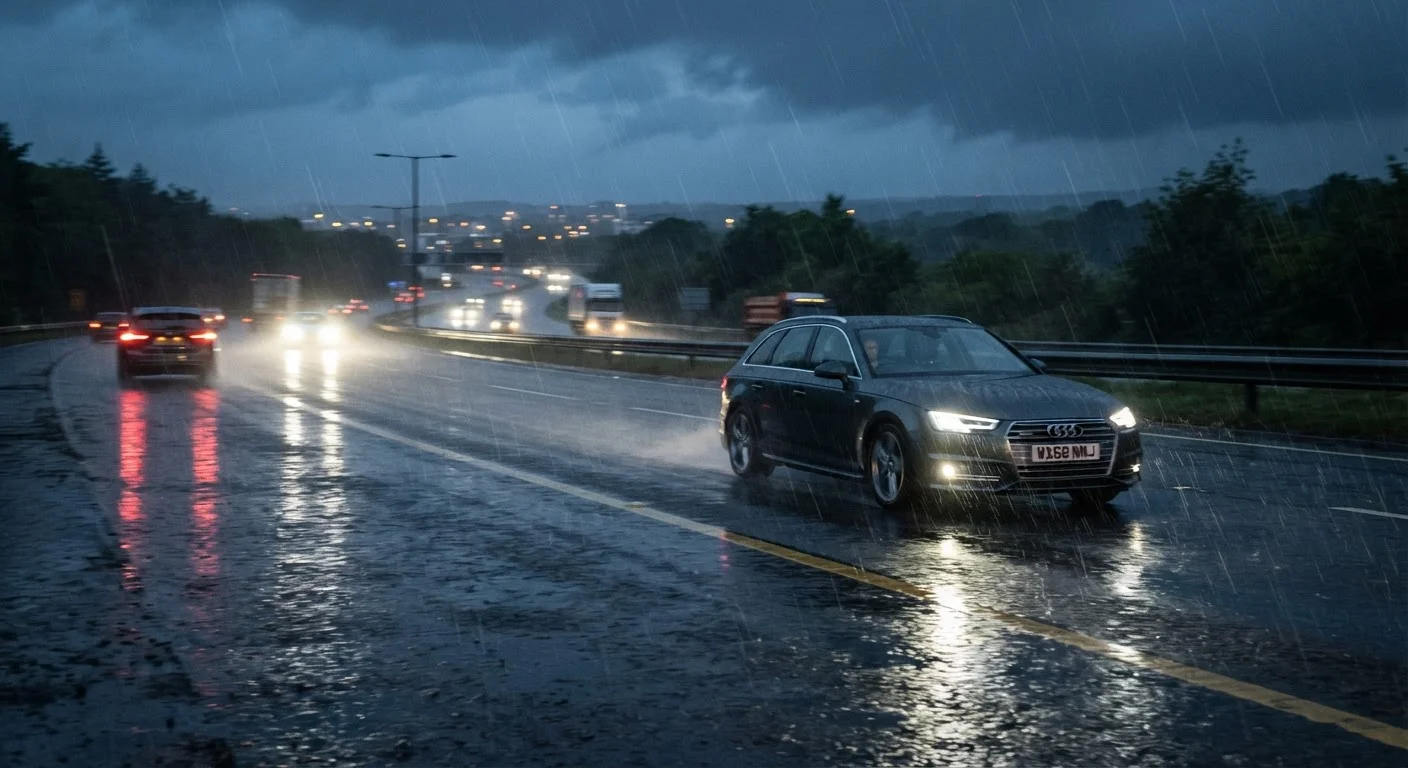
Photo credit: FaqBulletin.com | Information Made Easy
In this article
Each weather condition changes how your car handles. This guide covers speed, following distance, braking, and visibility adjustments for each.
Key Takeaways
- Reduce speed well below the posted limit in rain, snow, ice, or fog - conditions set the ceiling, not the sign.
- Triple your following distance on wet roads and increase it even further on snow or ice.
- Black ice forms without visible warning; treat any road below 35°F as potentially frozen.
- In fog, use low-beam headlights - never high beams, which reflect glare back at you.
- Brake gently and early; hard, sudden braking causes skids on every slippery surface.
- When conditions are severe enough, the safest decision is to pull over and wait them out.
Why Weather Changes Everything About How Your Car Handles
A dry road gives your tires maximum grip. Introduce water, snow, ice, or dense fog and that equation shifts dramatically - stopping distances lengthen, steering response dulls, and visibility collapses. Most drivers understand this in principle but underestimate just how severe the change is in practice. Wet pavement can more than double your stopping distance; ice can increase it by eight to ten times compared to dry asphalt.
Vehicle condition matters before you even pull out of the driveway. Worn tires, low tread depth, and underinflated rubber all compromise grip long before bad weather arrives. Our tire maintenance guidance explains how tread depth and pressure directly affect stopping distances - worth reviewing before winter. A seasonal vehicle check covering fluids, wipers, and brakes is equally important; the seasonal car maintenance checklist lays out exactly what to inspect.
The steps below address each major weather type individually because the right technique in rain differs from the right technique in fog or on ice. Read the section relevant to your current conditions, and apply the adjustments before you encounter the hazard - not after.
Step-by-Step: Adjusting Your Driving for Each Condition
Follow these steps when hazardous weather is present. Many apply across multiple conditions; where a technique is specific to one surface type, that is noted.
Reduce Speed Before You Enter the Hazard Zone
Slow down before you reach wet, icy, or foggy conditions - not after you're already in them. Speed reduction improves grip and gives you more time to react. In rain, reduce speed by at least 5-10 mph below the posted limit. In snow, aim for 10-20 mph below. On ice or in dense fog, drive only as fast as your sight distance allows you to stop completely.
Increase Following Distance Significantly
The standard three-second following gap is designed for dry roads. In rain, expand it to at least six seconds. On snow or ice, eight to ten seconds is more appropriate. To measure: pick a fixed landmark, note when the vehicle ahead passes it, then count seconds until you reach the same point. If you close the gap sooner than your target, ease off the accelerator gently.
Brake Early and Smoothly
Begin braking earlier than you normally would and apply pressure gradually. Sudden or hard braking causes wheels to lock up and can send the vehicle into a skid regardless of whether you have ABS (anti-lock braking system). If your vehicle has ABS, maintain firm, steady pressure and let the system pulse automatically - do not pump the pedal. If you feel the rear of the vehicle sliding, ease off the brake and steer gently into the skid direction to regain control.
Identify and Respond to Ice, Including Black Ice
Black ice is transparent and nearly invisible, forming most often on bridges, overpasses, shaded sections of road, and intersections where water pools. It appears when air temperature drops to 32°F or when road surface temperature falls below freezing even if the air reads slightly higher. If your vehicle suddenly feels like it's floating or steering input stops producing response, assume ice. Lift off the accelerator, avoid sudden steering inputs, and allow the vehicle to slow naturally.
Use Headlights Correctly for Each Condition
In rain, turn on your headlights - most states require them when wipers are in use. Low beams are correct for fog and heavy snow; high beams reflect off precipitation and reduce your own visibility. In moderate rain on a well-lit road, parking lights alone are not sufficient - use full low beams. Keep lenses clean and confirm all lights are functional as part of routine maintenance.
Manage Hydroplaning Calmly
Hydroplaning occurs when a layer of water builds between your tires and the road surface, causing the vehicle to lose contact with the pavement. It can happen suddenly, especially at highway speeds in heavy rain. If you hydroplane: lift your foot off the accelerator - do not brake hard - hold the steering wheel straight, and allow the vehicle to slow until tires regain contact. Oversteering or hard braking while hydroplaning will cause a spin.
Pull Over Safely When Conditions Exceed Safe Driving
If visibility drops to near zero, if road conditions are beyond your ability to manage, or if you feel unsafe, pull completely off the travel lanes onto a shoulder or into a parking area. Turn on hazard lights. Do not stop in a travel lane. Stay in the vehicle with your seatbelt fastened until conditions improve or help arrives. Exiting onto a highway shoulder during a storm introduces significant pedestrian risk.
AWD and 4WD Do Not Prevent Skids
All-wheel drive and four-wheel drive distribute engine power to improve traction when accelerating, but they provide no advantage when braking or cornering on slippery surfaces. Drivers of AWD and 4WD vehicles are frequently involved in winter crashes precisely because they overestimate their vehicle's capability. Treat all slippery roads with the same caution regardless of your drivetrain.
Fog and Night Overlap: A Compounding Hazard
Fog and darkness often arrive together, and each amplifies the danger of the other. High beams in fog scatter light off water droplets and reflect directly back into your eyes, reducing your usable sight distance rather than extending it. Low beams keep the light aimed at the road surface where it helps. Fog lights - if your vehicle has them - are designed for exactly this scenario and can be used in addition to low beams.
Dense fog can legally qualify as a condition severe enough to reduce speed to a crawl or stop entirely. Pull completely off the roadway onto a shoulder or into a parking area, turn on your hazard lights, and wait for visibility to improve. Stopping in a travel lane is far more dangerous than any delay. For a broader look at low-visibility driving risks after dark, see our night driving risk overview.
Pre-Trip Weather Check Takes Two Minutes
Before any drive in questionable conditions, check your state's 511 road condition line or its DOT website for real-time closures and advisories. The National Weather Service provides hour-by-hour forecasts that can reveal whether conditions will worsen during your travel window. Two minutes of checking can prevent hours of danger.
When to Cancel or Delay the Trip
No destination justifies an unacceptable level of risk. Before driving in severe weather, check road condition reports from your state's department of transportation, review the National Weather Service forecast for your route, and monitor whether conditions are worsening or improving. If authorities have issued a travel advisory or road closure, those directives exist for concrete safety reasons.
Road trips carry extra exposure because unfamiliar routes and fatigue compound weather risk. Our road trip planning guide covers how ignoring weather forecasts is one of the most common ways a planned journey turns dangerous. Build buffer time into any trip during weather-prone seasons so that a mandatory delay doesn't become pressure to drive when you shouldn't.
This article provides general driver education and safety information. Always follow local traffic laws, posted road signs, and guidance from law enforcement or transportation authorities for your specific conditions.

Author
Automotive Editorial Team
Automotive Editorial Team is the collective byline for our editorial team and contributor network. Articles published under this byline or an editorial pen name are researched, written, and reviewed according to our editorial standards for clarity, consistency, and independence before publication.
View all articles →