
Seasonal Rotation: Managing What Comes In and Out of Storage All Year
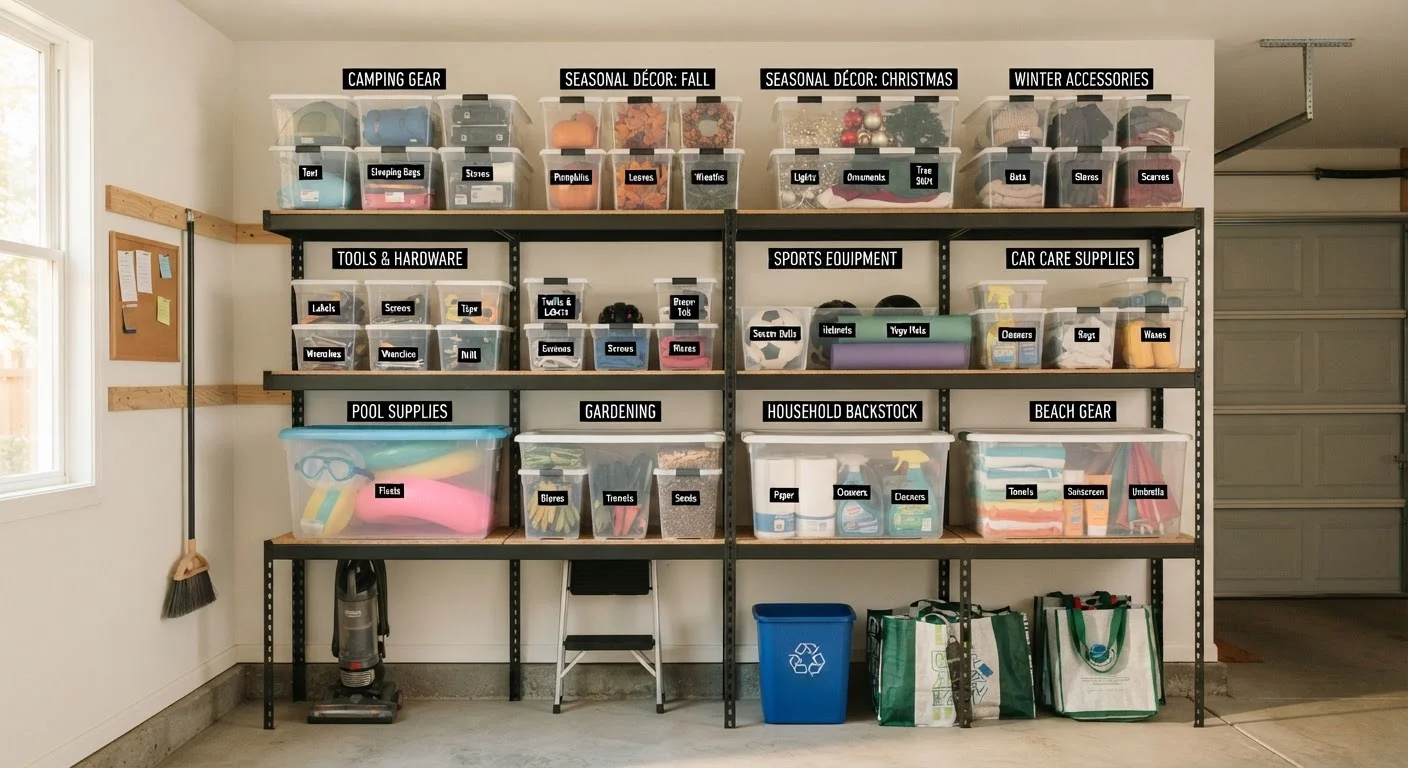
Photo credit: FaqBulletin.com | Information Made Easy
In this article
Holiday decorations, winter gear, summer gear — cycling seasonal items in and out takes a system. Learn how to store and retrieve them without losing your mind.
Key Takeaways
- Grouping items by season before storing them dramatically reduces retrieval time later.
- Clear, labeled containers eliminate the guesswork that leads to duplicate purchases.
- Scheduling two annual swap sessions — spring and fall — prevents pile-up and keeps storage manageable.
- Assigning a fixed zone for each season's items creates a system that sustains itself over time.
- Condition-checking during rotation is the easiest way to catch damage before it worsens.
Why Seasonal Rotation Deserves a Real System
Most households rotate seasonal items the same way every year: in a rush, with no real plan, stuffing things wherever there's space. Holiday decorations end up mixed with pool toys. Winter coats share a bin with Halloween costumes. By the time next season rolls around, nobody can find anything — and the frustration restarts the cycle.
A deliberate rotation system changes that dynamic entirely. Instead of reacting to each season, you're ahead of it. Items come out clean, intact, and easy to locate. What goes back into storage is sorted, labeled, and ready for next year. The goal isn't perfection — it's a repeatable process your whole household can follow without thinking too hard about it.
If your closets and storage areas tend to collapse after a short stretch of order, the missing ingredient is usually structure, not effort. See our guide to why storage systems break down for a deeper look at the design habits that make organization last. You might also find underused storage spots in your home that can quietly expand where seasonal items live.
Start With One Category, Not the Whole House
If a full-system overhaul feels overwhelming, start with just one seasonal category — holiday decorations are a common first choice because they're clearly defined and only used once a year. Get that one category working smoothly before adding others. A small, functioning system is far more useful than an ambitious one that never gets finished.
What You'll Need Before You Start
Gather your materials before the first swap so you're not stopping mid-session to find a marker or run to the store.
What you will need
Clear stackable bins with lids
Allow you to see contents at a glance without opening each container, reducing retrieval time.
Adhesive label maker or weatherproof labels and marker
Identify bin contents and the season they belong to so anyone in the household can locate or return items correctly.
Shelving unit or wall-mounted storage rack
Keeps bins off the floor, protects contents from moisture, and makes seasonal zones visually distinct.
Vacuum storage bags
Compress bulky soft items like winter coats, comforters, and sleeping bags to reduce the space they occupy.
Inventory notepad or shared digital note
Tracks what is in each bin so you can find items without opening everything.
Plastic moisture-absorbing packets (silica gel)
Protect stored items from humidity damage, particularly important in basements and garages.
Step-by-Step: Building and Running Your Rotation System
Follow these steps the first time to set up your system, then repeat steps 4 through 7 every time a season changes. The setup work front-loads the effort — subsequent rotations take a fraction of the time.
Audit everything currently in storage
Before creating any system, pull everything out of your storage area and sort it into four piles: keep, donate, discard, and needs repair. This step is non-negotiable. Organizing items you no longer need wastes containers and space. Be honest — if seasonal decor hasn't come out in three years, it likely won't.
Define your seasonal categories
Divide your keepers into categories that reflect how your household actually lives. Common groupings include: Winter (cold-weather clothing, holiday decor, snow gear), Spring/Summer (gardening tools, outdoor furniture cushions, sports and water gear), and Fall (harvest decor, back-to-school gear, transitional clothing). Adjust categories to fit your family — a household without children has different needs than one with three kids in different activities.
Assign dedicated storage zones
Map out where each seasonal category will live permanently. Assign the most accessible spots to the season you're currently in or approaching. Less accessible spaces — high shelves, far corners — work well for items that won't be touched for six or more months. Mark each zone clearly with a label on the shelf edge or wall so the system is self-explanatory to anyone who uses the space.
Pack and label each bin before storing
Pack items by category into clear bins. Label each bin on at least two sides with its contents and season. For soft items like clothing and bedding, vacuum storage bags can cut the space needed by more than half. Add a moisture-absorbing packet inside bins going into humid environments. Keep a brief inventory — either handwritten on the bin label or in a shared household note — listing what's inside.
Schedule two annual swap sessions
Put two dates on the household calendar each year: one in early spring (typically late March or April) and one in early fall (September or October). These are your rotation windows. Treat them like any other scheduled household task — block the time and protect it. Two to three hours per swap is realistic for most families once the initial system is in place.
During each swap: inspect, clean, then store
When items come out of storage, inspect them before putting them into use. Check for damage, mildew, missing parts, or outgrown sizing. When items go back into storage, clean them first — laundering clothing, wiping down gear, checking batteries in lights. Never store dirty items; stains set, smells intensify, and pests are attracted to food residue.
Prune and update the system each rotation
Each swap session is also a short audit. If something didn't get used during its season, ask whether it should stay. Add any new seasonal items you acquired during the year to the appropriate labeled bin. It takes five minutes and prevents gradual drift back toward disorder. A system that never gets trimmed eventually becomes the same pile it replaced.
Attic and Garage Storage Have Real Limits
Extreme temperatures in uninsulated attics and garages can degrade certain materials over time — candles warp, electronics suffer, and some plastics become brittle. Reserve these spaces for items that tolerate temperature swings: metal tools, non-motorized sports gear, and plastic holiday decor. Clothing, medications, electronics, and anything with batteries should be stored in climate-controlled spaces.
Pair your storage rotation with your broader seasonal upkeep. Our seasonal home maintenance checklist covers the tasks that often get missed when families are focused on one area at a time. Likewise, if your rotation involves outdoor gear, this year-round outdoor maintenance checklist can help you time garden tool storage alongside planting and pruning cycles.

Author
Home & Garden Editorial Team
Home & Garden Editorial Team is the collective byline for our editorial team and contributor network. Articles published under this byline or an editorial pen name are researched, written, and reviewed according to our editorial standards for clarity, consistency, and independence before publication.
View all articles →