
Hidden Storage Opportunities Most Families Overlook
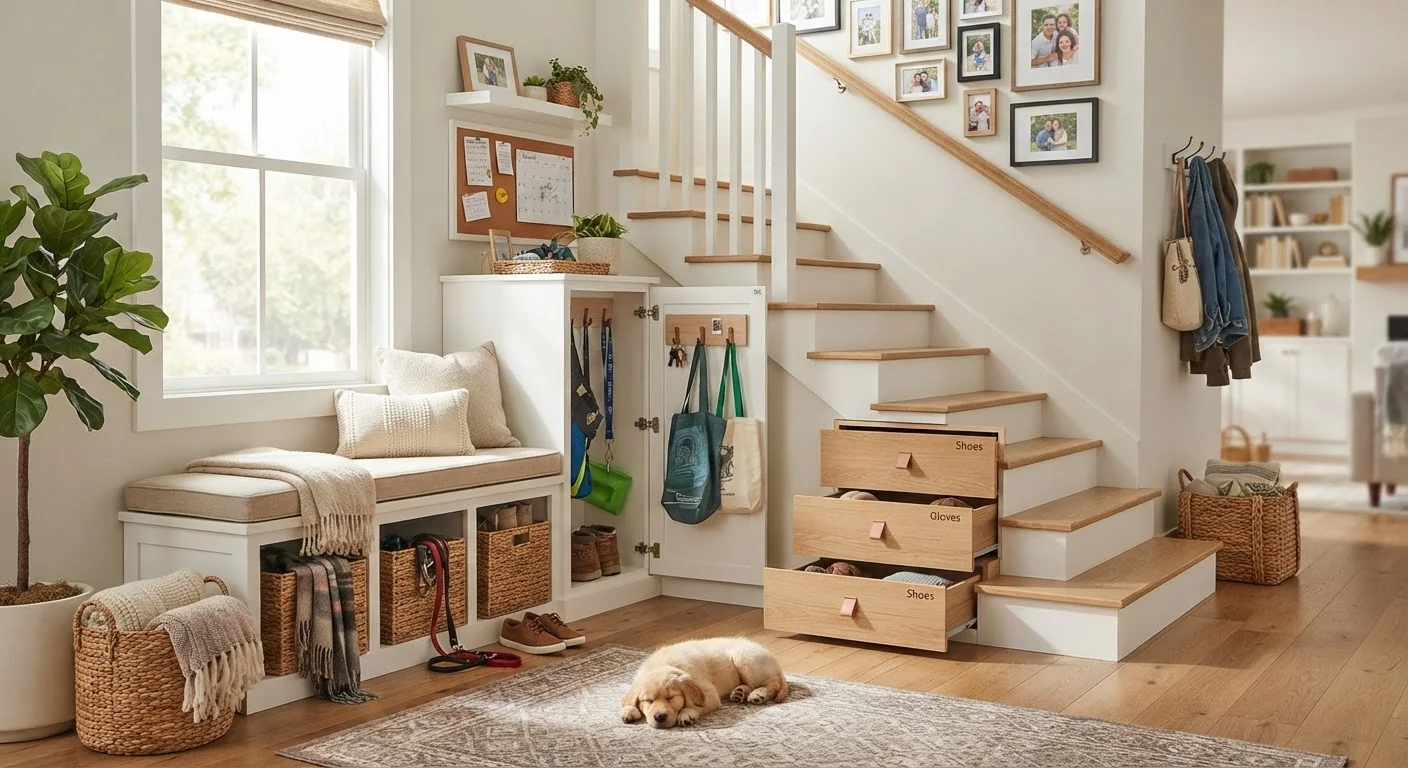
Photo credit: FaqBulletin.com | Information Made Easy
From stair risers to the backs of cabinet doors, discover underused storage spots in almost every home that can quietly expand your organization options.
Key Takeaways
- Most homes have multiple untapped storage zones that require no major renovation to activate.
- Vertical and underutilized structural spaces — stairs, doors, and walls — often hold the most potential.
- Small storage additions in several rooms compound into a meaningfully more organized household.
- Functional storage solutions work best when matched to the specific habits of your family.
- Many hidden storage upgrades are low-cost and reversible, making them accessible for renters too.
The Storage You Already Have But Haven't Found Yet
Most families eventually reach a tipping point: closets overflow, counters stay cluttered, and no amount of reorganizing seems to stick. But before assuming you need a bigger home or a major renovation, it's worth looking at what's already there — hiding in plain sight.
The average home contains dozens of underused micro-zones: the hollow space beneath stair treads, the blank interior of cabinet doors, the dead zone above the refrigerator, the gap between the wall and the bed frame. Individually, none of these spots feels like much. Collectively, they can quietly absorb a surprising volume of household items and reduce daily friction significantly.
This list covers the overlooked storage opportunities that appear in nearly every American home. Each one is practical, family-tested, and requires no structural work — just a willingness to see familiar spaces differently. For a broader look at organizing every room systematically, see our complete home organization guide.
Hollow stair risers
On staircases with closed risers — the vertical face of each step — there's often a hollow cavity behind the wood. Many homeowners have converted these into pull-out drawers or hinged cubbies to store shoes, books, toys, or even cleaning supplies. This works particularly well in entryways where the stair is immediately adjacent to the front door.
This type of modification typically involves cutting into the riser panel and fitting a drawer or box. Because it touches the structural staircase, consult a contractor or finish carpenter before proceeding, and verify whether a permit is required in your area.
Stair risers can conceal full drawers — a major storage gain in a spot most families never consider.
The backs of cabinet and closet doors
The inside face of a door is essentially a free wall that most households ignore completely. Over-the-door organizers — available in wire, fabric, and solid-panel styles — can hold spices, cleaning products, shoes, gift wrap, toiletries, or craft supplies depending on which room they're in.
In the kitchen, a slim rack on the pantry door can relocate canned goods or foil boxes out of prime shelf space. In bathrooms, a door organizer frees up the vanity for daily essentials. For a deeper look at how cabinet configurations affect what you can store and access easily, see our piece on open shelving vs. closed cabinets.
Every cabinet door is a hidden wall — over-the-door organizers turn that wasted space into working storage.
Under-bed clearance
The space beneath a bed is one of the largest single storage zones in most bedrooms, yet it's commonly left to accumulate dust. Low-profile bins or rolling drawers sized to the exact clearance height of your bed frame make this space genuinely functional for seasonal clothing, extra bedding, shoes, or children's toys that rotate in and out of use.
Vacuum-seal bags compress bulky items like comforters or winter sweaters down to a fraction of their normal size, dramatically increasing capacity. For families working with limited bedroom square footage, this single change can meaningfully reduce closet pressure. Vertical vs. horizontal storage strategies are worth reading alongside this if you're working in a smaller room.
Under-bed storage is one of the largest untapped zones in the average bedroom — don't leave it empty.
Above upper cabinets in the kitchen
The gap between kitchen cabinet tops and the ceiling — often 12 to 18 inches — is prime real estate for items used infrequently. Large serving platters, seasonal baking equipment, extra pantry overflow, or decorative baskets that double as concealed bins all fit naturally here.
Keeping like items in labeled baskets or bins makes retrieval easier and prevents the space from becoming a visual dumping ground. Because this area collects grease and dust in kitchens, a liner or tray beneath baskets simplifies cleaning.
The gap above kitchen cabinets is often 12 to 18 inches of completely unused storage real estate.
Toe-kick drawers beneath base cabinets
The recessed strip at the base of most kitchen and bathroom cabinets — called the toe kick — typically conceals a shallow but surprisingly wide cavity. Specialty toe-kick drawers can be fitted into this space and are particularly well suited for flat items: baking sheets, cutting boards, table linens, or a spare set of cleaning cloths.
Because this modification involves cabinetry, it's worth having a cabinetmaker or skilled DIYer assess the existing structure before cutting in. In some cases, prefabricated toe-kick drawer inserts are available that require minimal modification.
Toe-kick drawers slide flat items into a cabinet base space most families never knew existed.
Dead wall space in garages and utility rooms
Garage walls are frequently left bare while floors fill up with stacked boxes and freestanding shelves. Wall-mounted systems — pegboards, slotted wall panels, and heavy-duty rails — move tools, sports gear, garden equipment, and seasonal items off the floor and onto vertical surfaces where they're visible and accessible.
This approach also makes the floor easier to clean and the garage safer to navigate. The key is grouping related items in zones — lawn care in one section, sports equipment in another — so the system stays intuitive over time. Our home improvement hub covers practical upgrades like this in more detail.
Garage walls are essentially free storage — pegboards and rail systems unlock that vertical potential immediately.
Window seat and bench interiors
Built-in window seats and entryway benches are often constructed with a hollow interior that goes unused. If yours has a hinged lid or removable top, that cavity is ideal for storing items that don't have a clear home elsewhere: board games, extra throw blankets, sporting equipment, or children's toys.
If your bench is solid, adding a hinged lid is a relatively straightforward carpentry project — but confirm the construction first, and bring in a professional if the modification affects anything structural or load-bearing.
A window seat or entryway bench with a hinged lid can quietly store bulky, hard-to-place household items.
Making It Work for Your Household
The most effective hidden storage is storage you'll actually use. That means matching each solution to your family's real habits — where you drop things, what you reach for daily, and what genuinely needs to be tucked out of sight versus kept accessible.
Start With a Quick Walk-Through
Before purchasing any organizers or hardware, walk through each room with fresh eyes and note every surface, door, and structural gap that currently holds nothing. Photograph what you find. This simple audit often reveals three to five storage opportunities per room that are easy to act on — and helps you prioritize based on where clutter is already causing the most daily friction.
If you have children sharing a bedroom, combining hidden storage with clear zoning makes a real difference. Our guide on organizing a shared kids' room offers strategies that pair well with the ideas here. And once you've created more storage capacity, a seasonal rotation system helps you keep those spaces from filling back up with items that don't belong year-round.
Start with just one or two spots from this list. Small wins build momentum, and momentum is what turns a cluttered home into a calm one.

Author
Home & Garden Editorial Team
Home & Garden Editorial Team is the collective byline for our editorial team and contributor network. Articles published under this byline or an editorial pen name are researched, written, and reviewed according to our editorial standards for clarity, consistency, and independence before publication.
View all articles →