
A Complete Guide to Organizing Every Storage Space in Your Home
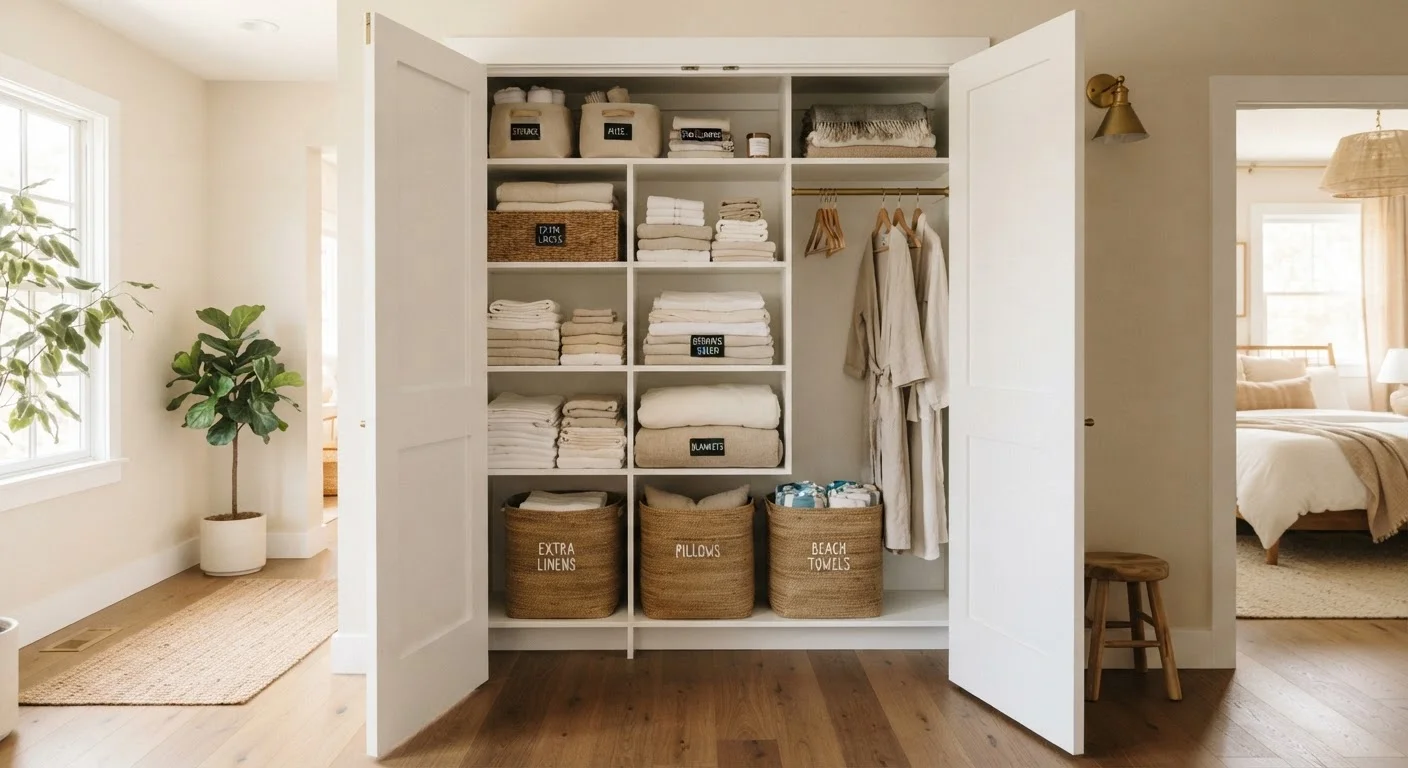
Photo credit: FaqBulletin.com | Information Made Easy
In this article
From junk drawers to attics, this end-to-end resource covers principles, methods, and practical strategies for organizing every storage area in a typical home.
Key Takeaways
- Declutter before organizing — storage solutions cannot substitute for reducing what you own.
- Assigning every item a fixed home is the single most effective organizing habit.
- Zone-based thinking keeps categories separated and makes maintenance intuitive.
- Attics, basements, and garages need humidity and pest control before storage begins.
- Short, regular resets prevent clutter from returning after a major organizing effort.
The Core Principles Behind Lasting Organization
Home organization fails most often not because of a lack of containers, but because of two missing ingredients: a clear system and a commitment to editing what you own. Before touching a single shelf, internalize these foundational principles.
- Declutter first, organize second. Every item you eliminate is one you never have to store, label, or maintain. Use our room-by-room decluttering checklist to work through the house methodically.
- Every item needs a fixed home. Clutter accumulates where belongings have no designated place. Assigning a specific spot — and returning items there after use — is the backbone of any sustainable system.
- Group by function, not by object. Store things where you use them, not where they seem to belong logically. Batteries go near the devices they power; scissors go where you actually open packages.
- Visibility beats concealment. If you cannot see something, you will forget it exists, buy a duplicate, or dig through chaos to find it. Open shelving, clear bins, and labeled containers all increase visibility.
These principles apply equally to a junk drawer and a three-car garage. Check out common organization myths that trip up even motivated households before you invest in any supplies.
Before purchasing any organizers, measure every shelf, drawer, and cabinet opening. Products that do not fit exactly often create more disorder than they solve.
Ill-fitting bins and racks leave gaps that collect loose items, undermining the very system they were meant to support.
Start your organizing project with one small, self-contained space — a single drawer or one shelf — rather than an entire room. The visible win builds momentum.
Behavioral research consistently shows that small, completed tasks increase motivation to tackle larger ones, reducing the likelihood of abandoning the project midway.
Kitchen and Pantry Storage
Kitchens are the highest-traffic storage zones in most homes, which means disorganization compounds quickly.
- Pantry: Group items by category — baking, canned goods, snacks, grains — and place the oldest items at the front when restocking. Decant dry goods into uniform, airtight containers to maximize shelf depth and visibility.
- Cabinets: Position items by frequency of use. Daily dishes sit at eye level; rarely used serving pieces go on upper shelves. Stack pots with lids stored vertically in a rack beside them rather than nested and buried.
- Drawers: Subdivide with adjustable dividers. Utensil drawers should contain only the tools used at least weekly; everything else relocates to a secondary drawer or goes entirely.
- Under-sink: Use a two-tier pull-out rack to access the full cabinet depth. Keep cleaning supplies in a single caddy so they move together rather than scattering across the cabinet floor.
For ideas on storage spots most kitchens waste entirely, see hidden storage opportunities — cabinet door organizers and drawer risers alone can reclaim significant space.
Bedroom Closets and Dressers
Closet organization starts with a realistic inventory. Pull everything out, discard or donate what you have not worn in a full year, then rebuild deliberately.
- Hang by category and length: Group jackets, shirts, and pants separately so the floor area under shorter items becomes usable shelf or drawer space.
- Fold using a consistent method: File folding — standing items vertically in a drawer — lets you see every piece at once and prevents the avalanche effect of stacked piles.
- Use the shelf above the rod: Stackable bins or small shelves here house seasonal items, extra bedding, or bags that would otherwise crowd the floor.
- Dressers: Assign each drawer a single category and label it. Mixed-category drawers are the primary reason dressers become disorganized within days of cleaning.
Bathrooms and Linen Closets
Bathrooms are small, humid, and shared — a combination that accelerates disorder. Keep only what is actively in use under the sink or on the counter.
Do Not Store Medications in the Bathroom
Despite being called a medicine cabinet, the bathroom is one of the worst places to store medications. Heat and humidity accelerate degradation of both prescription and over-the-counter drugs. Store medications in a cool, dry location — a bedroom drawer or a dedicated kitchen cabinet away from the stove — and keep them out of reach of children.
- Under-sink cabinet: Dedicate one zone per person if the space is shared. Use small bins or a lazy Susan to prevent items from migrating across zones.
- Medicine cabinet and drawers: Edit regularly — medications expire, products get discontinued. Keep first-aid items in one dedicated, clearly labeled container.
- Linen closet: Store full sheet sets inside one of their own pillowcases so sets stay together. Stack towels with the folded edge facing out for a uniform appearance and easier access.
The zone-based organization method works especially well in shared bathrooms, where assigning personal zones prevents the gradual creep of one person's items into another's space.
Living Areas, Entryways, and Junk Drawers
Shared living spaces accumulate items from every family member, which means systems here must be simple enough for everyone to follow without reminders.
- Entryway: Install hooks at multiple heights for adults and children. A single tray or basket near the door corrals keys, mail, and small everyday items without creating clutter on surfaces.
- Living room: Use closed storage — ottomans with lids, sideboards, or baskets on lower shelves — to contain remotes, charging cables, and other loose items that drift onto sofas and coffee tables.
- Junk drawer: Reframe this space as a utility drawer. Sort contents into categories — tools, batteries, office supplies, takeout menus — and use small containers for each group. Discard anything that belongs elsewhere or nowhere.
25%
Of households with two-car garages that cannot fit a single car
A U.S. Department of Energy survey found roughly one in four two-car garages is too full of stored items to park any vehicle inside.
40%
Of housework time attributed to clutter
Research cited by the National Soap and Detergent Association suggests that eliminating clutter could reduce the time spent on household tasks by nearly half.
Attics, Basements, and Garages
These large, low-traffic spaces are where organization projects go to die if approached without a plan. They also present real safety and preservation concerns.
- Control the environment first: Humidity ruins stored items. Basements and attics need a working dehumidifier or adequate ventilation before you bring in storage bins. Check for pest activity as well — rodents and insects follow stored goods.
- Use uniform, stackable bins with lids: Label every bin on all four sides and the top. Store bins in broad categories — holiday décor, off-season clothing, archived documents — with the most frequently accessed closest to the door.
- Leave an aisle: Plan your layout so you can reach any bin without moving others. An aisle down the center of an attic or basement is not wasted space; it is functional infrastructure.
- Garage: Treat it as a series of zones — automotive, garden, sports, tools — and store each zone along a dedicated wall or section. Our related guide on garage organization from scratch covers zoning, shelving types, and realistic first steps in detail.
For any structural changes in these spaces — adding wall-mounted shelving to masonry, reinforcing attic flooring for storage loads, or installing electrical — consult a licensed contractor and verify local permit requirements before beginning work.
Maintaining Organization Over Time
A one-time organizing session is a starting point, not a destination. The households that stay organized do so through short, regular habits rather than marathon purge sessions.
- Daily reset (5–10 minutes): Return items to their fixed homes before bed. This single habit prevents pile-up more effectively than any container or label.
- Weekly check-in: Scan high-traffic areas — entryway, kitchen counter, bathroom vanity — and catch anything drifting out of place before it multiplies.
- Seasonal review: Four times a year, walk through closets and storage zones to discard expired or unused items and verify that current categories still reflect how the household actually lives.
- One-in, one-out rule: When a new item enters the home, a comparable item leaves. This prevents storage systems from being gradually overwhelmed.
Organization is a practice, not a project. Building these lightweight habits means you spend less time managing your home and more time enjoying it. For households looking to extend these strategies across every room systematically, the zone-based home organization approach offers a repeatable framework that scales with your space.

Author
Home & Garden Editorial Team
Home & Garden Editorial Team is the collective byline for our editorial team and contributor network. Articles published under this byline or an editorial pen name are researched, written, and reviewed according to our editorial standards for clarity, consistency, and independence before publication.
View all articles →