
Zone-Based Home Organization: Dividing Your Space to Actually Keep It Clean
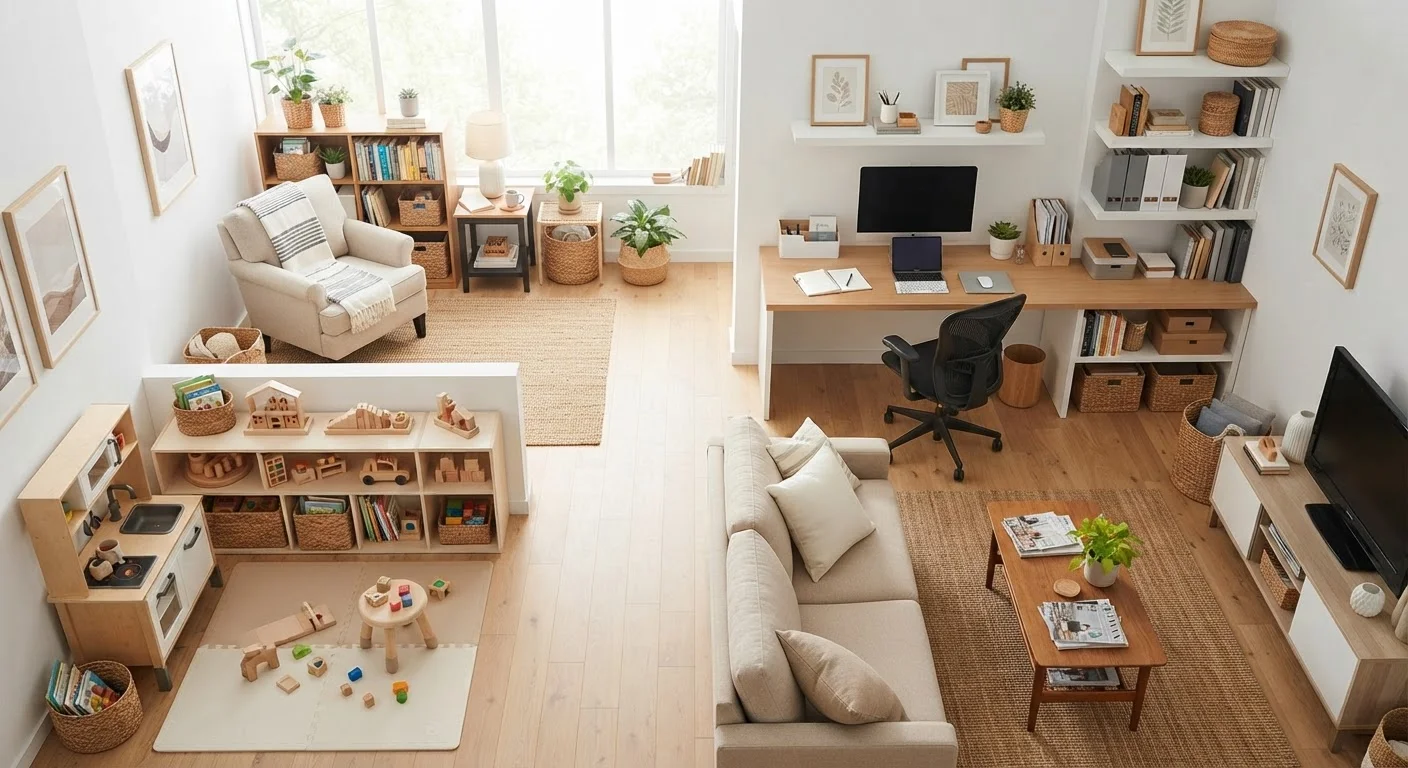
Photo credit: FaqBulletin.com | Information Made Easy
In this article
Organizing by zones assigns every area of your home a clear purpose. Here's how the method works and why families find it easier to maintain long-term.
Key Takeaways
- Zones assign every area of your home a clear purpose, eliminating the guesswork of where things belong.
- Effective zones are built around how your household actually behaves, not an idealized plan.
- Zone boundaries can be flexible — a visual cue like a rug is often enough to define a zone.
- Maintaining zones is easier than full cleanups because each reset is small and contained.
- Most families benefit from starting with two or three zones before expanding the system.
Why Most Organization Systems Fail
Most home organization attempts collapse within a few weeks — not because the people trying them lack discipline, but because the system didn't reflect how the household actually lives. Items end up wherever they land after a busy evening. Without a defined home, putting something away requires a small decision every single time. Multiply that across hundreds of objects and dozens of daily interactions, and the cognitive load alone is enough to make anyone give up.
Zone-based organization addresses this at the root. Rather than assigning individual spots to individual items, it assigns areas of your home to specific activities. Everything used for that activity lives in that zone. When cleanup time comes, the question changes from "where does this go?" to simply "which zone does this belong to?" — a much faster and lower-effort judgment.
If you're curious how this compares to other popular approaches, see our overview of decluttering frameworks that covers methods like KonMari and SPACE. You might also recognize yourself in some common organization myths that make tidying harder than it needs to be.
“The home environment should support the activities of daily life, not fight against them. When storage is organized around behavior rather than category, maintenance becomes almost automatic.”
— Julie Morgenstern, Professional organizer and author of 'Organizing from the Inside Out'
How to Identify and Define Your Zones
Before buying a single bin or shelf, spend a few days observing how your household actually uses each room. Where do backpacks land when kids walk in the door? Where does mail pile up? Where does the family gather to eat, and is that the same place homework gets done? These patterns reveal your natural zones — your job is to formalize and support what's already happening, or consciously redesign habits that aren't working.
Common zones in a typical household include:
- Entry zone: Shoes, bags, keys, outerwear — items that transition between inside and outside
- Meal prep zone: Cooking tools, pantry staples, and appliances grouped around the stove and counter
- Homework or work zone: Writing supplies, reference materials, a charging station — ideally away from high-traffic areas
- Relaxation zone: Books, remotes, throw blankets — things associated with downtime
- Cleaning zone: Supplies stored near where they'll be used, not all in one central closet
Zones don't require walls or room boundaries. A rug, a bookcase, or even a consistent basket placement can define a zone within an open-plan space. The goal is a visible, consistent signal that tells household members: this area is for this activity.
Start With One Problem Zone
Resist the urge to redesign your entire home at once. Pick the single area that causes the most daily friction — often the entryway or kitchen — and build a functioning zone there first. Once household members adapt to the system in one area, applying it elsewhere becomes much easier and requires less effort to maintain.
Maintaining Zones Over Time
The real power of zone-based organization is in maintenance, not setup. Once zones are established, daily tidying becomes a series of small, contained resets rather than a whole-house overhaul. A ten-minute sweep at the end of the day — returning items to their zones — is enough to keep most homes functional.
A few practices help zones stay stable over months and years:
- Audit zones seasonally. Needs change. A craft zone that worked for young children may need to evolve as they grow. Check twice a year that each zone still reflects how the space is actually being used.
- Address zone creep early. Zone creep happens when one activity's items migrate into another zone. A single charging cable on the kitchen table is manageable; six of them mean the work zone has moved and needs a real home.
- Keep zones well-supplied. A homework zone without enough pencils will push homework to the kitchen, where the pencils are. Ensure each zone has everything it needs so there's no reason to borrow from another area.
For a structured way to clear out what no longer serves any zone in your home, the room-by-room decluttering checklist is a practical next step. Pair zone maintenance with habits like the one-in, one-out rule — covered in detail in our guide on habits that stop clutter from rebuilding.
Zone-based organization works because it matches your system to your life — not the other way around. Start with one or two high-friction areas, define clear boundaries, and let the household build the habit before expanding. The complete guide to organizing every storage space can help you go deeper once your zones are in place.
91%
Americans who say clutter negatively affects their mood
According to a survey conducted by the National Association of Productivity and Organizing Professionals (NAPO).
40%
Of housework eliminated by reducing clutter
The National Soap and Detergent Association has cited estimates suggesting significant cleaning time is tied to managing excess items rather than actual cleaning tasks.
Frequently Asked Questions

Author
Home & Garden Editorial Team
Home & Garden Editorial Team is the collective byline for our editorial team and contributor network. Articles published under this byline or an editorial pen name are researched, written, and reviewed according to our editorial standards for clarity, consistency, and independence before publication.
View all articles →