
Organizing a Shared Kids' Room Without Constant Chaos
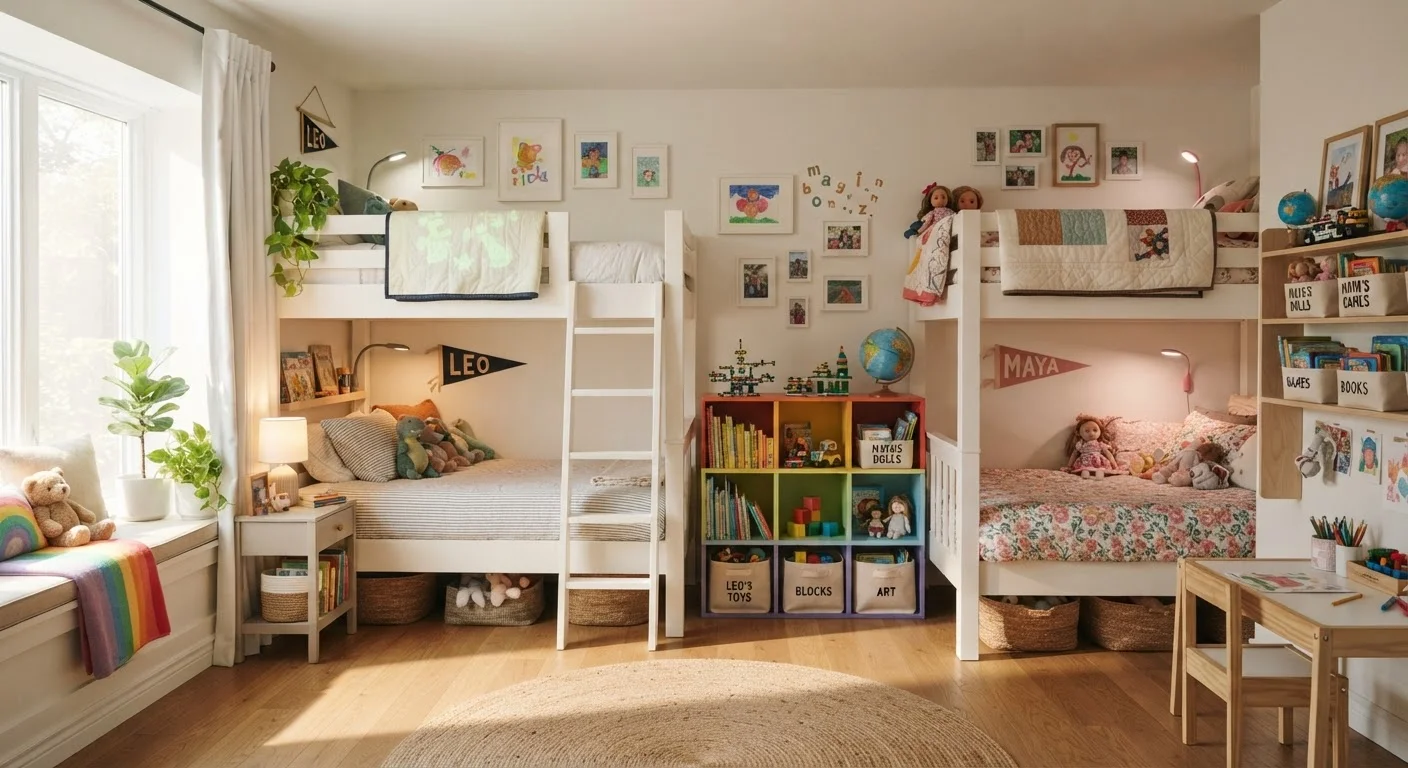
Photo credit: FaqBulletin.com | Information Made Easy
When siblings share a bedroom, organization requires more planning. Learn space-division strategies and storage systems that work for multiple children.
Key Takeaways
- Defining clear personal zones for each child reduces conflict over belongings and space.
- Labeled, individual storage systems make it easier for kids to maintain order independently.
- Vertical storage is critical in shared rooms where floor space is limited.
- Involving children in the setup process increases their buy-in and follow-through.
- A shared activity zone needs its own ground rules to stay functional.
- Regular brief decluttering sessions prevent gradual buildup from undoing your system.
Why Shared Rooms Need a Different Approach
Organizing a room for one child is straightforward enough. Organizing a room for two or more children — with different ages, personalities, and amounts of stuff — is a genuinely different challenge. Without deliberate structure, shared rooms tend to devolve into a territorial mess where nothing has a clear owner and nothing stays put.
The foundation of a workable shared room is the same principle that makes whole-home organization stick: zones. Assigning every area a clear purpose — and every child a clearly defined personal territory — removes the ambiguity that causes most sibling disputes over space. For a deeper look at how zone-based thinking applies across your entire home, see our guide to zone-based home organization.
Before you buy a single storage bin, it also pays to do a thorough declutter. You cannot organize clutter — you can only store it. Work through each child's belongings honestly, removing outgrown clothing, broken toys, and duplicates. Our room-by-room decluttering checklist makes that process systematic and fast.
Involve the Kids Early
Children who help plan their own space are far more likely to maintain it. Ask each child to name one thing that's most important to them about their zone — privacy, display space for collections, room to play — and factor that into your layout. The setup takes a little longer, but the buy-in is worth it.
How to Set Up the Room for Lasting Order
Follow these steps in sequence. Skipping the planning phase and jumping straight to purchasing storage products is the most common mistake families make — and the reason many organized rooms fall apart within a month.
What you will need
Measure the Room and Map Personal Zones
Sketch a simple floor plan on graph paper or a notes app. Mark windows, doors, and closet openings. Then divide the available floor space as evenly as practical, giving each child a primary zone: their bed, a storage area, and ideally a small surface for personal items. Even in a small room, the act of drawing a boundary — physical or implied — dramatically reduces conflict.
Choose Furniture That Doubles as Storage
In a shared room, every piece of furniture should earn its place twice. Beds with under-bed drawers, ottomans with interior storage, and nightstands with shelves all reduce how much additional furniture you need. If the room can accommodate it, a loft or bunk bed frees significant floor space for desks, play areas, or additional shelving below.
Assign Individual Storage to Each Child
Avoid shared bins for personal belongings — they guarantee confusion. Give each child their own labeled shelf section, drawer set, or cubby system in a color or label they can identify. Matching the storage system to each child's age matters: young children do best with large open bins and picture labels; older kids can manage more subdivided drawers and written labels.
Go Vertical with Wall Storage
Floor space is at a premium in a shared room. Wall-mounted shelves, pegboards for art supplies or sports gear, over-door organizers, and tall bookshelves all expand capacity without shrinking the room. Mount shelves at heights appropriate to each child's reach so they can genuinely put things away independently — a shelf a six-year-old can't reach is a shelf that won't get used correctly.
Establish a Shared Reset Routine
No organizational system maintains itself. Build a brief daily reset — five to ten minutes before bed — into the children's routine. Each child tidies their own zone; shared zones are handled together. A weekly check-in, where items that have migrated out of place get returned, prevents slow drift from undoing the setup. Keep the bar achievable: the goal is functional, not perfect.
Once the physical setup is complete, don't overlook the shared zones outside each child's personal territory. A common desk area, a shared bookshelf, or a craft corner all need their own simple rules: who clears it after use, where shared supplies live, and what happens when it gets cluttered. Treating shared zones like a mini common area — rather than anyone's personal space — keeps those spots neutral and functional.
For families who feel like they've run out of room entirely, the solution is often looking up and in. Walls, the backs of doors, and the space under beds hold far more than most families use. Explore hidden storage opportunities most families overlook to find extra capacity without changing the room's footprint. And if you're looking at a broader home organization project, the complete guide to organizing every storage space in your home covers every room from top to bottom.
Don't Overload the System at Once
Introducing too many new rules and storage categories simultaneously can overwhelm children and lead to system abandonment. Start with the core zones and individual storage, then add complexity — like subdivided craft supplies or a shared chore chart — once the basics are running smoothly. Gradual layering outperforms a perfect-but-ignored setup every time.

Author
Home & Garden Editorial Team
Home & Garden Editorial Team is the collective byline for our editorial team and contributor network. Articles published under this byline or an editorial pen name are researched, written, and reviewed according to our editorial standards for clarity, consistency, and independence before publication.
View all articles →