
Open Shelving vs. Closed Cabinets: Trade-Offs Worth Thinking Through
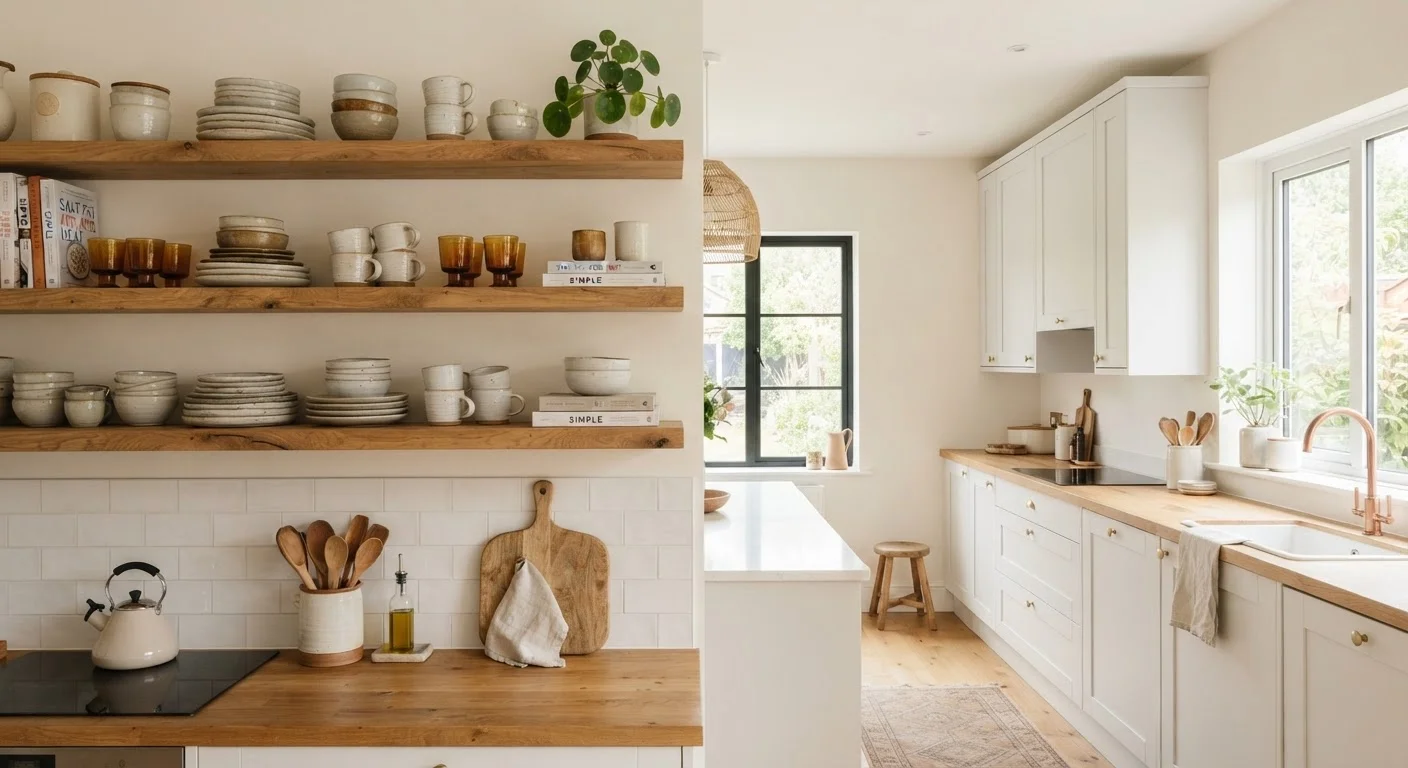
Photo credit: FaqBulletin.com | Information Made Easy
In this article
Open shelves look airy; closed cabinets hide the mess. Both have real advantages and drawbacks depending on your household's habits and storage needs.
Key Takeaways
- Open shelving makes items easy to grab but requires consistent tidiness to look presentable.
- Closed cabinets conceal clutter but can encourage disorganized accumulation behind closed doors.
- Your household's daily habits matter more than design trends when choosing a storage approach.
- Most homes benefit from a deliberate mix of both open and closed storage.
- Dust, grease, and foot traffic patterns should all factor into your decision.
Items are immediately visible and accessible
No searching behind closed doors — everyday items like plates, glasses, and spices are grabbed in seconds. This particularly benefits cooking workflows where speed and visibility matter.
Makes small spaces feel more open
Removing the visual mass of cabinet boxes can make a compact kitchen or living area feel less enclosed. The wall behind the shelf becomes part of the design rather than a surface to cover.
Encourages regular editing of possessions
Because items are always on display, most people naturally avoid overstocking or keeping things they don't use. Visible shelves tend to stay more curated over time.
Lower upfront material cost in many cases
Simple open shelves — a board and brackets — generally cost less to install than full cabinet boxes with doors and hardware. This makes them accessible for budget-conscious updates.
Requires consistent tidiness to look presentable
A single disorganized shelf is immediately noticeable to anyone in the room. For households with variable tidying habits or multiple people sharing a space, this can become a source of ongoing stress.
Dust and grease accumulate faster on open surfaces
Open shelves near cooking areas collect grease vapor, and all open surfaces gather dust more quickly than items stored behind doors. This translates to more frequent cleaning of both the shelf and everything on it.
Less flexibility for storing varied or imperfect items
Mismatched containers, utilitarian supplies, and work-in-progress clutter are hard to accommodate on open shelves without the space looking chaotic. Closed cabinets absorb this kind of variety invisibly.
Items at the back are harder to reach and easier to forget
Deep open shelves can cause the same 'out of sight, out of mind' problem as closed cabinets, with the added issue that reaching past front items risks knocking things over.
What You're Really Deciding
Choosing between open shelving and closed cabinets isn't purely an aesthetic decision — it's a commitment to a particular maintenance routine and organizational habit. Open shelves put everything on display, which means visual clutter is always visible, but so is exactly where things live. Closed cabinets create a tidy surface appearance while allowing more variety (and messiness) behind the door.
Before deciding, it helps to be honest about two things: how often you tidy up, and how many people in your household share the space. A single adult with a curated collection of dishes will have a very different experience with open shelving than a family of five with mismatched containers and snack reserves. See our complete home organization guide for a broader framework on matching storage choices to real household behavior.
The Case for Open Shelving
Open shelving has genuine functional advantages — it isn't just a design trend. When items are visible and within reach, daily routines become more efficient. You don't have to open a door or move items to find what you need, which matters most in high-traffic areas like kitchens and home offices.
Items are immediately visible and accessible
No searching behind closed doors — everyday items like plates, glasses, and spices are grabbed in seconds. This particularly benefits cooking workflows where speed and visibility matter.
Makes small spaces feel more open
Removing the visual mass of cabinet boxes can make a compact kitchen or living area feel less enclosed. The wall behind the shelf becomes part of the design rather than a surface to cover.
Encourages regular editing of possessions
Because items are always on display, most people naturally avoid overstocking or keeping things they don't use. Visible shelves tend to stay more curated over time.
Lower upfront material cost in many cases
Simple open shelves — a board and brackets — generally cost less to install than full cabinet boxes with doors and hardware. This makes them accessible for budget-conscious updates.
Open shelves also create a natural accountability mechanism: because everything is visible, there's ongoing pressure to keep things tidy and edited. Many people find this motivating rather than burdensome. If your household tends to accumulate items slowly and forget about them, visible shelving can prevent that kind of quiet clutter buildup — something common organization myths often overlook.
The Case for Closed Cabinets
Closed cabinets have earned their place as the default storage choice in American kitchens and living spaces for practical reasons. They offer flexibility: you can store mismatched items, work-in-progress projects, or utilitarian objects without the space feeling visually busy. That flexibility reduces the cognitive load of maintaining a picture-perfect arrangement at all times.
Requires consistent tidiness to look presentable
A single disorganized shelf is immediately noticeable to anyone in the room. For households with variable tidying habits or multiple people sharing a space, this can become a source of ongoing stress.
Dust and grease accumulate faster on open surfaces
Open shelves near cooking areas collect grease vapor, and all open surfaces gather dust more quickly than items stored behind doors. This translates to more frequent cleaning of both the shelf and everything on it.
Less flexibility for storing varied or imperfect items
Mismatched containers, utilitarian supplies, and work-in-progress clutter are hard to accommodate on open shelves without the space looking chaotic. Closed cabinets absorb this kind of variety invisibly.
Items at the back are harder to reach and easier to forget
Deep open shelves can cause the same 'out of sight, out of mind' problem as closed cabinets, with the added issue that reaching past front items risks knocking things over.
Closed storage also provides meaningful protection. In kitchens especially, grease and cooking vapors coat surfaces quickly. Items stored behind doors stay cleaner far longer than those sitting on open shelves near a cooktop. For households with young children, closed cabinets with appropriate hardware can also keep hazardous items — cleaning supplies, sharp tools — out of reach more reliably than open shelving.
Practical Factors Most People Underestimate
Beyond aesthetics and access, a few practical factors significantly affect which approach works better in a given space.
Dust and air quality
Open shelves accumulate dust on every surface, including the tops of dishes, books, and decorative objects. In homes with pets, allergies, or significant foot traffic, this means more frequent cleaning. Closed cabinets aren't immune — dust still enters through gaps — but exposure is dramatically reduced.
Space and wall configuration
Open shelving can make a small room feel larger by removing the visual bulk of cabinet boxes. However, the same shelves in a narrow galley kitchen can feel chaotic if storage isn't perfectly curated. Vertical storage strategies are worth considering alongside this choice if square footage is limited.
The hidden-storage overlap
Some of the most effective storage solutions combine both approaches — using closed lower cabinets for bulky or irregular items while reserving open upper shelving for everyday essentials. Hidden storage opportunities like cabinet door organizers can also expand capacity without adding visual weight.
The Hybrid Approach Worth Considering
Many kitchen designers suggest a practical rule of thumb: keep the top one-third of your storage open (for display and everyday items) and the bottom two-thirds closed (for everything else). This preserves the airy, accessible feel of open shelving while giving you the clutter-hiding capacity of closed cabinets where it matters most. The exact ratio depends on your household's storage volume and visual preferences.
Making a Decision That Sticks
The most common mistake families make is choosing a storage approach based on how they want to live rather than how they actually live. A kitchen styled with open shelving in a showroom looks effortless because it's curated and static. Your kitchen isn't. Before committing to a full open-shelf installation or a closed-cabinet overhaul, try a small-scale version first — remove a cabinet door for a month, or add a single open shelf in a high-traffic area, and observe whether your habits support it.
If your current setup consistently reverts to chaos no matter what system you try, the issue may be deeper than the cabinet style. Why spaces revert to disorder often comes down to misalignment between the system and the people using it — and the same principle applies here.
~30%
Of kitchen storage space typically underused
Home organization researchers and professional organizers commonly estimate that a significant portion of kitchen cabinet space holds items used less than once a year, regardless of cabinet type.
2–3×
More frequent dusting required on open shelves
Interior cleaning guides generally recommend wiping open shelving every one to two weeks versus every four to six weeks for closed cabinet interiors, depending on household activity.

Author
Home & Garden Editorial Team
Home & Garden Editorial Team is the collective byline for our editorial team and contributor network. Articles published under this byline or an editorial pen name are researched, written, and reviewed according to our editorial standards for clarity, consistency, and independence before publication.
View all articles →