
Organic vs. Synthetic Fertilizers: Understanding the Trade-Offs
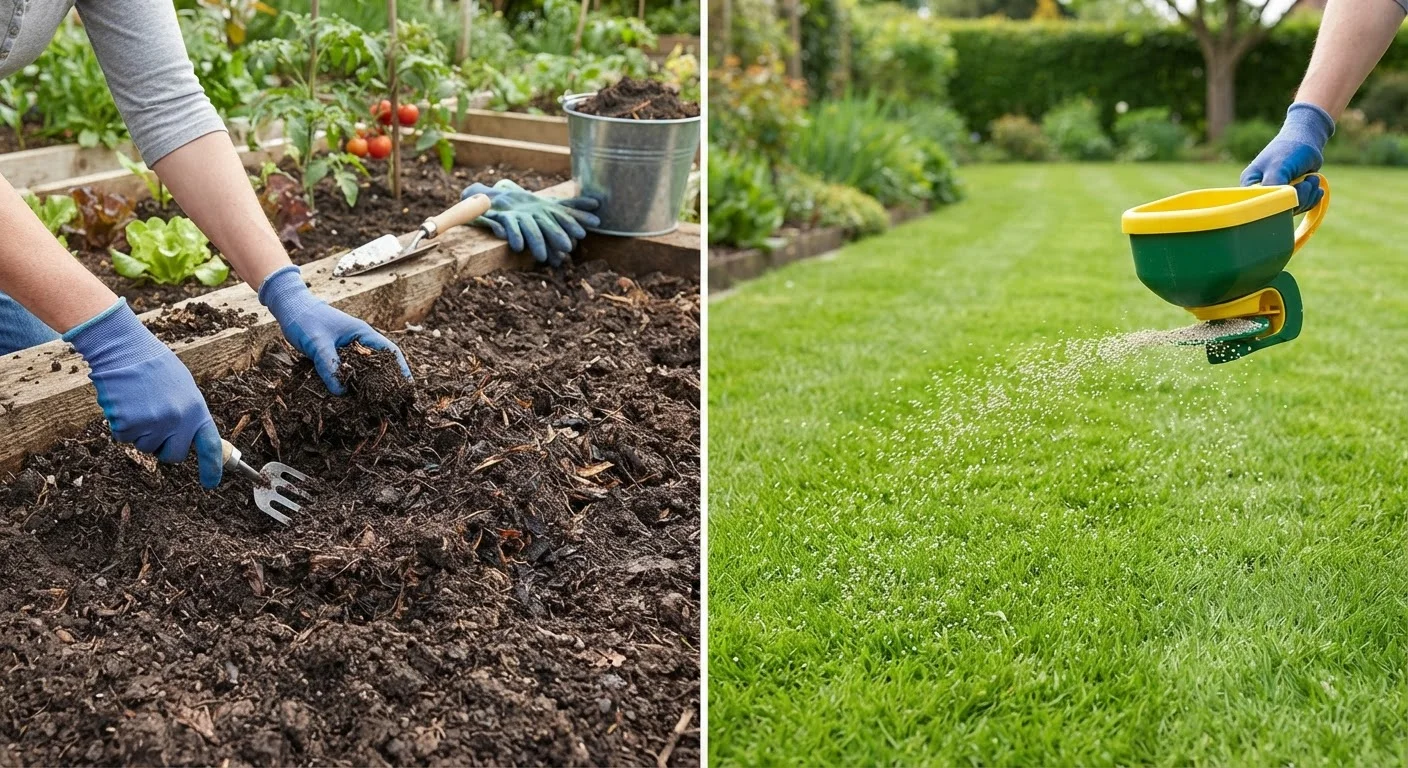
Photo credit: FaqBulletin.com | Information Made Easy
In this article
Break down how organic and synthetic fertilizers differ in nutrient release, soil impact, cost, and environmental footprint for home gardeners.
Key Takeaways
- Organic fertilizers release nutrients slowly, improving soil structure over multiple seasons.
- Synthetic fertilizers deliver fast, precise nutrition but can degrade soil biology with long-term use.
- Neither type is universally superior — the right choice depends on your soil, plants, and goals.
- A soil test before fertilizing helps avoid over-application, regardless of which type you choose.
- Combining both approaches strategically can offer short-term results while building long-term soil health.
How Each Type Delivers Nutrients
The fundamental difference between organic and synthetic fertilizers comes down to how nutrients reach plant roots. Organic fertilizers — derived from materials like composted manure, bone meal, kelp, and worm castings — must be broken down by soil microorganisms before plants can absorb them. This biological process takes time, typically weeks to months, but it feeds the soil ecosystem in the process.
Synthetic fertilizers are manufactured to deliver nutrients in forms plants can absorb almost immediately — particularly nitrogen, phosphorus, and potassium (the N-P-K on any fertilizer label). This directness is their primary advantage in corrective situations, such as a lawn showing clear signs of nitrogen deficiency mid-season.
Understanding this distinction helps set realistic expectations. If you're preparing a new vegetable bed in fall, organic amendments make sense. If you're rescuing a struggling lawn in July, a targeted synthetic application may be more practical. For a deeper look at what your soil actually needs before you add anything, see our guide to soil health.
Impact on Soil Biology and Structure
Healthy soil is a living system. Organic fertilizers support that system by feeding bacteria, fungi, earthworms, and other organisms that break down matter, aerate soil, and make nutrients available over time. Repeated organic applications tend to improve soil texture — making clay soils drain better and sandy soils retain more moisture.
Synthetic fertilizers, by contrast, bypass soil biology almost entirely. While plants may thrive short-term, heavy reliance on synthetics over many seasons can reduce microbial diversity, lower organic matter content, and create a cycle of dependency where soil loses its natural nutrient-holding capacity. High-salt synthetic formulations can also harm earthworm populations.
This doesn't make synthetics inherently damaging when used judiciously, but it does mean that a garden fed exclusively by synthetic fertilizers may show declining soil quality over years. Pairing fertilizer decisions with mulching practices can help maintain soil moisture and organic matter — our mulching overview explains how to integrate that step effectively.
| Organic Fertilizers | Synthetic Fertilizers | |
|---|---|---|
| Nutrient release speed | Slow (weeks to months) | Fast (days to weeks) |
| Soil biology impact | Feeds and supports microbes | Minimal to negative long-term |
| Runoff/leaching risk | Lower risk | Higher risk without careful timing |
| Nutrient precision | Variable, label estimates | Consistent, exact N-P-K ratios |
| Cost per application | Generally higher | Generally lower |
| Soil structure improvement | Yes, over time | Minimal or none |
| Best use case | Long-term soil building | Quick corrective treatment |
Environmental Footprint and Runoff Risk
One of the most significant concerns with synthetic fertilizers is nutrient runoff. Because nutrients are water-soluble and immediately available, heavy rain or overwatering can carry them into storm drains, streams, and groundwater. Excess nitrogen and phosphorus in waterways contribute to algae blooms that deplete oxygen and harm aquatic life — a phenomenon called eutrophication.
Organic fertilizers release nutrients more slowly, so they're less prone to acute runoff. However, they are not entirely without environmental risk; improperly applied manure-based products can introduce pathogens or contribute to phosphorus buildup in soil over time.
Never Exceed Recommended Application Rates
Over-applying any fertilizer — organic or synthetic — can damage plants, burn roots, and introduce excess nutrients into the environment. Always follow label instructions and base application decisions on a soil test when possible. More fertilizer does not mean faster growth; it often means harm.
For homeowners managing lawn nutrition across the seasons, timing applications to avoid heavy rain events and following label rates carefully are important regardless of fertilizer type. Our seasonal lawn care guide covers how to schedule fertilization responsibly throughout the year.
Cost, Availability, and Practical Considerations
Synthetic fertilizers are generally less expensive per application and widely available. Their consistent N-P-K labeling makes dosing straightforward, which appeals to gardeners who want precision without guesswork.
Organic options tend to cost more per pound and vary more in nutrient concentration — a bag of compost, for instance, may have an N-P-K of 1-1-1, far lower than a synthetic 10-10-10. This means larger volumes are needed to achieve comparable nutrient delivery, which adds both cost and labor. However, the ancillary benefits to soil structure and biology often justify that investment for long-term gardeners.
Home composting can offset organic fertilizer costs significantly. Kitchen scraps and yard waste converted into finished compost provide a free, low-concentration amendment that consistently improves soil texture. It won't replace targeted nutrients in depleted soil, but it forms a practical foundation that reduces how much purchased fertilizer — organic or synthetic — you'll need over time.
A soil test, available through many university cooperative extension programs, takes the guesswork out of which nutrients are actually lacking. Fertilizing without knowing your baseline risks applying what your soil doesn't need while missing what it does.

Author
Home & Garden Editorial Team
Home & Garden Editorial Team is the collective byline for our editorial team and contributor network. Articles published under this byline or an editorial pen name are researched, written, and reviewed according to our editorial standards for clarity, consistency, and independence before publication.
View all articles →