
What Your Check Engine Light Is Actually Telling You
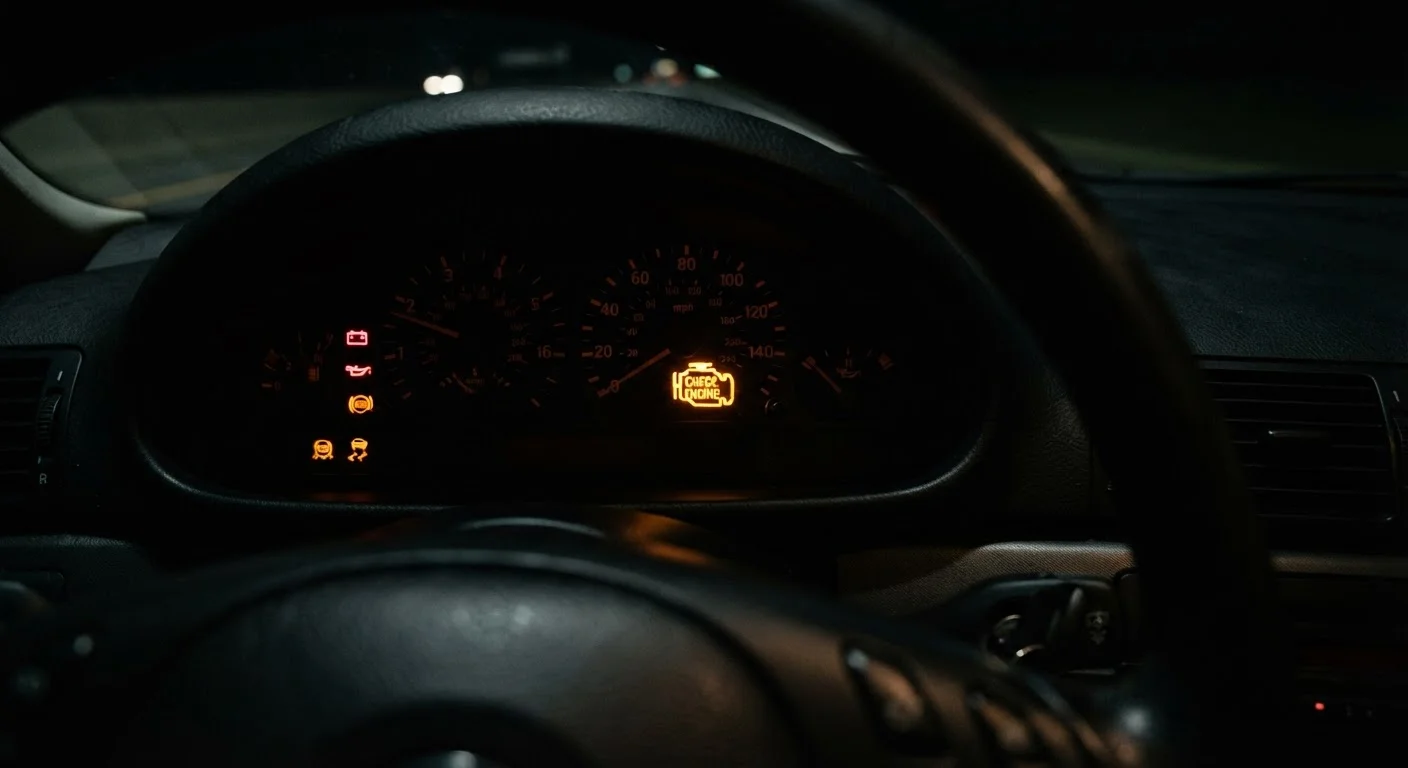
Photo credit: FaqBulletin.com | Information Made Easy
In this article
Decode the check engine light: learn what triggers it, which codes are urgent, and when it's safe to keep driving.
Key Takeaways
- A steady check engine light is rarely an emergency, but it should not be ignored for weeks.
- A flashing check engine light usually signals an active, serious fault - stop driving and seek help promptly.
- The light alone doesn't tell you the cause; a diagnostic scan tool is needed to read stored fault codes.
- Common triggers include a loose gas cap, a failing oxygen sensor, or catalytic converter issues.
- Clearing the code without fixing the underlying problem will cause the light to return.
What the Light Actually Means
Your vehicle's onboard computer - the Engine Control Unit (ECU) - continuously monitors dozens of sensors throughout the engine, exhaust, and emissions systems. When a sensor reading falls outside an acceptable range on two or more consecutive drive cycles, the ECU logs a Diagnostic Trouble Code (DTC) and illuminates the check engine light on your dashboard.
Importantly, the light is a messenger, not a diagnosis. A single lit icon on your dashboard could represent well over 1,000 possible fault codes. Without connecting a scan tool to the OBD-II port - typically located under the dashboard near the steering column - no one can tell you the specific cause just by looking at the light.
The distinction between a steady light and a flashing light matters enormously. A steady light indicates a stored, non-critical fault that should be checked soon. A flashing or blinking light signals an active, potentially severe problem - most commonly an engine misfire - that can cause rapid damage to the catalytic converter. If your check engine light is flashing, reduce your speed, avoid hard acceleration, and get to a mechanic as soon as safely possible.
Not All Codes Point to the Listed Part
A fault code such as P0141 (O2 Sensor Heater Circuit) identifies a system and circuit - not necessarily a failed sensor. Wiring damage, a blown fuse, or an exhaust leak can produce the same code. This is why a qualified mechanic performs component-level testing rather than simply replacing the part named in the code.
The Most Common Causes
While hundreds of faults can trigger the check engine light, a relatively small set of issues accounts for the majority of cases seen in everyday vehicles:
- Loose or faulty gas cap: Allows fuel vapors to escape, triggering an evaporative emission system leak code. This is the easiest fix - retighten or replace the cap.
- Oxygen (O2) sensor failure: O2 sensors measure exhaust gases to help the ECU optimize fuel delivery. A failed sensor reduces fuel efficiency and can cause increased emissions over time.
- Catalytic converter degradation: The catalytic converter reduces harmful exhaust emissions. When it loses efficiency - often as a downstream consequence of other ignored faults - it triggers its own fault code.
- Mass Airflow (MAF) sensor fault: The MAF sensor measures the volume of air entering the engine. A dirty or failing sensor leads to rough running, poor fuel economy, and stalling.
- Spark plugs or ignition coil issues: Worn spark plugs or a failing ignition coil can cause misfires, which directly harm engine performance and the catalytic converter.
- Thermostat or coolant temperature sensor fault: These affect how the engine manages operating temperature, and a fault can trigger drivability and emissions problems.
Keeping up with scheduled maintenance reduces the likelihood of many of these faults. See our guide to vehicle fluids for related preventive steps.
~40%
Check engine lights linked to O2 sensor or gas cap faults
Industry diagnostic data consistently shows oxygen sensor failures and evaporative emission leaks (including loose gas caps) are among the most frequently retrieved fault codes from OBD-II systems.
1996
Year OBD-II became mandatory in US vehicles
The US Environmental Protection Agency required all passenger cars and light trucks sold in the US from model year 1996 onward to comply with the OBD-II diagnostic standard.
1,000+
Possible OBD-II fault codes across vehicle systems
The SAE and ISO OBD-II standards define a broad code library spanning powertrain, chassis, body, and network systems, which is why professional diagnosis is essential beyond simply reading a code.
How to Respond When the Light Comes On
Follow this straightforward decision framework when your check engine light illuminates:
- Observe the light's behavior. Steady means schedule a diagnostic soon. Flashing means act now - reduce speed and seek immediate service.
- Check for obvious symptoms. Is the car running roughly, overheating, losing power, or showing other dashboard warnings? Multiple warning lights together elevate urgency significantly.
- Check the gas cap. Remove it, inspect the seal, and reinstall it firmly. If the cap is cracked or the seal is damaged, a replacement is inexpensive and often solves the problem.
- Get the codes read. Many auto parts retailers offer free OBD-II scanning. This gives you the fault code, which is a useful starting point when speaking with a mechanic.
- Have a qualified mechanic diagnose the root cause. A code points toward a system, not always to a single definitive part. Proper diagnosis involves testing components in context - not just swapping the part referenced in the code.
Understanding when a repair is within a capable DIYer's reach versus when it calls for a professional is important. Our article on DIY car maintenance risks and rewards covers that boundary in detail.
If your registration renewal is approaching, be aware that an active check engine light will likely cause your vehicle to fail an emissions readiness check. Our annual vehicle checkup guide walks through what to address before renewal season.
Keep a Basic OBD-II Scanner in Your Glove Box
Inexpensive handheld OBD-II scanners are widely available and allow you to read fault codes yourself before visiting a shop. Knowing your code in advance helps you have a more informed conversation with your mechanic and reduces the risk of being charged for unnecessary diagnostics.
What Happens If You Ignore It
Driving indefinitely with an unaddressed check engine light carries real risk. What starts as a minor sensor fault - such as a failing oxygen sensor - can cascade. A degraded O2 sensor causes the engine to run rich (too much fuel), which over time clogs and destroys the catalytic converter, turning a modest repair into a significantly more expensive one.
Engine misfires, if ignored, can crack pistons, damage cylinder walls, and cause oil contamination. In a worst-case scenario, a dismissed warning can lead to a roadside breakdown or engine damage that far exceeds the original repair cost.
The check engine light is designed to alert you early, while the problem is still manageable. Treating it as background noise removes your best early warning. If a separate dashboard warning - such as a battery light - appears alongside the check engine light, those systems may be related. Our article on battery warning signs explains how electrical faults can intersect with broader vehicle health.
Frequently Asked Questions

Author
Automotive Editorial Team
Automotive Editorial Team is the collective byline for our editorial team and contributor network. Articles published under this byline or an editorial pen name are researched, written, and reviewed according to our editorial standards for clarity, consistency, and independence before publication.
View all articles →