
Warning Signs Your Battery Is About to Leave You Stranded
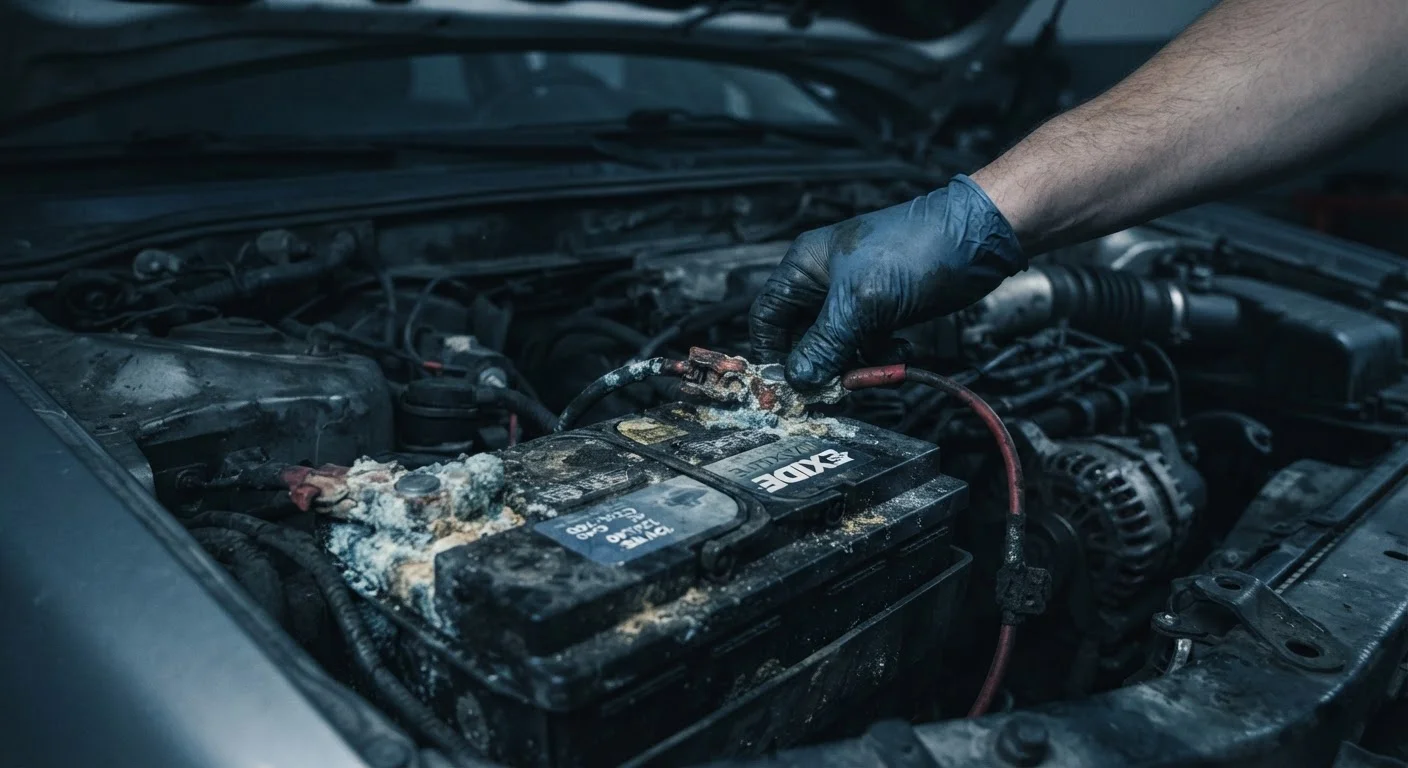
Photo credit: FaqBulletin.com | Information Made Easy
Slow cranks, dim headlights, and dashboard alerts often precede a dead battery. Learn to recognize them before you're stuck.
Key Takeaways
- A slow, labored engine crank is often the first and most reliable warning sign of a failing battery.
- Most automotive batteries last three to five years; age alone warrants a professional load test.
- Corrosion on battery terminals can mimic a dead battery - cleaning them may restore function temporarily.
- Extreme cold dramatically reduces battery output, making winter the most common season for failures.
- Dashboard battery or charging-system warning lights should never be ignored or dismissed as a glitch.
Why Batteries Fail Without Obvious Warning
A car battery doesn't usually give up all at once. It weakens gradually - through temperature swings, short trips that never fully recharge it, and the slow chemical degradation that comes with age. The trouble is that most drivers don't notice the decline until the morning they turn the key and get nothing.
Understanding what a struggling battery actually looks like gives you a meaningful window to act. These warning signs are real and readable, whether you're in a parking lot or your own driveway. If your vehicle is also showing dashboard alerts you don't recognize, our guide to check engine light codes can help you separate battery-related warnings from unrelated issues.
Slow or labored engine cranking
When you turn the key or press the start button, the starter motor draws a large burst of current from the battery. A healthy battery delivers that current instantly. A weakening battery struggles to keep up, and the result is a slow, grinding, or sluggish crank - the engine turns over but hesitates before firing.
This symptom is most pronounced on cold mornings because low temperatures reduce a battery's available power output. If your engine cranks noticeably slower than usual, especially in cool weather, treat it as a battery warning rather than a coincidence.
A sluggish morning crank is rarely a coincidence - it's often a battery in decline.
Dim or flickering headlights
Your headlights are powered by your vehicle's electrical system, which depends on the battery when the engine is off and the alternator when running. If your headlights appear noticeably dimmer than usual - particularly at idle - or flicker when you switch on other electrical loads like the rear defroster or air conditioning, the battery or charging system may be underperforming.
Dimming that improves when you rev the engine points toward a battery that's partially discharged. Persistent dimness at all RPMs may also indicate an alternator issue, which in turn accelerates battery wear.
Headlights that dim at idle often signal a battery struggling to hold its charge.
Frequent need for jump-starts
Needing a jump-start once after accidentally leaving the lights on is a normal inconvenience. Needing one repeatedly - without an obvious cause like a dome light left on - is a clear sign the battery can no longer hold a usable charge between uses. A battery that won't stay charged is a battery that's near the end of its service life.
Repeated jump-starts also stress other electrical components. If you've needed two or more jumps in a short period, have the battery load-tested promptly rather than waiting for a third failure.
Repeated jump-starts without an obvious cause mean the battery can no longer hold a charge.
Visible corrosion on battery terminals
A white, blue, or greenish powdery buildup on the battery's positive or negative terminals is corrosion caused by hydrogen gas escaping from the battery's electrolyte. Some surface corrosion is common over time, but heavy buildup increases electrical resistance and can interrupt the current flow your vehicle needs to start.
Corrosion doesn't always mean the battery itself has failed - cleaning the terminals may restore reliable function. But its presence is a signal that the battery should be inspected. Significant corrosion on an older battery often accompanies internal deterioration.
Heavy terminal corrosion increases resistance and can stop current flow entirely.
Battery or charging-system warning light
Most modern vehicles display a battery-shaped warning light when the onboard system detects a problem with the charging circuit. This light doesn't always mean the battery itself has failed - it can also indicate an alternator or voltage regulator problem - but it always warrants prompt attention.
Ignoring this light and continuing to drive risks a complete loss of electrical power while the vehicle is in motion. If the battery light comes on while driving, reduce non-essential electrical loads and have the system tested as soon as safely possible. This ties directly into broader car safety practices every driver should stay current on.
A battery warning light illuminated while driving demands prompt, not eventual, attention.
Age beyond three to five years
Battery chemistry degrades over time regardless of how well the vehicle is maintained. Most conventional lead-acid batteries have a reliable service life of roughly three to five years under typical conditions. Factors like extreme heat, frequent short trips, and high electrical loads can shorten that window noticeably.
A battery approaching or past the four-year mark should be proactively tested even if no symptoms are present. Many failures happen without obvious warning signs, particularly in batteries that have been maintained at a partial state of charge through urban stop-and-go driving.
A battery over four years old deserves a load test even if it shows no symptoms yet.
What to Do When You Spot These Signs
Identifying a warning sign early is only useful if you act on it. A battery load test - available at most auto parts stores and many independent garages - measures how well your battery holds a charge under realistic demand. It takes a few minutes and costs little or nothing. If your battery is more than three years old and showing any of the signs above, a load test is a reasonable next step before the battery decides for you.
Get a Free Load Test Before It Fails
Many auto parts retailers and independent garages offer battery load testing at no charge. A load test applies a controlled electrical demand to the battery and measures how well it holds voltage under that stress - far more informative than a simple voltage reading with a multimeter. If your battery is three or more years old, scheduling a test annually is a low-effort step that can prevent a high-inconvenience breakdown.
Terminal corrosion can often be safely cleaned at home with a basic corrosion-removal solution and a wire brush, but if you're uncertain about working near electrical components, know when DIY maintenance crosses into risky territory. Battery replacement itself is straightforward on most vehicles, but some modern cars with battery management systems require a reset after replacement - a step best handled by a qualified technician.
If you're heading into colder months, a battery check belongs on your preparation list. Cold-weather vehicle prep varies significantly by region, but battery inspection is one step that applies everywhere. And since a dead battery is one of the more common roadside emergencies, it's also worth reviewing what emergency supplies belong in your trunk - including jumper cables or a portable jump starter - so you're covered if a battery does fail unexpectedly.

Author
Automotive Editorial Team
Automotive Editorial Team is the collective byline for our editorial team and contributor network. Articles published under this byline or an editorial pen name are researched, written, and reviewed according to our editorial standards for clarity, consistency, and independence before publication.
View all articles →