
Keeping Kids Engaged on Long Drives: What Actually Works
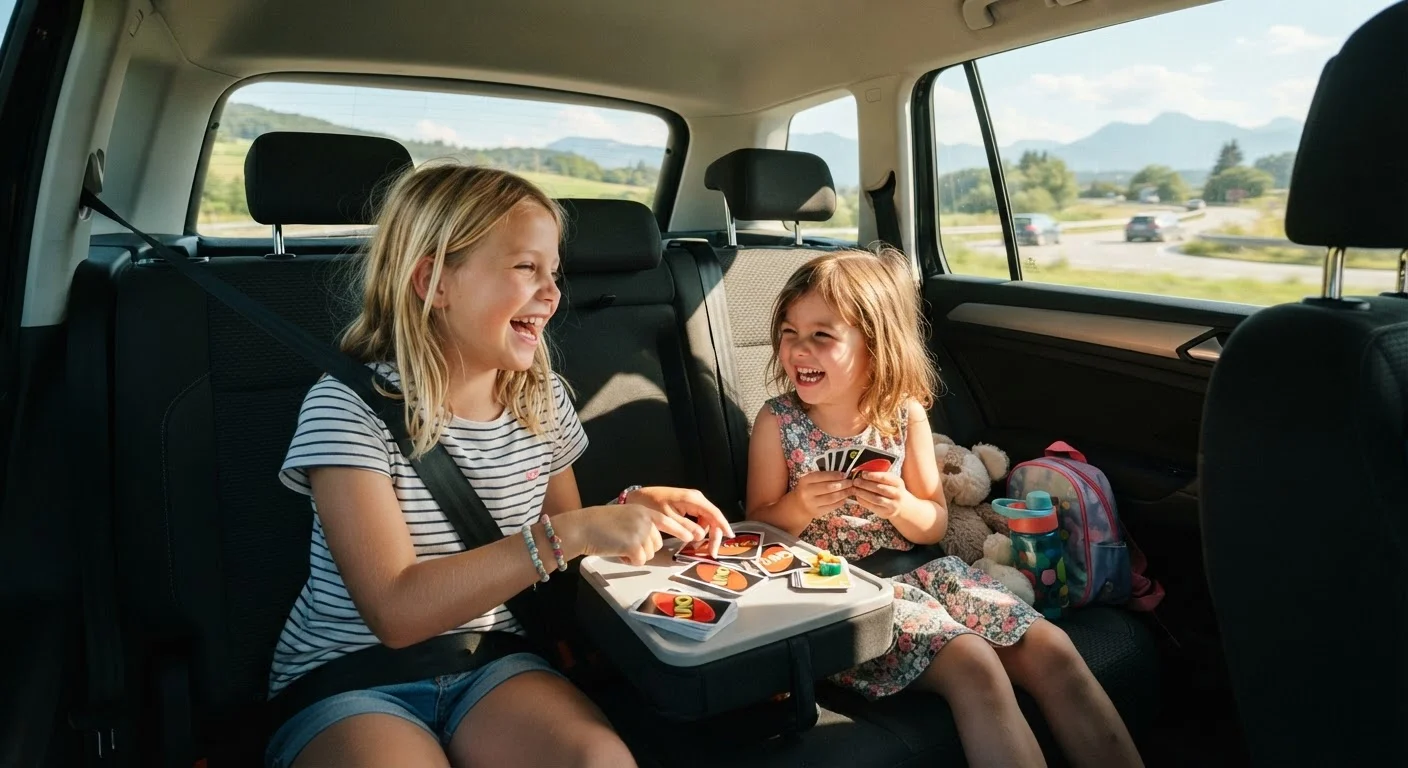
Photo credit: FaqBulletin.com | Information Made Easy
In this article
Screen-free and screen-friendly strategies backed by child development insights for managing long stretches in the car.
Key Takeaways
- Rotating activities every 30–45 minutes helps prevent boredom better than one long distraction.
- Screen-free games like 20 Questions and storytelling build connection without draining batteries.
- Strategic snack timing can reset the mood and energy of the whole car.
- Giving kids small choices — like which audiobook to play — reduces power struggles on long drives.
- Planned pit stops every 90–120 minutes help younger children regulate their bodies and emotions.
Why Long Drives Feel So Hard for Kids (And What That Tells You)
Children's brains are wired for novelty and movement. Sitting still in a confined space for hours goes against nearly everything their developing nervous systems are built to do. Understanding this isn't an excuse to lower expectations — it's a starting point for smarter planning.
Research in child development consistently shows that attention spans are shorter and impulse control is still maturing well into the teen years. For younger kids especially, abstract reassurances like "we'll be there soon" mean very little. They need concrete anchors: something to do right now, something to look forward to in an hour, and something to eat.
Before you even back out of the driveway, it helps to think like a producer, not just a driver. What's the schedule of activities? What's the pacing? If you've already put thought into your flexible family itinerary, applying that same flexible mindset to the car itself pays real dividends.
Proven Practices for Keeping Kids Happily Occupied
These are the approaches that hold up across different ages, trip lengths, and family styles — screen or no screen.
Rotate activities in 30–45 minute windows rather than relying on one long engagement.
Children's attention naturally cycles, and a single activity — even a favorite one — loses its power after a sustained stretch. Rotating keeps novelty alive and resets focus. It also mirrors the kind of structured pacing that child development specialists recommend for sustained engagement.
Give kids limited but real choices throughout the drive.
Children who feel some agency over their experience are less likely to protest or shut down. Offering structured choices — not open-ended free-for-alls — satisfies the need for autonomy without creating chaos. This reduces the 'when are we there' spiral significantly.
Use snacks strategically as mood resets, not just hunger fixes.
A snack break does more than satisfy appetite — it interrupts a frustration cycle and gives kids something to look forward to on a predictable schedule. Pairing a snack with a change in activity amplifies both effects.
Plan physical pit stops every 90–120 minutes regardless of whether kids ask.
Young children often can't accurately read or communicate their own physical discomfort until it tips into meltdown territory. Proactive stops prevent the escalation. Even five minutes of running around a rest-stop lawn resets the nervous system.
Introduce one 'mystery bag' item per major leg of the trip.
Novelty is one of the most reliable engagement triggers for children. A small, wrapped item — a new coloring book, a travel puzzle, a deck of cards — creates genuine anticipation and extends engagement because it's fresh. The 'mystery' element amplifies the effect beyond what an openly known item would achieve.
Set expectations and a visual timeline before the trip begins.
Abstract time is nearly meaningless to young children. A simple visual — even a hand-drawn map with dots for each stop — converts time into space, which kids can actually understand. This dramatically reduces repetitive 'are we there yet' questions.
Quick Wins You Can Pull Off Before You Leave the Driveway
A few fast moves before departure morning can dramatically change the tone of the whole drive. Think of these as your pre-flight checklist for the back seat.
Need help thinking through what to load in the car itself? Our guide on packing the car for a family trip covers how to organize kid supplies so they're actually accessible when you need them.
Making the Drive Part of the Trip, Not Just the Prelude
One of the most underrated shifts families can make is reframing the drive itself as an experience rather than an obstacle. Kids who feel like the trip has already begun are less focused on how long it's taking.
Treat the Drive Like Its Own Destination
Building one or two 'just for the drive' traditions — a specific playlist that only plays on road trips, a storytelling game that begins the moment you hit the highway — helps kids associate the car ride with something they actually enjoy. Over time, these rituals become something children look forward to rather than dread. Consistency is what turns a distraction into a tradition.
Audiobooks are a particularly powerful tool here. A gripping story pulls the whole car into the same world — parents and kids alike. Libraries often offer free digital lending through apps, making this an accessible option for most families. Podcasts designed for kids (covering history, science, and humor) are another strong choice that sparks genuine conversation.
Verbal games like 20 Questions, the Alphabet Game using road signs, or storytelling chains ("I'll start a story, you add the next sentence") cost nothing and hold attention surprisingly well. For more on how engagement and memory reinforce each other, our education piece on memory strategies that actually work offers some relevant insight into how varied input keeps the brain active.
The same principles behind avoiding common road trip mistakes — like skipping rest stops or over-scheduling — apply just as much to backseat management as to the route itself.
This article is for general informational and educational purposes. Every child is different; if you have concerns about your child's behavior, development, or comfort during travel, consult your pediatrician or a qualified child development professional.

Author
Travel Editorial Team
Travel Editorial Team is the collective byline for our editorial team and contributor network. Articles published under this byline or an editorial pen name are researched, written, and reviewed according to our editorial standards for clarity, consistency, and independence before publication.
View all articles →