
Currency Exchange: A Traveler's Reference for Rates, Fees, and Formats
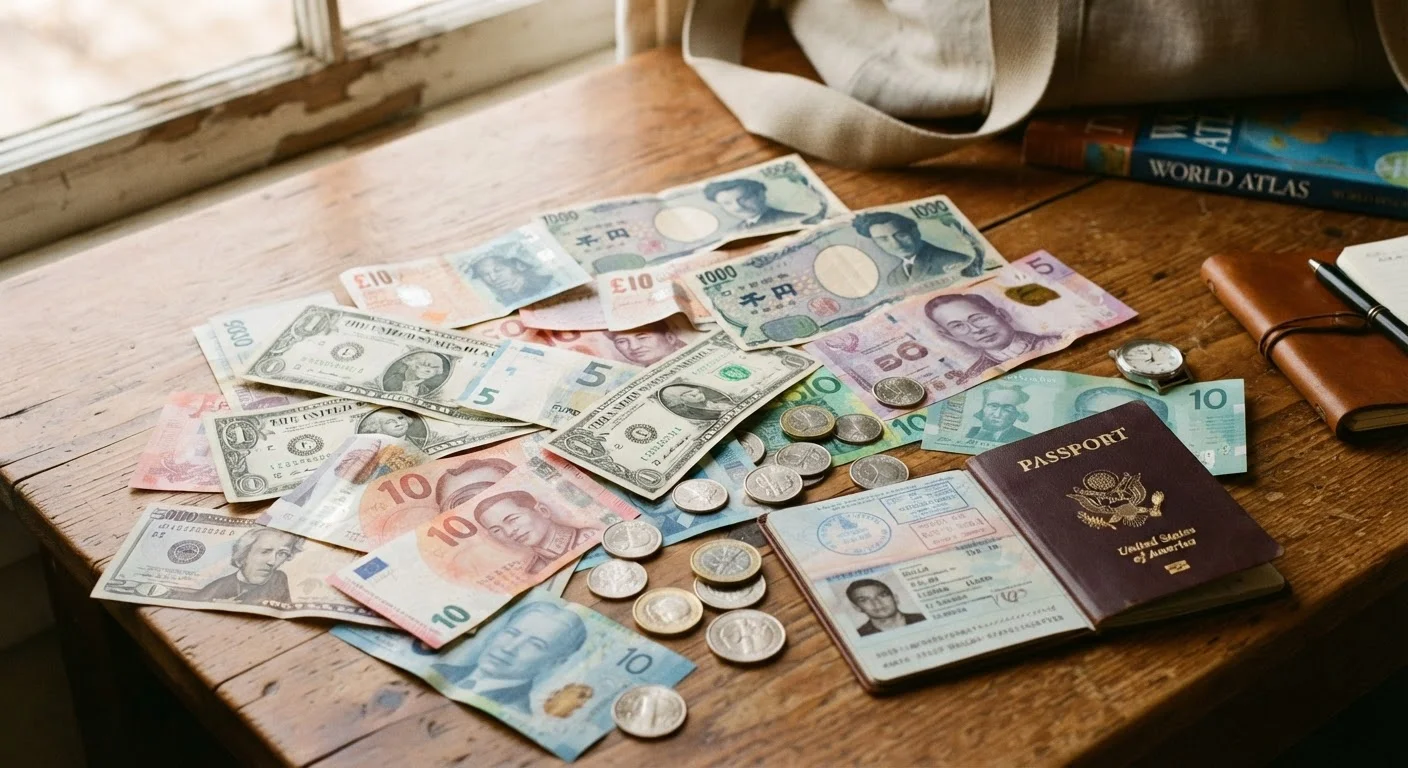
Photo credit: FaqBulletin.com | Information Made Easy
In this article
ATMs, airport kiosks, local banks—quick facts on how currency exchange works so you keep more money in your pocket abroad.
How Exchange Rates Actually Work
Every time you swap dollars for another currency, you're working with two numbers: the interbank rate (the true mid-market rate banks charge each other) and the rate you're actually offered. The gap between those two numbers — the spread — is how exchange providers make money. No consumer will ever receive the interbank rate exactly, but getting as close to it as possible is the goal.
Rates shift constantly because they respond to economic data, geopolitical events, and market sentiment. For planning purposes, use a free reference tool like XE.com to check the current mid-market rate and treat it as your benchmark. If a provider's rate deviates dramatically from that figure, the spread is working heavily against you.
Interbank Rate
The wholesale exchange rate that banks use when trading currencies with one another. It is the most favorable rate available and serves as the benchmark against which all consumer rates are compared.
Spread
The difference between the rate at which an exchange provider buys a currency and the rate at which it sells. A wider spread means a worse deal for the traveler.
Dynamic Currency Conversion (DCC)
An optional service at foreign point-of-sale terminals that converts a transaction into your home currency on the spot. DCC rates are typically less favorable than your card issuer's rate.
Foreign Transaction Fee
A fee, usually 1–3% of the purchase amount, charged by some card issuers for transactions processed in a foreign currency or through a non-US bank.
ATM Withdrawal Fee
A flat fee charged by your home bank, the foreign ATM operator, or both when you withdraw cash abroad. Fees and structures vary widely by institution.
Currency Peg
A government policy that fixes a country's currency at a set rate to another currency, usually the US dollar or euro, limiting natural fluctuation.
Understanding these mechanics ties into broader money literacy. The financial terms every household should know covers concepts like spreads and fees in everyday contexts, making them easier to spot on the road.
Where to Exchange: ATMs, Banks, Kiosks, and Cards
Your exchange method matters as much as timing. Here's a quick-reference breakdown of the most common options:
- ATMs abroad: Generally offer rates close to the interbank benchmark because they draw from wholesale networks. Watch for flat withdrawal fees from your home bank and the foreign ATM operator — these can stack. Withdrawing larger amounts less frequently reduces the per-dollar cost of those flat fees.
- Airport and hotel kiosks: Convenient but consistently expensive. Markups of 10–15% above the interbank rate are common. Use these only as a last resort for small immediate needs upon arrival.
- Local banks at the destination: Often competitive, especially for major currencies. Expect to show your passport and allow extra time during business hours.
- Travel-optimized credit and debit cards: Cards with no foreign transaction fees are widely available and are frequently the lowest-cost option for day-to-day spending. Always decline dynamic currency conversion (DCC) at checkout — choose to pay in the local currency so your card issuer applies its rate rather than the merchant's.
- Prepaid travel money cards: Let you lock in a rate in advance, protecting against adverse rate swings — though you won't benefit if rates improve after you load the card.
| Benchmark Rate | Interbank (mid-market) rate (Used by financial data providers such as XE.com) |
| Typical Foreign Transaction Fee | 1%–3% per transaction (General industry range; varies by card issuer) |
| Airport Kiosk Markup | Often 10%–15% above interbank rate (Commonly cited by consumer travel finance guides) |
| Most Accepted Travel Currencies | US Dollar (USD) and Euro (EUR) (Widely recognized in international markets) |
| Recommended Pre-Trip Cash | Enough for 1–2 days of expenses (General travel planning guidance) |
| DCC Best Practice | Always choose local currency at checkout (Avoids unfavorable on-the-spot conversion rates) |
No single method wins in every situation. Most seasoned travelers combine a fee-conscious card for daily purchases with a modest amount of local cash for markets, taxis, and small vendors that don't accept cards.
Fees, Formats, and Final Reminders
Fees are where travelers quietly lose money. Audit these before departure:
- Foreign transaction fee: Charged per purchase in a foreign currency — typically 1–3%. Review your card's terms before traveling.
- ATM fees: Your home bank may charge a flat fee, and the foreign ATM operator may add its own. Some institutions rebate foreign ATM fees — worth checking in advance.
- DCC surcharge: Accepting on-the-spot USD conversion at a merchant terminal typically adds 3–7% to your cost. Always decline and pay in local currency.
- Exchange service markup: "Zero commission" signs at kiosks can be misleading — profit is simply embedded in a wide spread. Compare the offered rate to the mid-market rate to understand the real cost.
Verify Currency and Customs Rules Officially
Some countries restrict how much foreign currency you can bring in or out, and declaration thresholds vary. Currency regulations can change without notice, so verify requirements with the destination country's official customs authority and the US Department of State before your trip. This article is general educational information, not legal or financial advice.
Building awareness of travel fees fits naturally into household budgeting practice. The same logic behind understanding fixed vs. variable expenses applies when estimating the variable cost of currency exchange across a multi-destination trip.
For everything else that goes into preparing for international travel — from passports to customs to jet lag — see the ground-up guide to crossing borders confidently.

Author
Travel Editorial Team
Travel Editorial Team is the collective byline for our editorial team and contributor network. Articles published under this byline or an editorial pen name are researched, written, and reviewed according to our editorial standards for clarity, consistency, and independence before publication.
View all articles →