
Fixed vs. Variable Expenses: A Reference Guide for Household Budgeters
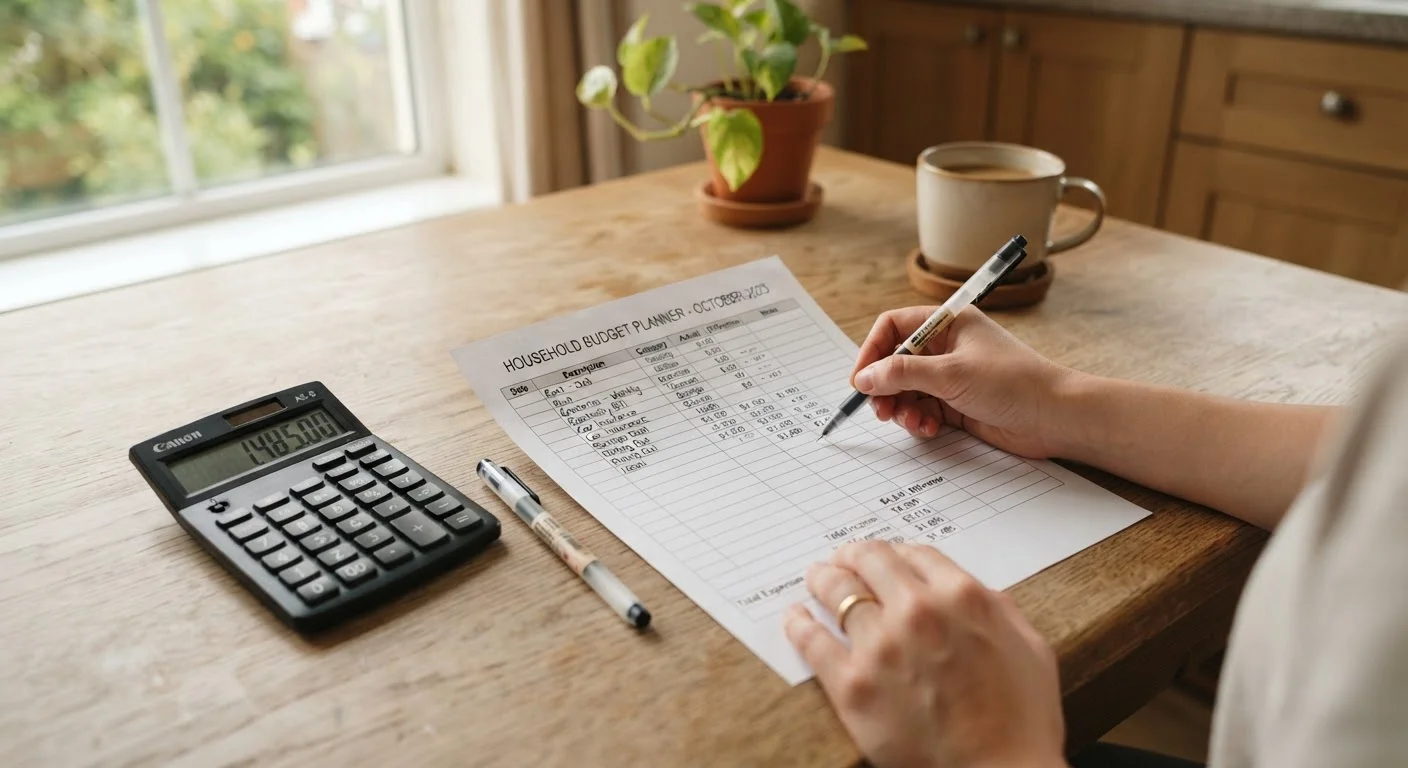
Photo credit: FaqBulletin.com | Information Made Easy
In this article
A clear, lookup-style breakdown of fixed and variable expenses—with examples, definitions, and how each type fits into a household budget.
What Makes an Expense Fixed or Variable?
The single most useful thing you can do before building a budget is sort every dollar you spend into one of two buckets: fixed or variable. The distinction isn't about importance — it's about predictability.
Fixed Expense
A recurring cost that stays the same amount every billing cycle. Because the amount doesn't change, fixed expenses are the easiest to plan for in a budget.
Variable Expense
A cost that fluctuates month to month based on usage, choices, or circumstances. Groceries and utility bills are common examples — the category is predictable, but the exact amount isn't.
Periodic Expense
A cost that is fixed in amount but doesn't recur every month — such as an annual insurance premium or a quarterly tax payment. These need to be divided and set aside in advance.
Discretionary Spending
Variable expenses tied to wants rather than needs — dining out, entertainment, and subscriptions you could cancel. These are the first place most budgeters look when trimming spending.
Non-Discretionary Spending
Expenses you must cover regardless of your financial situation, such as rent, utilities, and minimum debt payments. Both fixed and variable costs can be non-discretionary.
Budget Baseline
The minimum monthly spending required to cover all essential fixed and non-discretionary variable costs. Knowing your baseline helps you see how much income is truly flexible.
A fixed expense hits your account for the same amount on roughly the same date every month. Your mortgage or rent payment is the clearest example. You know the number before the month begins, which makes planning straightforward.
A variable expense changes based on how much you use or consume. Your electric bill, grocery tab, and gas spending all belong here. The category is consistent — you'll always have a grocery line — but the dollar amount shifts.
Understanding this difference matters because the two categories require different budgeting tactics. Fixed costs are scheduled; you only need to make sure the money is there. Variable costs need a spending ceiling — an amount you decide in advance and track against throughout the month. For a full walkthrough of how to put both together, see this ground-up family budget guide.
Common Examples by Category
Use this as a quick lookup. Most household expenses fall clearly into one column — a few will depend on your specific situation.
| Typical fixed expense share of household budget | 50–60% of monthly spending (Consumer Expenditure Survey, U.S. Bureau of Labor Statistics) |
| Most common fixed expenses | Rent/mortgage, car loan, insurance premiums, subscriptions |
| Most common variable expenses | Groceries, utilities, gas, dining out, clothing |
| Periodic expenses — billing cycle | Quarterly or annually (e.g., property taxes, car registration) |
| 50/30/20 rule: needs allocation | 50% of after-tax income toward needs (mostly fixed costs) (Popularized by Elizabeth Warren and Amelia Warren Tyagi in All Your Worth) |
| Emergency fund target | 3–6 months of essential fixed + variable expenses (General guidance from financial planning associations) |
Fixed Expense Examples
- Rent or mortgage payment
- Auto loan payment
- Student loan payment (standard repayment plan)
- Health, auto, renters, or homeowners insurance premiums
- Life insurance premium
- Flat-rate streaming or software subscriptions
- Childcare or daycare at a set monthly rate
Variable Expense Examples
- Groceries and household supplies
- Electricity, gas, and water utilities
- Gas for vehicles
- Dining out and takeout
- Clothing and personal care
- Medical copays and out-of-pocket costs
- Entertainment and recreation
Semi-Fixed Expenses: The In-Between Category
Some costs blur the line — a cell phone plan is fixed if you're on a flat-rate contract, but variable if you pay for overages. Internet, cable bundles, and gym memberships can behave similarly. When categorizing, use your actual billing history to decide: if the amount rarely changes, treat it as fixed; if it swings by more than 10–15%, treat it as variable.
Periodic Expenses — Don't Let These Sneak Up
Annual or quarterly bills — property taxes, vehicle registration, back-to-school supplies — are technically fixed in amount but don't appear every month. Divide the annual total by 12 and set that amount aside each month so you're never caught short. This is one of the most overlooked steps for households living paycheck to paycheck.
How to Use This Breakdown in Your Budget
Once you've classified your expenses, the budgeting math becomes clearer. Add up all your fixed monthly costs first — that's your baseline, the floor below which your spending cannot go. What remains after fixed costs is available for variable spending, savings, and debt paydown.
~33%
Average share of income spent on housing
According to the U.S. Bureau of Labor Statistics Consumer Expenditure Survey, housing is consistently the largest fixed expense for American households.
60%+
Households with no written budget
Multiple surveys, including those cited by the NFCC, indicate that most American households manage money without a formal written spending plan.
$412
Average monthly food-at-home spending
U.S. Bureau of Labor Statistics Consumer Expenditure data shows grocery spending is the most significant recurring variable cost for most families.
For variable expenses, set a monthly cap for each category based on your average from the past two or three months. Track spending in real time — weekly, not monthly — so you can catch overspending before it compounds. Your monthly budget review is where you reconcile what you planned against what actually happened.
If you find your fixed costs are eating more than 60% of your take-home pay, the options are limited but clear: increase income, reduce a fixed commitment (refinancing, downsizing, canceling a subscription), or build a plan to do so over time. Variable expenses are where most households find short-term flexibility — they're the dials you can turn month to month.
Households with irregular income — freelancers, gig workers, or seasonal earners — need to be especially deliberate about this split. See managing a budget without a fixed paycheck for strategies tailored to variable income. For additional day-to-day money habits that reinforce these fundamentals, the Everyday Money Tips hub is a useful ongoing reference.
This article provides general financial information for educational purposes and is not personalized financial advice. Consider consulting a qualified financial professional for guidance specific to your situation.

Author
Personal Finance Editorial Team
Personal Finance Editorial Team is the collective byline for our editorial team and contributor network. Articles published under this byline or an editorial pen name are researched, written, and reviewed according to our editorial standards for clarity, consistency, and independence before publication.
View all articles →