
Enrichment Ideas That Keep Small Pets Mentally Engaged
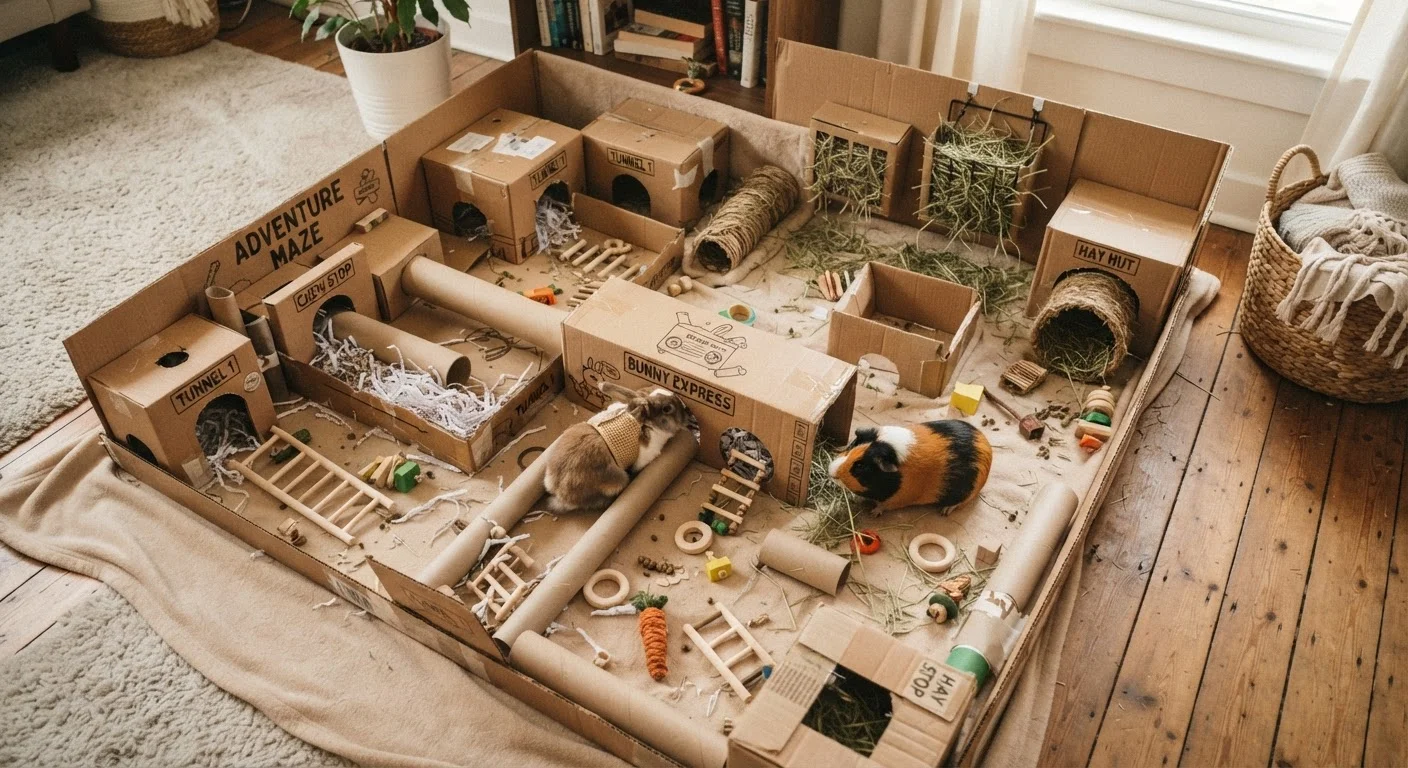
Photo credit: FaqBulletin.com | Information Made Easy
In this article
Boredom affects small animals just as much as larger ones. Explore environment-based and interaction-based enrichment strategies for common small pets.
Key Takeaways
- Small pets like rabbits, guinea pigs, and hamsters need regular mental stimulation to stay healthy and stress-free.
- Enrichment doesn't require expensive equipment — cardboard, hay, and safe household materials work well.
- Matching enrichment to a species' natural behaviors produces the greatest benefit.
- Signs of boredom in small pets include repetitive movements, over-grooming, and reduced appetite.
- Rotating activities regularly prevents habituation and keeps environments feeling novel.
Why Enrichment Matters for Small Pets
It's easy to assume that a well-fed small pet living in a clean enclosure is a happy one — but behavioral science and veterinary guidance tell a more nuanced story. Animals like rabbits, guinea pigs, hamsters, gerbils, and chinchillas are cognitively complex creatures with strong instincts for foraging, exploration, and social interaction. When those drives go unmet, the result is often boredom-related stress that can manifest as repetitive behaviors, aggression, or health problems.
Enrichment — the practice of adding variety, challenge, and stimulation to an animal's environment — is widely recognized as a cornerstone of good small-pet care. It doesn't require elaborate setups or significant expense. It requires understanding what your specific species does in the wild and finding safe, accessible ways to mirror those activities at home.
This guide covers practical enrichment strategies across seven key categories, applicable to the most common small pets kept by American households. For broader context on your pet's housing setup, see our guide on indoor vs. outdoor housing for small pets.
Foraging Feeders and Hidden Food
In the wild, small animals spend a large portion of their waking hours searching for food. Replicating this drive through foraging enrichment is one of the most natural and impactful things you can do. Rather than placing food directly in a bowl, scatter hay or pellets throughout the enclosure, tuck leafy greens into cardboard tubes, or stuff small paper bags with a mix of bedding and a few treats.
For hamsters and gerbils, burying seeds at varying depths in deep substrate allows them to dig and cache — behaviors central to their natural lifestyle. Rabbits and guinea pigs benefit from hay racks placed at different heights or loosely packed hay piles they must sift through to find the best strands.
Foraging mimics wild feeding behavior and provides both mental and physical engagement.
Tunnels, Burrows, and Hideaway Structures
Prey animals have an instinctive need for shelter and concealment. Offering tunnels and hideaways isn't just comfort — it actively reduces stress by giving small pets a sense of security. Cardboard tubes, untreated wooden boxes, paper bags, and commercially available cork logs all serve this purpose effectively.
Chinchillas and degus appreciate vertical structures where they can jump between platforms and duck into enclosed spaces. Guinea pigs are particularly vocal about hiding preferences — notice which spots they return to most and anchor your setup around those. Rotate tunnel configurations monthly to make the environment feel new again.
Prey animals experience reduced stress when they have reliable, enclosed hiding spots available.
Chewing and Gnawing Opportunities
Rodents and lagomorphs (the family that includes rabbits) have continuously growing teeth, and chewing is both a dental necessity and a behavioral outlet. Providing appropriate chew materials isn't optional — it's fundamental to welfare. Safe options include untreated apple or willow branches, dried corn husks, compressed hay cubes, and plain cardboard.
Avoid anything painted, chemically treated, or made from softwoods like pine and cedar, which can contain compounds harmful to small animals. Varying the texture and shape of chew items — some rough bark, some softer cardboard — keeps the activity interesting and exercises different chewing motions.
Chewing is a biological necessity for rodents and rabbits, not just a behavioral preference.
Puzzle Feeders and Problem-Solving Toys
Puzzle feeders challenge animals to work out how to access food — pressing levers, rolling containers, or nudging doors. These are particularly effective for rats, who are highly intelligent and can quickly master complex mechanisms. Start with simpler puzzles and increase difficulty gradually to avoid frustration.
For rabbits and guinea pigs, placing vegetables inside loosely woven grass balls or inside paper wrapping they must tear open offers a similar cognitive payoff. The key is that the animal has to invest some effort and problem-solving to get the reward. Even a small cardboard egg carton filled with hay and a few pellets qualifies as a rudimentary puzzle feeder.
Puzzle feeders reward curiosity and problem-solving, reducing boredom in intelligent small pets.
Social Interaction and Supervised Exploration
Many small pets are social species. Guinea pigs, for example, are widely understood by animal welfare experts to need companionship — some regions' guidelines explicitly recommend housing them in pairs or groups. Rats are also highly social and can develop signs of depression when housed alone for extended periods.
Beyond inter-species companionship, supervised exploration outside the enclosure provides enormous enrichment value. A guinea pig allowed to roam a safely enclosed floor space, or a rabbit exploring a bunny-proofed room, experiences environmental novelty that an enclosure alone cannot deliver. Always supervise free-roaming time and ensure the space is free of electrical cords, toxic plants, and small gaps. Enrichment strategies for other household pets — such as those covered in our guide on enrichment for cats — reinforce how universal the need for mental engagement is across species.
Social species like guinea pigs and rats need companionship as a baseline form of enrichment.
Sensory Enrichment: Scent and Sound
Small animals rely heavily on scent to interpret their world. Introducing novel, safe scents — dried herbs like chamomile or lavender tucked into bedding, or a pinch of dried rose petals placed in a corner — gives them new olfactory information to investigate. Avoid strong artificial fragrances or essential oils, which can irritate sensitive respiratory systems.
Sound enrichment is more subtle but worth considering. Soft background music or ambient nature sounds at low volume has been explored in some animal care settings as a way to reduce stress responses, though the evidence for small pets specifically is limited. More practically, keeping your pet's space away from startling noises — loud appliances, bass-heavy speakers — is itself a form of sensory management that supports calm, curious behavior.
Novel scents introduced safely into bedding give small animals new information to explore and investigate.
Rotating Environments and Novel Objects
Novelty is one of the most straightforward ways to re-engage a small pet that has grown accustomed to its surroundings. Periodically rearranging tunnels, moving food sources, or introducing new safe objects — an empty tissue box, a clean pine cone, a small terracotta pot — prompts investigative behavior and keeps the animal mentally active.
Avoid changing everything at once; gradual changes are less stressful, particularly for prey animals that rely on spatial familiarity for security. Introduce one or two new elements at a time, observe how your pet responds, and remove anything that causes obvious anxiety. This cycling approach works for all common small pet species and requires nothing more than thoughtful observation and a little creativity.
Introducing one or two novel objects at a time reliably triggers curiosity without causing environmental stress.
Putting It All Together
The most effective enrichment programs are consistent, varied, and species-appropriate. Start with one or two ideas from this list, observe how your pet responds, and expand from there. Rotating activities every week or two prevents habituation — the point at which a once-exciting stimulus becomes background noise.
Start Small and Observe Responses
You don't need to overhaul your pet's setup overnight. Introduce one new enrichment element per week and watch closely for signs of engagement — sniffing, investigating, interacting with the object. If your pet ignores something entirely after a few days, swap it out rather than leaving it in place. The goal is sustained curiosity, not a cluttered enclosure.
Keep in mind that enrichment is only one piece of the overall care picture. If your small pet shows persistent behavioral changes — such as unusual lethargy, repetitive circling, or loss of appetite — those can be signs of underlying health issues that enrichment alone won't address. Our article on small pet veterinary care outlines when it's time to seek professional attention. Families with children can also explore what to realistically expect from small pets when bringing younger members into the enrichment routine.

Author
Pets Editorial Team
Pets Editorial Team is the collective byline for our editorial team and contributor network. Articles published under this byline or an editorial pen name are researched, written, and reviewed according to our editorial standards for clarity, consistency, and independence before publication.
View all articles →