
Dry Kibble vs. Wet Food: Understanding the Real Differences for Your Dog
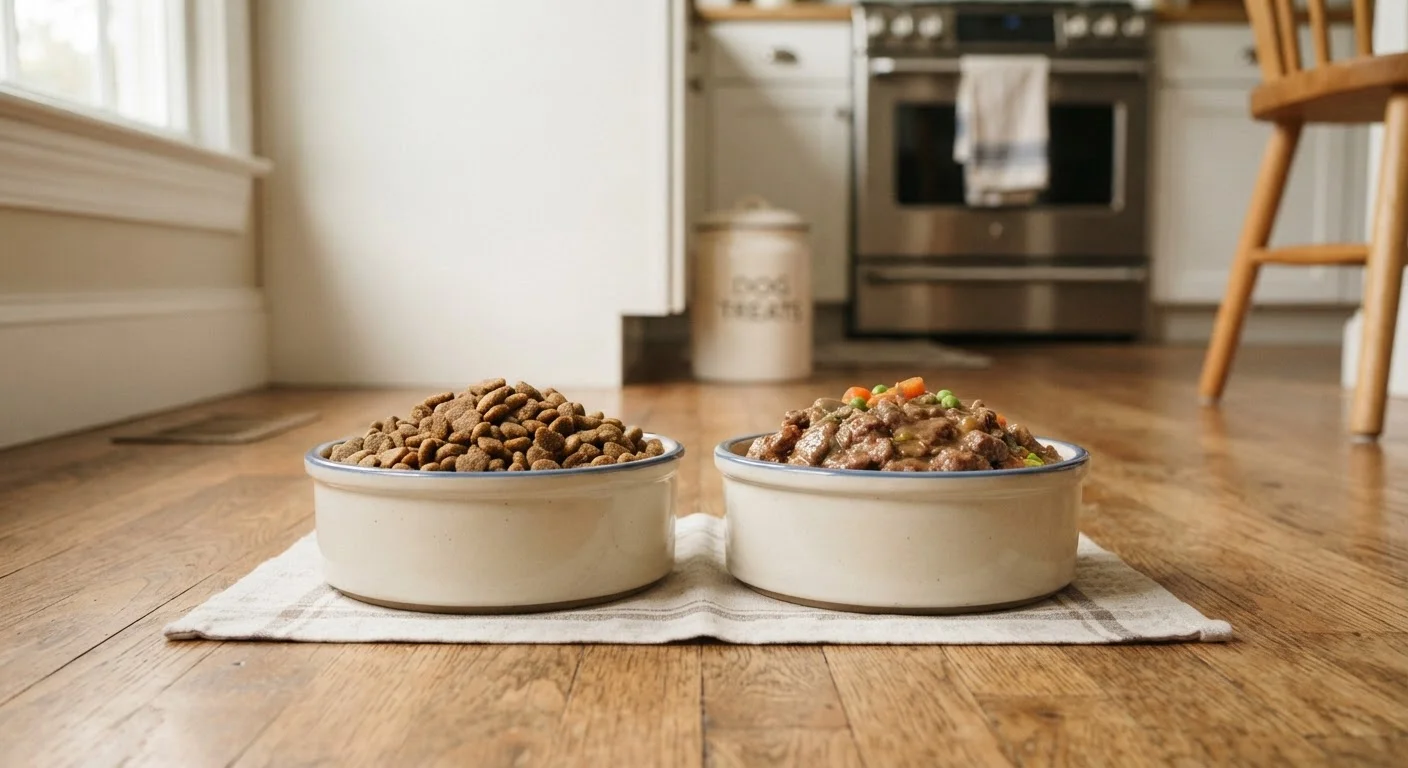
Photo credit: FaqBulletin.com | Information Made Easy
In this article
Kibble and wet food differ in more than texture. Explore how moisture, calories, dental impact, and cost compare to help you feed your dog well.
Key Takeaways
- Wet food contains roughly 70–80% moisture versus kibble's 8–12%, making it a significant hydration source.
- Dry kibble is generally more calorie-dense per volume, which matters for portion control and weight management.
- Neither format is universally superior — the right choice depends on your dog's health, age, and lifestyle.
- Kibble's texture may provide modest mechanical plaque reduction, but it is not a substitute for dedicated dental care.
- Wet food typically costs more per calorie than dry kibble, which is an important long-term budget consideration.
- Mixing both formats is a common, vet-accepted approach that can balance palatability and practicality.
What Actually Separates Kibble from Wet Food
The most fundamental difference between dry kibble and wet food is moisture content. Kibble is typically processed to contain just 8–12% water, whereas wet food — whether sold in cans, pouches, or trays — retains 70–80% moisture. That gap has cascading effects on caloric density, palatability, storage, and how each format fits into a dog's overall diet.
Beyond water, both formats are produced to meet the same foundational nutritional standards established by the AAFCO. A complete and balanced product in either format should deliver adequate protein, fat, carbohydrates, vitamins, and minerals for the appropriate life stage. The format itself does not automatically make one more nutritious than the other — ingredient quality and formulation matter just as much. For a deeper look at how to evaluate what's actually inside the bag or can, reading your dog's food label carefully can reveal a lot that marketing language does not.
| Criterion | Dry Kibble | Wet Food |
|---|---|---|
| Moisture content | 8–12% | 70–80% |
| Caloric density (per volume) | Higher | Lower |
| Typical cost per calorie | Lower | Higher |
| Storage after opening | Weeks in sealed container | 1–3 days refrigerated |
| Palatability for picky dogs | Moderate | Generally higher |
| Mechanical dental cleaning | Modest benefit possible | Minimal benefit |
| Hydration contribution | Negligible | Significant |
| Ease of portion measuring | Easy | Moderate |
Hydration, Calories, and Dental Health
Because wet food delivers substantial moisture with every meal, it can be a meaningful hydration tool — especially for dogs that are prone to urinary issues or simply don't drink enough water. This does not replace a fresh water supply, but it supplements daily intake in a way kibble cannot.
On the calorie side, the equation flips. Because so much of wet food's volume is water, you typically need to feed a larger volume to match the caloric content of a smaller portion of kibble. This can make wet food feel more filling for dogs on weight-loss plans, but it also means bags of kibble last longer and cost less per calorie over time.
Dental health is a nuanced topic here. Dry kibble is often cited as better for teeth because chewing hard food can physically scrape plaque from tooth surfaces. There is some evidence supporting modest mechanical cleaning from chewing, but it is easy to overstate. Most veterinary dental specialists note that kibble alone is not sufficient dental care. Dogs eating either format benefit from dedicated tooth brushing or veterinary-approved dental hygiene routines. For a fuller picture of what plaque buildup actually means for your dog's systemic health, see what gets ignored in canine dental health.
70–80%
Moisture content in typical wet dog food
Compared to just 8–12% in dry kibble, this difference makes wet food a meaningful contributor to daily fluid intake for dogs.
~80%
Dogs affected by periodontal disease by age 3
According to the American Veterinary Medical Association, the majority of dogs show signs of dental disease by their third year, underscoring that diet format alone is insufficient for oral health.
3–4x
Approximate cost difference per calorie
Wet food can cost several times more per calorie than equivalent dry kibble, a factor that significantly affects long-term feeding budgets for medium and large dogs.
Choosing Based on Your Dog's Life Stage and Health Needs
No single feeding format suits every dog. Life stage, health status, and individual preference all shape the right approach. Puppies, seniors, and dogs with specific medical conditions each have distinct needs. Nutritional requirements shift considerably from puppyhood through adulthood, and the format of food can interact with those shifts — understanding how nutritional needs change across life stages helps ensure you're not feeding a one-size-fits-all diet.
Dogs recovering from illness, those with oral pain, or seniors with declining dental function often do better on wet or softened food. Conversely, healthy adults and dogs prone to obesity may benefit from the portion predictability and slower eating pace that kibble can encourage. Mixing both formats — often called a combination feeding approach — is a widely accepted middle ground that many veterinarians and owners find practical. It can boost palatability for reluctant eaters while keeping costs manageable.
Combination Feeding: A Middle-Ground Option
Many owners and veterinarians find that mixing a portion of wet food with dry kibble offers practical benefits: improved palatability, added moisture, and cost management. If you try combination feeding, be sure to adjust total caloric intake to avoid overfeeding. Your vet can help calculate appropriate portions for your dog's size and activity level.
This article is for general informational purposes only and is not a substitute for personalized veterinary nutrition advice. Always consult your veterinarian before making significant changes to your dog's diet, especially if your dog has a health condition.

Author
Pets Editorial Team
Pets Editorial Team is the collective byline for our editorial team and contributor network. Articles published under this byline or an editorial pen name are researched, written, and reviewed according to our editorial standards for clarity, consistency, and independence before publication.
View all articles →