
What Your Dog's Food Label Actually Tells You
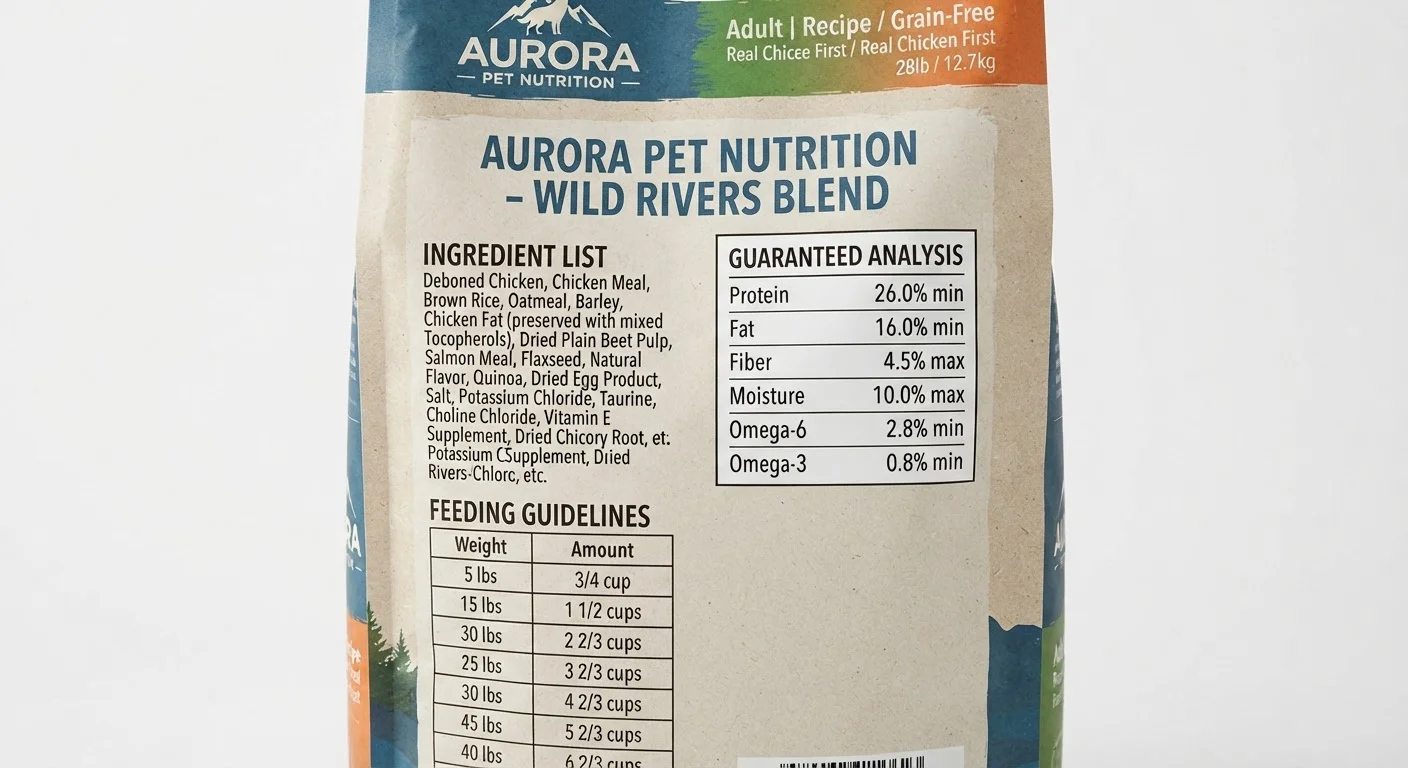
Photo credit: FaqBulletin.com | Information Made Easy
In this article
Decode the ingredient lists, guaranteed analysis panels, and AAFCO statements on dog food packaging to make more informed feeding choices.
Key Takeaways
- Ingredients are listed by weight before processing, which can be misleading for some protein sources.
- The guaranteed analysis panel shows minimums and maximums, not exact nutrient amounts.
- An AAFCO nutritional adequacy statement tells you whether a food is complete and balanced for a specific life stage.
- "Formulated to meet" and "feeding trial" AAFCO statements represent different levels of nutritional validation.
- Life stage labeling — puppy, adult, or all life stages — matters more than marketing language on the front of the bag.
The Ingredient List: What It Reveals — and What It Doesn't
The ingredient list on a dog food bag follows a simple rule: ingredients are listed in descending order by weight before processing. That sounds straightforward, but it has meaningful implications. Fresh meats like chicken or beef contain significant water weight, so they often appear first — even when, once cooked and dried, they contribute less total protein than a lower-ranked ingredient like chicken meal.
Chicken meal, by contrast, is already a concentrated, rendered protein source with most moisture removed. Seeing it in the top five ingredients is often a sign of substantial protein contribution. Neither form is inherently inferior — context matters.
Watch for ingredient splitting, a practice where variations of the same ingredient (e.g., ground corn, corn gluten meal, corn bran) are listed separately, making each appear further down the list than they would if combined. This can make a food look more protein-forward than it truly is.
Ingredient Quality Isn't Listed on the Label
Regulations govern ingredient order and name conventions, but the sourcing quality, processing method, and digestibility of ingredients are not disclosed on the label. Two foods with identical ingredient lists may differ in actual nutrient bioavailability. Consulting a veterinary nutritionist can help you evaluate foods beyond what the label alone reveals.
The Guaranteed Analysis Panel: Numbers With Limits
The guaranteed analysis (GA) panel is mandatory on every dog food sold in the U.S. It lists, at minimum: crude protein (minimum %), crude fat (minimum %), crude fiber (maximum %), and moisture (maximum %). Some manufacturers voluntarily include additional values like omega fatty acids or calcium.
These figures are regulatory guardrails, not precise nutritional snapshots. A food listing "minimum 26% crude protein" could legally contain significantly more. Because moisture content varies widely between food types, comparing GA panels across dry and wet foods requires converting to a dry matter basis — a calculation that removes moisture from the equation so nutrient levels are truly comparable.
For a deeper look at how wet and dry foods stack up nutritionally, see our guide on dry kibble vs. wet food.
~4,000
Pet food products sold in the U.S.
The U.S. pet food market includes thousands of formulations, making label literacy a practical necessity for pet owners navigating choices.
2
Types of AAFCO nutritional adequacy statements
AAFCO recognizes formulation-based and feeding-trial-based statements — two distinct methods of validating that a dog food meets nutritional standards.
The AAFCO Statement: The Most Important Line on the Bag
The AAFCO nutritional adequacy statement is arguably the single most important piece of information on a dog food label. It tells you two things: whether the food is considered complete and balanced, and for which life stage it's intended.
There are two types of AAFCO statements, and the difference matters:
- "Formulated to meet" AAFCO nutrient profiles: The manufacturer calculated that the recipe meets minimum nutrient levels on paper or through lab analysis. No live animals were fed the food to verify it.
- "Animal feeding tests using AAFCO procedures": The food was fed to dogs in a structured trial and demonstrated it could support health over time. This is generally considered the stronger validation.
If a label reads "intended for intermittent or supplemental feeding only," that food is not nutritionally complete and should not be a dog's primary diet. Life stage matters too — puppy and adult formulas have different nutrient requirements and are not interchangeable.
Front-of-Bag Claims: Marketing vs. Regulation
The front panel of a dog food bag is marketing territory. Words like "premium," "holistic," "natural," and "human-grade" may sound meaningful but carry varying degrees of regulatory weight. Under AAFCO guidelines, "natural" has a specific definition — it means no chemically synthetic ingredients except those without a natural equivalent — but it says nothing about nutritional quality.
"Grain-free" simply indicates grains were excluded from the formula. Whether that's appropriate for a given dog depends on individual health needs and should be discussed with a veterinarian, particularly given ongoing research into diet and cardiac health in dogs.
Flavor descriptors also follow rules: a food labeled "Chicken Dog Food" must contain a significant percentage of chicken, while "Chicken Flavor Dog Food" only needs enough chicken to be detectable. These naming conventions, established under the AAFCO pet food ingredient definitions, give you a rough sense of how much of a named ingredient is actually present.
Use Dry Matter Basis to Compare Foods Fairly
When comparing the guaranteed analysis panels of a dry kibble and a wet food, moisture content skews the numbers significantly. To convert to dry matter basis, subtract the moisture percentage from 100, then divide the nutrient percentage by that number. This gives you a true apples-to-apples comparison of nutrient density across different food formats.
This article provides general educational information about dog food labeling and is not a substitute for personalized veterinary nutritional advice. Consult your veterinarian with questions about your dog's specific dietary needs.
Frequently Asked Questions

Author
Pets Editorial Team
Pets Editorial Team is the collective byline for our editorial team and contributor network. Articles published under this byline or an editorial pen name are researched, written, and reviewed according to our editorial standards for clarity, consistency, and independence before publication.
View all articles →