
Grooming Routines That Actually Reduce Hairballs and Shedding
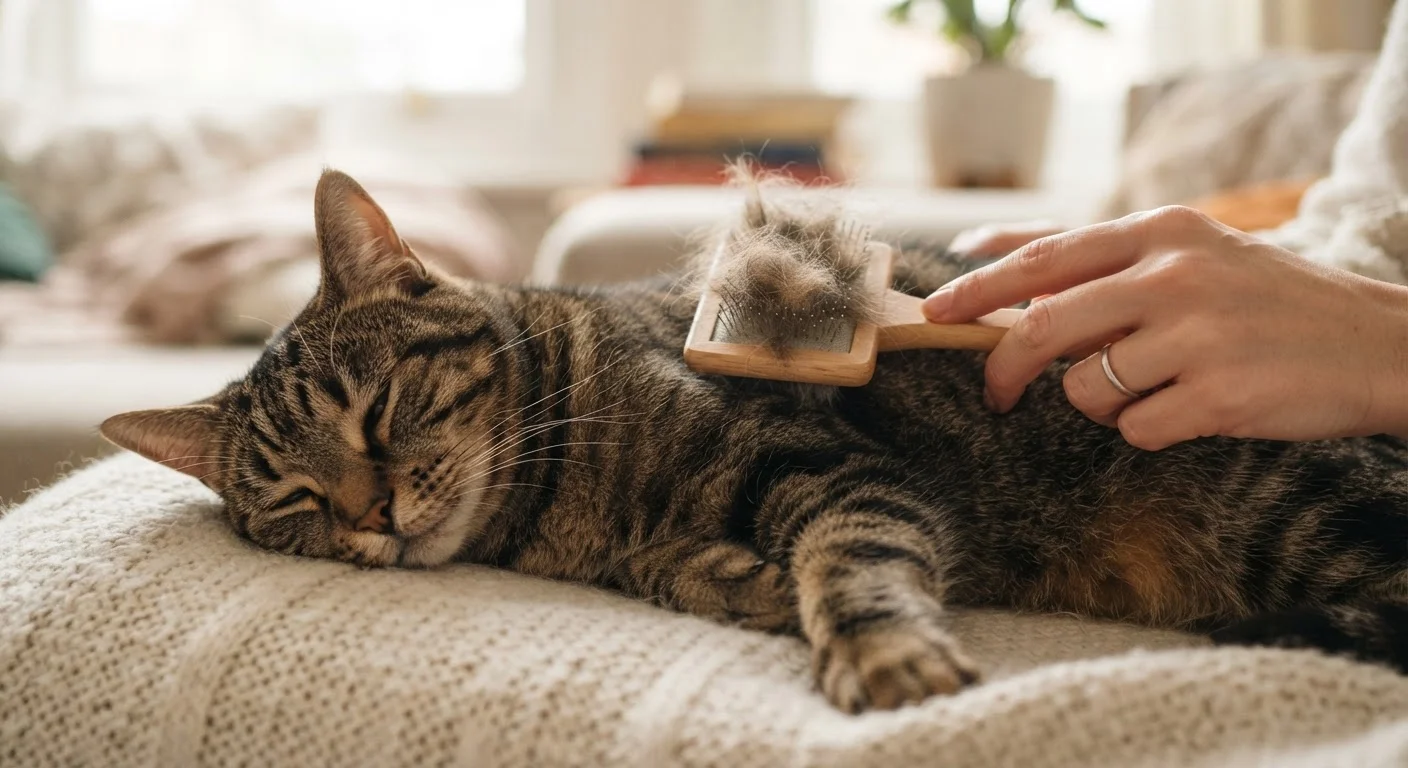
Photo credit: FaqBulletin.com | Information Made Easy
In this article
Consistent brushing, coat type considerations, and grooming frequency — practical routines for keeping your cat's coat healthy.
Key Takeaways
- Brushing frequency should match your cat's coat length — long-haired cats need daily attention.
- Reducing loose fur through grooming directly lowers the amount of hair cats ingest while self-grooming.
- Hydration and diet quality both influence coat health and shedding volume.
- Deshedding tools and slicker brushes serve different purposes — using the right tool matters.
- Even short-haired cats benefit from weekly brushing sessions to minimize hairballs.
Why Grooming Directly Affects Hairball Frequency
Hairballs form when cats swallow loose fur during their natural self-grooming. That ingested fur accumulates in the stomach and is either vomited up as a compressed cylinder or, less commonly, passed through the digestive tract. The connection is straightforward: the more loose fur present in a cat's coat, the more they swallow.
Consistent brushing intercepts that loose fur before the cat does. By removing dead hairs from the coat mechanically, you're reducing the raw material that becomes hairballs. This is especially important during seasonal shedding periods — typically spring and fall — when fur turnover accelerates significantly. Cats living indoors with controlled lighting and temperature may shed more consistently year-round, as noted in veterinary guidance on feline coat cycles. For context on how indoor versus outdoor life affects your cat's overall physiology, see Indoor Cat, Outdoor Cat, or Both.
Matching Your Grooming Tools and Routine to Coat Type
Not all cat coats are the same, and the grooming approach that works for a shorthaired domestic cat won't serve a Maine Coon or Persian equally well. Matching tools to coat type is foundational.
- Short-haired cats: A rubber grooming mitt or a fine-toothed comb removes loose fur effectively without irritating the skin. Weekly sessions are generally sufficient outside of heavy shed periods.
- Medium to long-haired cats: A slicker brush followed by a wide-tooth metal comb helps detangle and lift undercoat fur. Daily or every-other-day brushing prevents matting, which can become painful and require veterinary or professional grooming intervention.
- Double-coated cats: Breeds like Siberian and Norwegian Forest cats carry a dense undercoat. An undercoat rake or deshedding tool reaches beneath the guard hairs to remove shed undercoat that a surface brush misses entirely.
Invest time in acclimating your cat to grooming gradually — short, positive sessions with treats build tolerance. Cats that resist grooming often do so because early experiences were rushed or uncomfortable.
Nutrition and Hydration as Grooming Allies
A coat reflects internal health. Cats eating a nutritionally complete diet with adequate protein and essential fatty acids typically shed less excessively and produce a coat that's easier to maintain. Omega-3 and omega-6 fatty acids, found naturally in fish-based proteins, support skin barrier function and can reduce inflammatory shedding.
Hydration matters too. Cats are naturally low-thirst animals and often don't drink enough when fed exclusively dry food. Chronic mild dehydration can contribute to dry, flaky skin and increased shedding. Incorporating wet food, or adding water to meals, supports skin moisture from the inside out. Always discuss dietary changes with your veterinarian before making significant adjustments, particularly for cats with existing health conditions.
When Hairballs Signal Something More
Occasional hairballs — roughly once or twice a month — are considered normal for many cats. However, frequent retching without producing a hairball, loss of appetite, lethargy, or constipation alongside hairball episodes can indicate a gastrointestinal issue unrelated to grooming alone. These symptoms warrant a veterinary evaluation rather than an adjustment to your brushing schedule.
Building a Routine That Sticks
Consistency is what separates a grooming routine from an occasional effort. A few structural habits make regularity easier to maintain.
Anchor grooming to an existing daily event — feeding time, a morning routine, or a quiet evening period. Cats are highly attuned to household rhythms and often become more cooperative when grooming happens predictably. Keep sessions short initially: even three to five minutes of thorough brushing removes a meaningful amount of loose fur.
Track hairball episodes informally. If your cat is vomiting hairballs more than once or twice a month, that's a signal to increase brushing frequency and consult your veterinarian — it may also reflect an underlying gastrointestinal concern rather than grooming alone. For a broader view of feline health information that's evidence-based, Common Cat Health Myths That Vets Hear Too Often is worth a read.
Multi-cat households introduce an additional variable: cats that groom each other socially may ingest more fur collectively. Brushing each cat individually remains essential. See Multi-Cat Households for guidance on managing shared spaces effectively.
This article is for general informational purposes only and is not a substitute for professional veterinary advice. Consult your veterinarian for guidance tailored to your cat's individual health needs.

Author
Pets Editorial Team
Pets Editorial Team is the collective byline for our editorial team and contributor network. Articles published under this byline or an editorial pen name are researched, written, and reviewed according to our editorial standards for clarity, consistency, and independence before publication.
View all articles →